
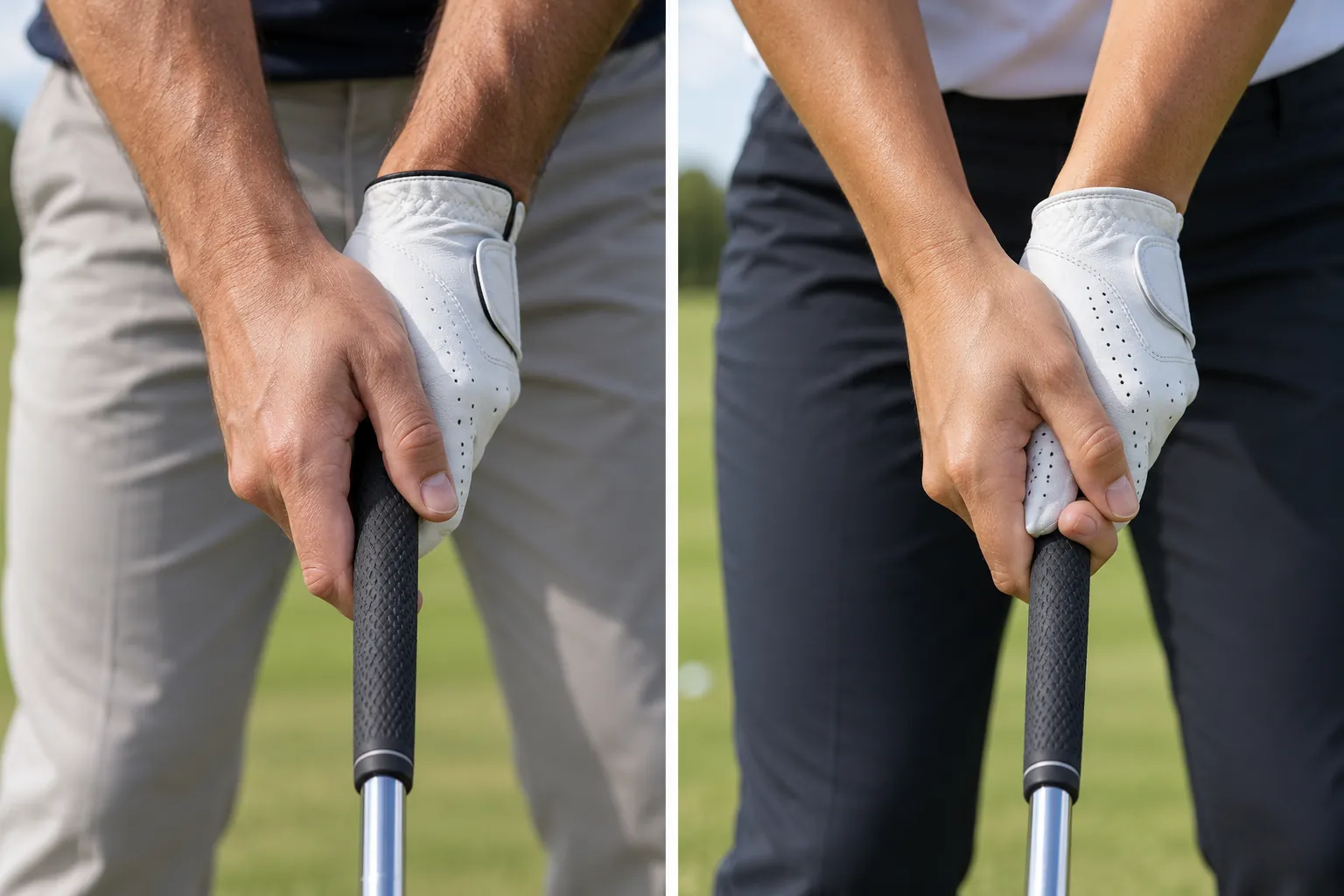
Overlap vs interlock golf grip describes two ways the hands connect on a club. In an overlap grip, the trail-hand little finger rests over the gap between two fingers of the lead hand. In an interlock grip, the trail-hand little finger and lead-hand index finger link together. Neither method is automatically right for every golfer.
This guide explains the hand connection and then shows how physical grip size, taper and surface affect the comparison. For a complete handle-size reference, use the golf grip size chart.
Overlap vs interlock golf grip at a glance
| Point | Overlap grip | Interlock grip | What to observe |
|---|---|---|---|
| Finger connection | Trail little finger rests over the lead index-middle finger area | Trail little finger links with the lead index finger | Comfort, skin pressure and unwanted gaps |
| Hand relationship | Hands touch but retain a layered connection | Hands feel more mechanically linked | Whether both hands work together without squeezing |
| Common preference | Often explored by golfers with enough finger reach | Often explored when a closer connection feels secure | Individual hand and finger proportions |
| Equipment sensitivity | Can change with grip diameter and taper | Can create finger pressure if the handle or hand position is unsuitable | Same club, same grip and same trial conditions |
These are comparison points, not a fitting rule. A golfer may prefer either style for reasons that are not visible from hand size alone. Anyone experiencing pain or restricted movement should stop forcing the position and consult a qualified instructor or health professional as appropriate.
How the overlap grip connects the hands
For a right-handed golfer, the little finger of the right hand typically rests over or near the gap between the left index and middle fingers. A left-handed golfer reverses the hands. The goal is a comfortable connection without lifting the trail hand away from the handle.
The overlap can feel natural when the fingers have enough reach and the grip diameter allows both hands to sit without crowding. If the little finger slides too far or the trail palm separates, review the hand placement and handle size rather than adding pressure.
How the interlock grip connects the hands
In the interlock, the trail-hand little finger and lead-hand index finger connect between the hands. This can make the hands feel unified, but the fingers should not be twisted deeply or squeezed together.
Check the finger joints after several practice swings. Pinching, rubbing or a sharp pressure point can indicate that the connection, grip size or hand placement needs adjustment. The interlock should create a secure relationship without becoming a forced hook.
Physical golf grip size changes the comparison
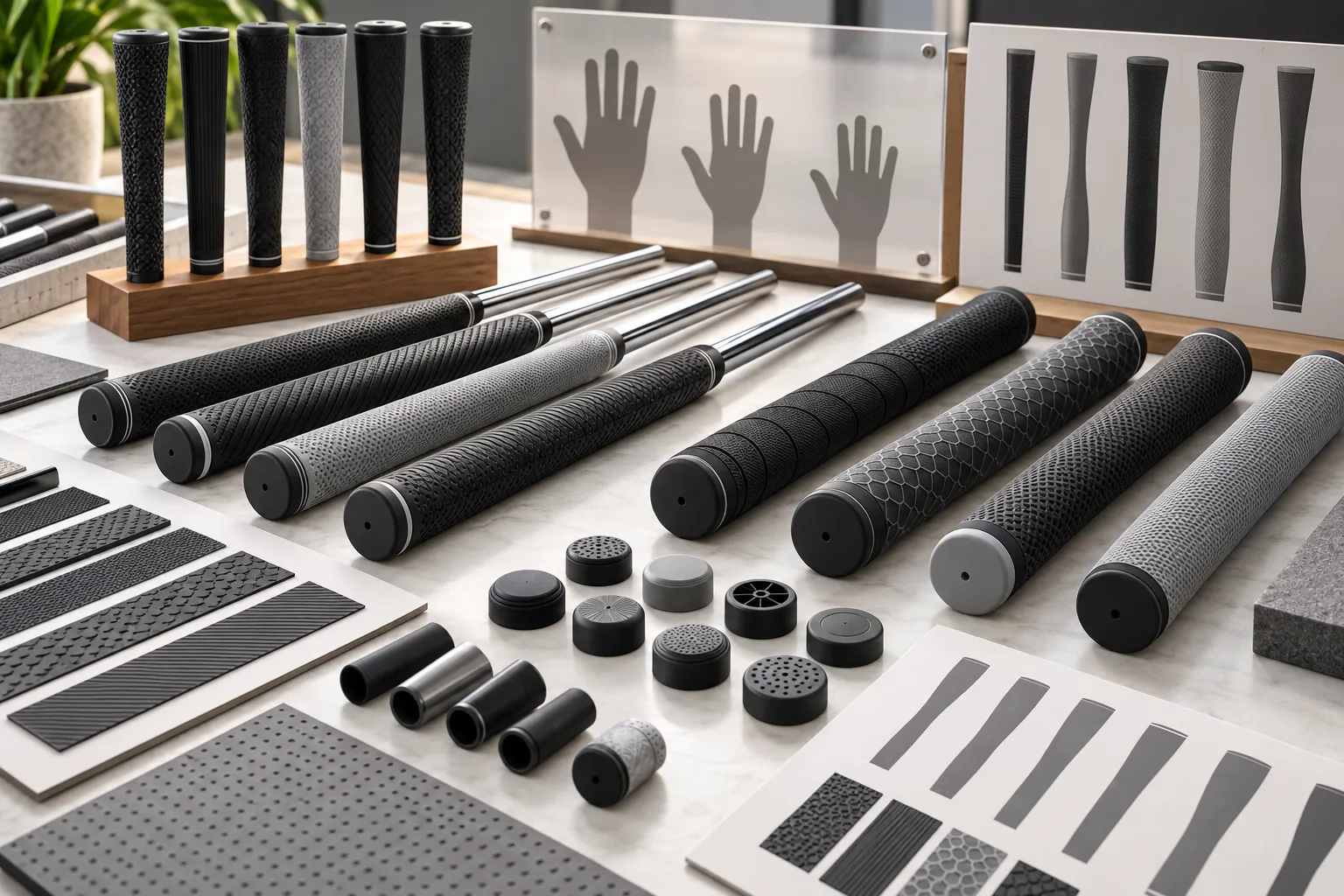
The same overlap vs interlock golf grip can feel different on two handles. Diameter affects how far the fingers wrap, taper affects the lower hand and surface texture changes the pressure a golfer uses to prevent slipping.
Core and outside diameter
Confirm shaft butt size, grip core and finished outside profile together. A size label alone does not describe the installed result.
Standard or midsize
A larger profile can reduce finger wrap for some golfers. Compare the midsize vs standard grip guide.
Taper profile
Traditional and reduced-taper shapes change the lower-hand diameter. Test both hand positions on the complete installed grip.
Surface texture
Pattern depth, cord, tack and firmness affect perceived security. More texture should not be used to justify excessive pressure.
Material feel
Rubber, polymer and composite constructions can feel different in dry or humid conditions. Approve the actual compound sample.
Installed consistency
Check orientation, finished length and diameter at defined points across several clubs, not just one loose grip.
Hand size is a starting point, not a verdict
Larger hands may have enough reach to overlap comfortably, while some smaller hands may prefer the closer interlock connection. These tendencies do not decide the answer for an individual golfer. Finger length, joint movement, previous habits and the chosen handle all matter.
When comparing, use the same club and grip. Make a small number of controlled swings with one hand connection, rest, and repeat with the other. Changing grip size, alignment and connection simultaneously makes the result difficult to interpret.
Pressure matters more than locking the fingers
Both methods can work with balanced pressure. Problems often appear when the golfer squeezes at the connecting fingers to make the hands feel secure. That can create tension without improving the overall hold.
Check whether the handle remains supported through the fingers and whether both hands maintain contact during a slow practice motion. The comparison should focus on comfort, repeatability and club control rather than copying another golfer’s hand position.
What pro shops and brands should explain
A retail display should separate technique choice from product size. Overlap and interlock describe how the hands connect; standard, midsize and oversize describe the physical handle. Avoid promising that one grip model will automatically correct a golfer’s technique.
Use sample handles with clear size and material labels. Let the customer compare diameter, taper and texture before choosing an installed set. For product construction options, review the golf grip material guide.
How to evaluate grip samples for a product range
Define the installed specification
Record shaft butt size, core, finished length, outside-diameter checkpoints, taper and alignment requirements.
Compare hand connections
Use the same installed sample to try overlap and interlock. Observe finger reach, pressure points and repeatability.
Review surface and firmness
Check texture, tack, cord exposure and material response in the intended playing conditions.
Inspect production consistency
Measure multiple samples, confirm weight and artwork orientation, and keep a retained approved reference.
For a branded range, the hand-connection article should guide the customer toward a fit conversation, while the specification controls the manufactured product. Keep those two purposes clear.
Care and replacement also affect feel
Dirt, oils and wear can reduce traction and cause a golfer to squeeze harder. Before deciding that a hand connection no longer works, inspect the handle condition. The golf grip cleaning guide explains routine care, and the regripping guide covers replacement signs.
Prepare a custom golf grip brief
State the intended customer, core size, outside profile, taper, material, firmness, texture, weight direction, colors, artwork and alignment marks. If sample handles will support retail fitting, list each comparison size separately.
Add quantity per SKU, packaging, destination and required date. Use the custom golf grips page to request material, branding and sample review for the complete program.
Frequently asked questions
What is the difference between overlap and interlock golf grips?
Overlap places the trail little finger over the lead-hand finger area. Interlock links the trail little finger with the lead index finger.
Is overlap or interlock better for small hands?
Some smaller-handed golfers prefer interlock, but hand size alone does not decide the best choice. Comfort, mobility and handle diameter also matter.
Can grip size change how overlap or interlock feels?
Yes. Diameter and taper change finger wrap and spacing, so compare both hand connections on the same installed handle.
Should the fingers be tightly locked in an interlock grip?
No. The connection should feel secure without twisting or pinching the finger joints. Stop if the position causes pain.
Is the overlap grip only for golfers with large hands?
No. Hand size can influence reach, but golfers with different hand shapes use overlap successfully. Personal comfort and repeatability matter.
What should a custom golf grip inquiry include?
Include core, outside profile, taper, material, firmness, texture, colors, artwork, quantity per SKU, packaging and destination.
Build a grip range around real hand fit
Send the target customer, size profiles, taper, material, texture, artwork, colors, quantity per SKU, packaging and destination. PASSEN can review sample and branding requirements before quotation.