
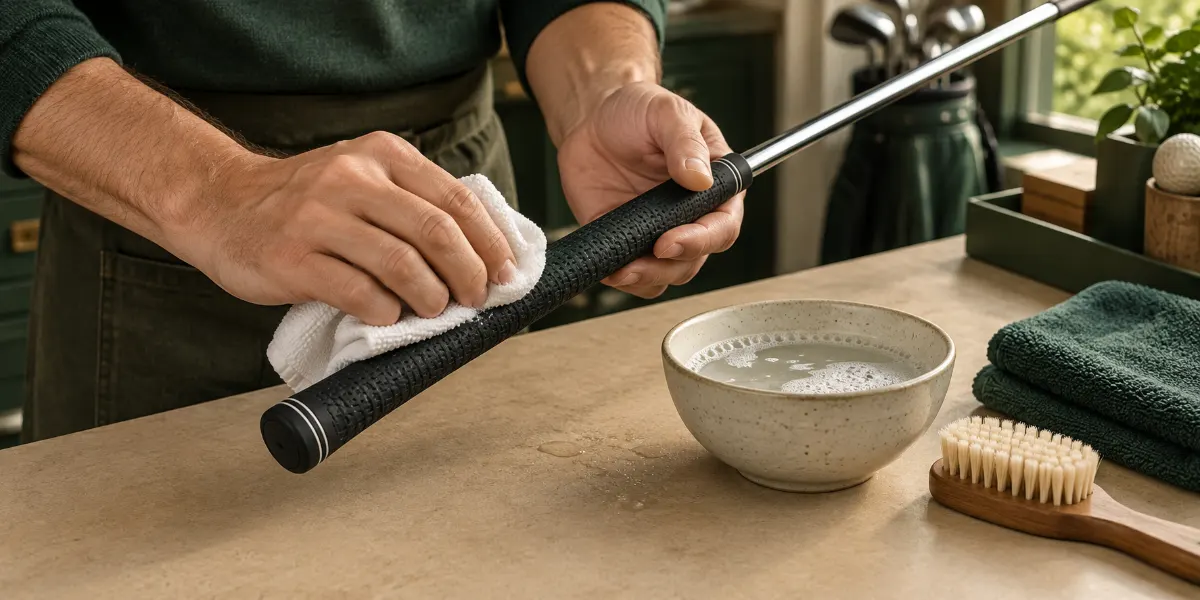
This guide explains how to clean golf grips while respecting the care requirements of the actual material. Start with the grip maker’s instructions. A routine intended for conventional rubber can be unsuitable for a soft polymer wrap, leather finish or specialty putter grip.
Check the grip before choosing a cleaning method
Identify the model, not just its color or feel. Look at the end cap, your purchase record or the manufacturer’s product page. If the grip has a wrap seam, layered surface, unusual coating or mixed materials, find its specific care instructions before brushing or adding a cleaning product. When identification is uncertain, ask the seller or a club professional rather than testing increasingly strong cleaners.
| What you find | What to check first |
|---|---|
| Conventional rubber grip | Whether the maker permits mild soap, water and a soft brush |
| Cord or mixed-material grip | Instructions for every exposed surface; do not assume all sections need the same treatment |
| Soft polymer, wrap or leather | Product-specific cleaner, cloth and moisture restrictions |
| Loose, split or peeling grip | Whether the grip needs inspection or replacement instead of cleaning |
Prepare a small, clean working area
Keep a clean cloth for the grip separate from the towel used on muddy clubheads. Put the cleaning supplies on a stable surface and protect the floor below. If the maker permits a wash, prepare mild soap, warm water, a soft cloth or approved brush and a dry towel. Avoid using a club-groove brush on the grip just because it is already attached to your bag.
A simple routine for grips approved for soap and water
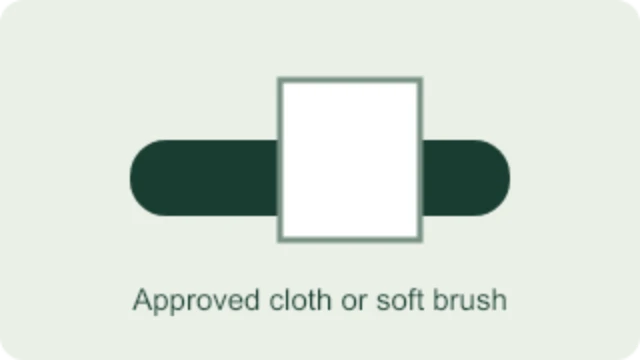
1. Clean gently
Work around the grip with the approved cloth or soft brush. Use controlled pressure and pay attention to the areas your hands contact most.
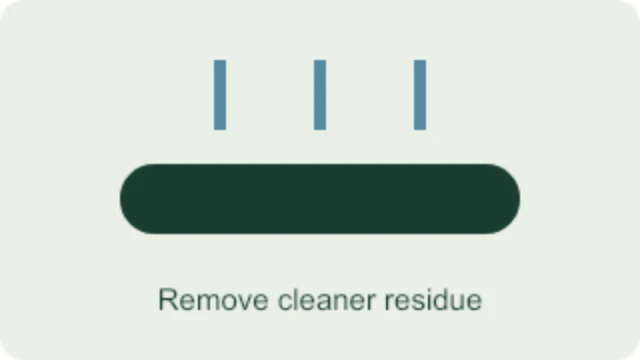
2. Remove residue
Remove the soap as directed without soaking the club or forcing water into the end-cap opening. Do not leave cleaner on the surface.
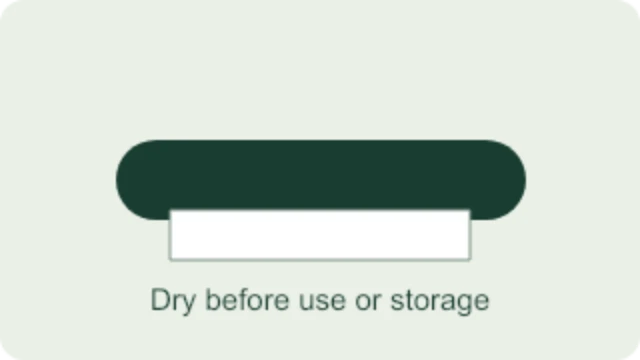
3. Dry and inspect
Pat dry, allow the grip to dry fully and inspect it before use. Judge the result when dry, not while the surface is wet.
Golf Pride’s grip-care guidance describes routine cleaning with soap, water and a soft brush; its official cleaning demonstration also shows a cloth option, rinsing and towel drying. Apply that approach only where appropriate for the grip you own. These diagrams illustrate the sequence, not a universal cleaning specification.
Do not use one cleaning rule for every material
A smooth or soft-feeling grip is not automatically a rubber grip. Before using alcohol, solvent, degreaser, household spray or an abrasive pad, look for explicit approval for that model. The absence of a warning on an unrelated product page is not approval. Likewise, avoid assuming that a method used to remove installation tape is suitable for maintaining the grip’s outer surface.
For identifying material options, see our golf grip material guide. Material selection and cleaning are related, but the finished coating and construction can change the care requirements.
Still slippery after cleaning? Check these separately
| Observation after drying | Next step |
|---|---|
| The surface still feels coated | Check that approved cleaner residue has been removed; do not add another chemical automatically |
| Texture is visibly worn or smooth in hand-contact areas | Ask a club professional whether replacement is appropriate |
| Grip rotates, seam lifts or material splits | Stop treating the issue as dirt; have the grip and installation checked |
| Only some clubs feel different | Compare model, condition and hand-contact pattern rather than cleaning every club more aggressively |
Build care into your playing routine
Inspect grips while putting the clubs away. A regular check is easier to maintain than a fixed calendar rule that ignores how the clubs are used. After a wet or muddy round, separate damp cleaning items from clean grips and let equipment dry before closing the bag for storage. Make a note of a problem club so it does not disappear into the set until the next round.
If cleaning no longer resolves the problem, use our grip replacement guide to understand the next task. If the main issue is fit, the grip size guide answers a different question: cleaning cannot change an unsuitable installed size.
Frequently asked questions
Can I clean every golf grip with dish soap?
No. Check the specific maker and model first. Some surfaces require a different cloth, cleaner or moisture limit.
Should I soak my clubs in a bucket?
Do not use soaking as the default grip-cleaning method. Follow the manufacturer’s instructions and avoid directing water into openings.
Can I use the same brush as my clubheads?
Only use a brush approved for the grip. A stiff or metal groove-cleaning brush is not a substitute for a soft grip-care brush.
How long should grips dry?
Allow them to dry fully before use or storage. The time depends on the surface, cleaning method and conditions; do not rely on one universal number.
How often should I clean golf grips?
Use the maker’s guidance and inspect according to use and conditions. Dirt, residue or a change in feel is a reason to check them.
Will cleaning repair worn grips?
No. Cleaning removes contamination; it does not rebuild texture, fix a loose installation or repair split material.
Planning accessories for a club, shop or event?
Explore custom golf grip options to discuss the item, artwork, quantity per SKU and destination. Standard products start at 200 per SKU, and logo, color or packaging customization starts at 500 per SKU. Sets are counted as sets. Ask for the sample and written specification for your chosen model before ordering.
Contact PASSEN about your project.