
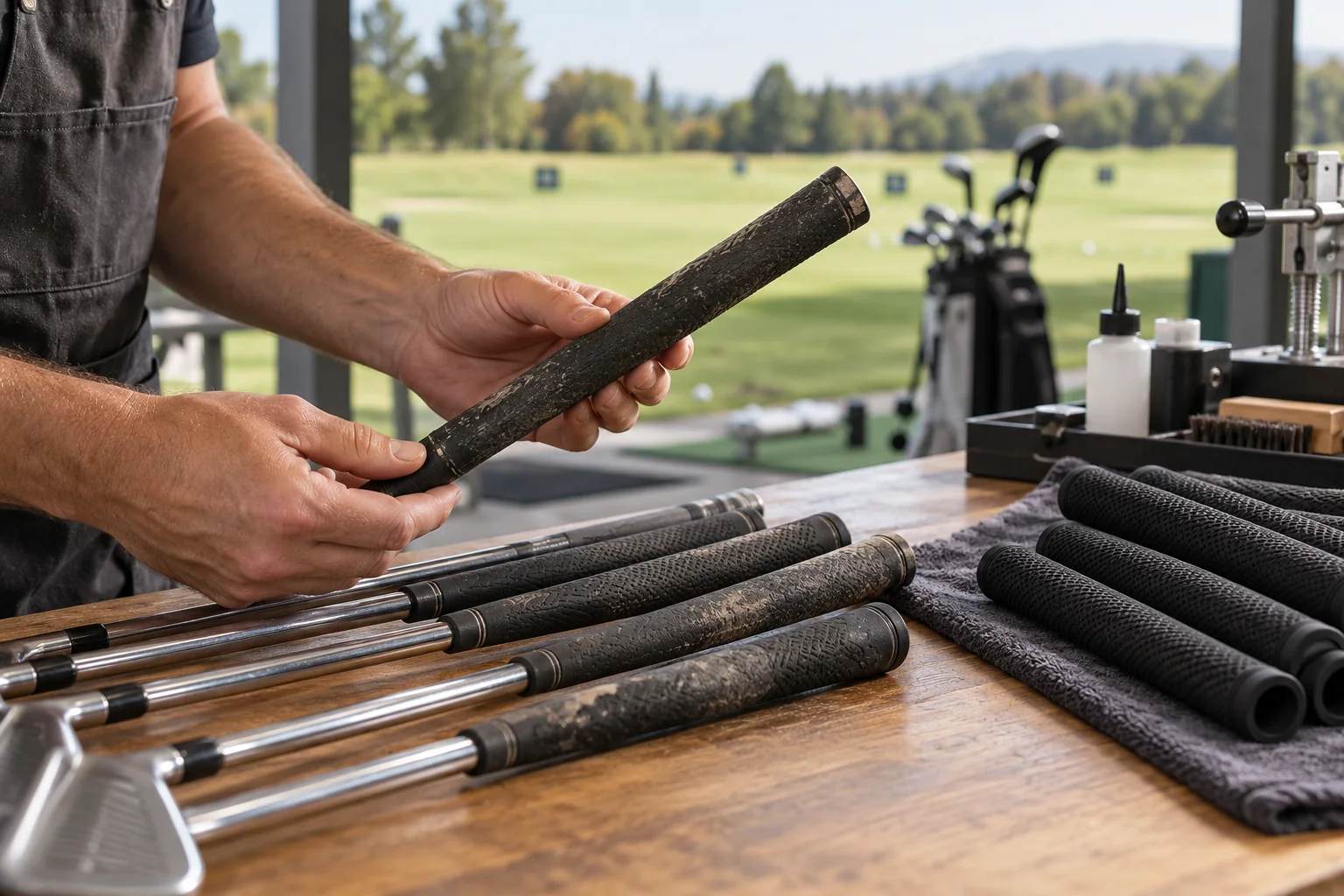
How often should you regrip golf clubs? For many active golfers, an annual inspection is a useful starting point, while replacement often falls somewhere around 12–18 months. Heavy play, frequent practice, heat, humidity and worn surface texture can shorten that interval. The condition of the grip matters more than a calendar date.
If you are deciding how often to regrip golf clubs, start with condition, playing frequency and storage rather than replacing every grip on an arbitrary date.
This guide explains what changes the replacement interval, how to inspect a set consistently and how clubs, retailers and golf brands can plan a repeatable regripping or private-label grip program.
A practical replacement schedule
| Playing pattern | Inspection starting point | What can shorten the interval |
|---|---|---|
| Heavy play and practice | Check several times during the season | High round count, range sessions, heat, sweat and frequent cleaning |
| Regular weekly golf | Inspect at the start and middle of the season | Humid storage, visible shine, hardened rubber or uneven wear |
| Occasional golf | Inspect before the main season | Age, UV exposure and long storage in a hot vehicle or garage |
| Rental, fitting or club fleet | Use a documented inspection cycle | Different users, high-use clubs and inconsistent care between sessions |
A grip can age even when the club is not being played. Rubber and other compounds change through time, heat, sunlight and contamination. That is why a lightly used but hardened grip may need replacement before a newer grip that has seen more rounds under better storage conditions.
Six signs a golf grip needs attention
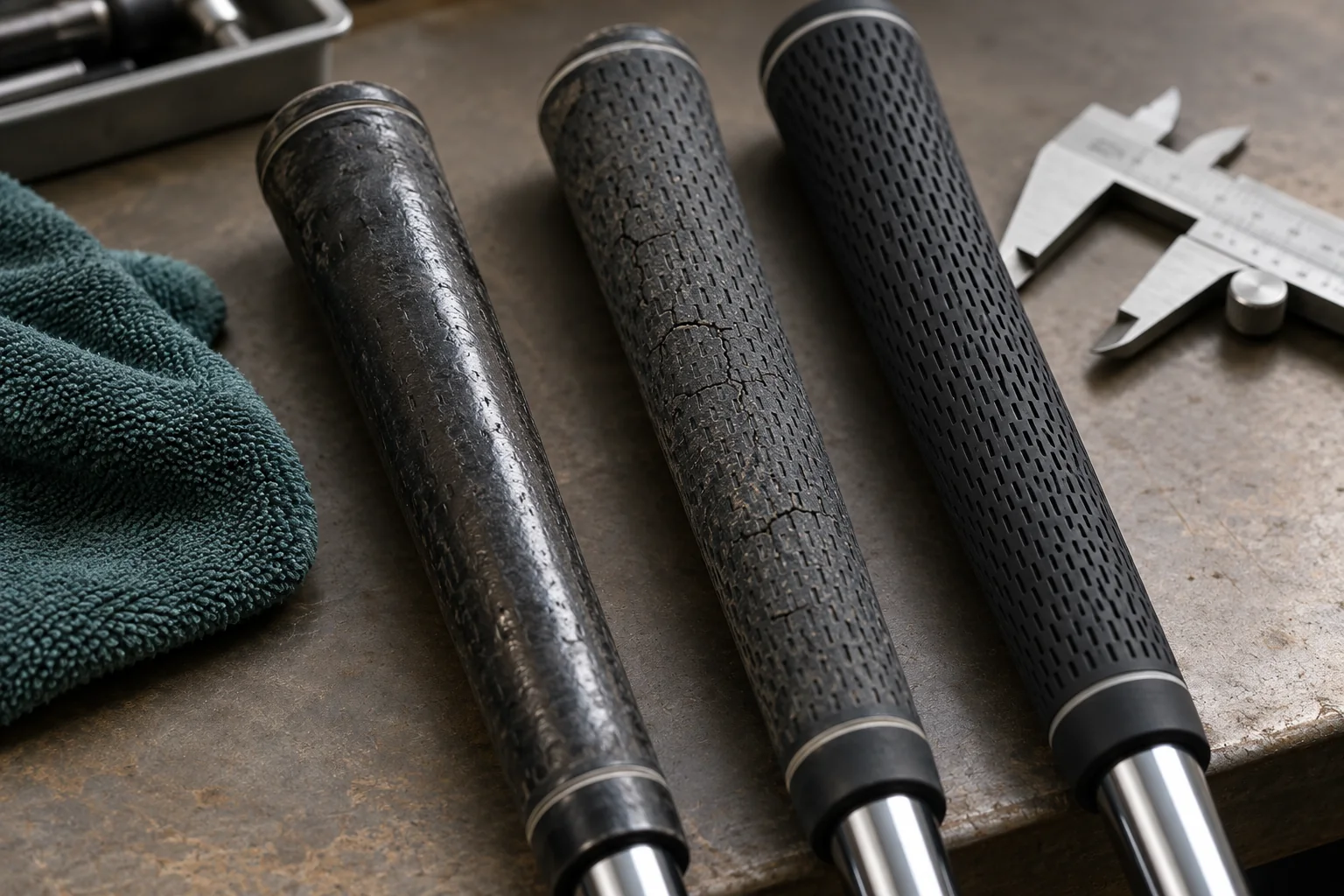
Glossy surface
A polished or shiny contact area often means the original texture has worn down.
Hard or brittle feel
A grip that no longer compresses as expected may have aged even if it has few visible marks.
Cracks or crumbling
Splits, loose cord or material loss are clear reasons to remove the grip from service.
Loss of traction
If the grip still feels slippery after suitable cleaning and drying, replacement is usually more useful than repeated cleaning.
Uneven wear
One thumb area or hand position may become smooth first, creating a different feel along the set.
Extra grip pressure
Needing to squeeze harder to control the club is a practical warning sign, even before severe damage appears.
Inspect every club under the same light and with clean, dry hands. Compare high-use clubs such as the driver, wedges and putter with clubs used less often. Mixed wear across a set is normal, so replacing only the affected grips can be reasonable when size, model and feel remain consistent.
What changes grip lifespan?
Rounds, range sessions and hand pressure
Round count alone does not capture total use. A golfer who practices several times each week can put more swings on a grip than a player with a higher number of casual rounds. Firm hand pressure also concentrates friction in the same zones.
Heat, sunlight and storage
Heat and UV exposure can accelerate hardening and fading. Leaving clubs in a vehicle for long periods may expose grips to conditions that are very different from indoor storage. Store clubs dry and away from direct sunlight where practical.
Moisture, oils and chemicals
Sweat, sunscreen, skin oils and dirt can fill surface texture. Clean grips with the method recommended for the selected material. Strong solvents or abrasive tools may change the surface and should not be assumed suitable for every compound.
Material and surface design
Soft tacky rubber, firmer compounds, cord, hybrid constructions and putter grips do not age in exactly the same way. A softer feel can trade some wear resistance for comfort; cord may retain wet-condition traction but can show fiber damage. Judge the complete grip rather than the material name alone.
Clean first, then decide
Dirt can make a usable grip feel slick. Before replacing an otherwise sound grip, follow a suitable cleaning routine: remove loose dirt, use mild soap and water where approved, brush textured areas gently, rinse and dry fully. Our golf grip cleaning guide covers the sequence in more detail.
Cleaning cannot restore missing texture, reverse hardening or repair cracks. Reinspect after the grip is completely dry. If traction returns and the surface remains sound, continue monitoring it. If slickness, hardness or damage remains, plan replacement.
Replace one grip or the complete set?
| Option | When it makes sense | What to check |
|---|---|---|
| Single grip | One club is damaged or receives much heavier use | Match model, size, weight, texture, alignment and color |
| Partial set | Driver, wedges or other frequently used clubs have worn faster | Keep hand feel consistent through the clubs used together |
| Complete set | Age, hardness or surface wear is similar across most clubs | Confirm quantity, core size, installed dimensions and swing-weight considerations |
| Fleet replacement | Rental, academy or fitting clubs follow a service schedule | Use batch records, inspection criteria and spare-stock planning |
If the replacement grip differs in weight or outside dimensions, assess the finished club rather than assuming the old setup will be preserved. The golf grip size guide explains how core size, shaft diameter and build-up interact.
Plan installation before ordering grips
For individual clubs, decide whether a trained workshop or a careful DIY process is appropriate. Correct removal, shaft preparation, tape coverage, activation method, seating and alignment all matter. Follow the grip, tape and solvent instructions for the chosen system. See our step-by-step regripping guide for the installation sequence.
For a club, retailer or private-label program, document the following before sampling:
- grip type, material direction, surface pattern and firmness target;
- club category, shaft butt diameter and required core size;
- finished outside dimensions and measurement points;
- grip weight and allowed tolerance;
- logo orientation, paint fill, color references and artwork version;
- tape and installation method used for approval;
- unit packaging, labels, barcode and carton requirements;
- quantity per SKU, destination and required arrival date.
Build a replacement program for clubs and retailers
A useful replacement program combines inspection, stock planning and a consistent specification. Record the installation date or incoming lot, identify high-use clubs and keep an approved sample. When a grip is replaced, note why: surface wear, damage, hardening, contamination, fit or a planned model change.
Retail programs should separate product quantity from workshop consumables. Grip tape, solvent or approved activation system, shaft protection, cutting tools and waste handling are operational inputs; they are not automatically included with a grip quotation. If kits are required, list every component and pack quantity.
For a custom range, compare the available constructions on the custom golf grips page. Send the intended player segment, size, feel, color, artwork and packing brief so samples can be assessed against the same criteria.
Frequently asked questions
Should golf grips be replaced every year?
An annual inspection is a useful starting point, but replacement should follow condition and use. Some heavily used grips need attention sooner, while lightly used grips stored well may remain serviceable longer.
Can cleaning make old grips tacky again?
Cleaning can remove dirt, oil and residue, but it cannot restore worn texture, reverse hardening or repair cracks. Inspect the grip again after it is fully dry.
Do all clubs need new grips at the same time?
No. High-use clubs may wear first. Replace individual grips or a partial set when the remaining grips still meet the required condition and the replacement can match size and feel.
Do putter grips last longer?
They often receive less force and fewer full swings, but age, oils, UV exposure and storage still affect them. Inspect surface feel, shape and attachment rather than relying only on age.
What information is needed for a custom grip sample?
Provide the club category, shaft reference, core and finished size, material and texture direction, grip weight, colors, logo artwork, packing, quantity per SKU and destination.
What is the MOQ for golf grips?
PASSEN's standard MOQ is 200 per SKU. Logo, color or packaging customization starts at 500 per SKU.
Plan a golf grip program
Send the grip profile, core and finished size, material and surface direction, weight target, colors, artwork, packaging, quantity per SKU and destination. PASSEN can review the specification and sample requirements before quotation.