
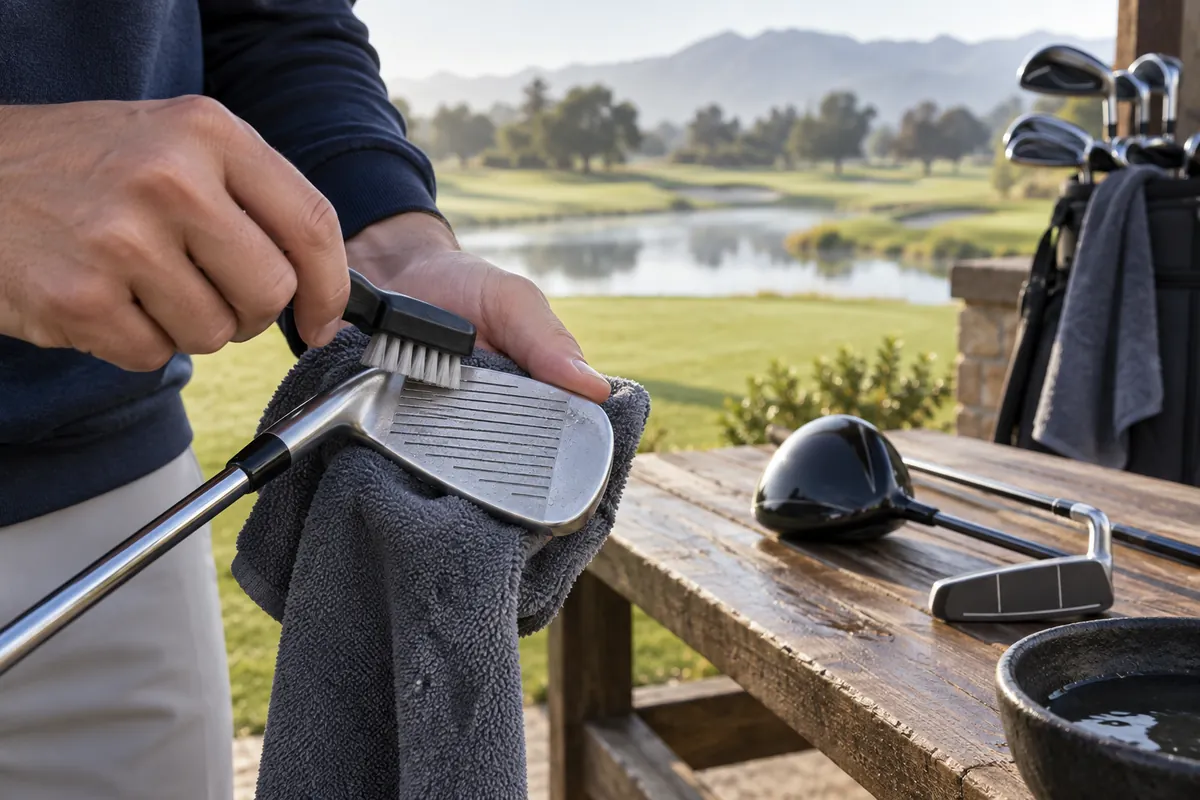
How to clean golf clubs safely begins with the least aggressive method that removes the dirt. Use a damp microfiber towel for a quick wipe; for an iron or wedge with packed soil, add mild soap and a soft nylon brush. Dry the head and grooves before putting the club away. Always check the club maker’s care instructions first, especially for unusual finishes or multi-material heads.
This guide separates the quick between-shot routine from a more careful after-round clean. It also explains where a brush, towel and grip-care tool fit, so you can build a practical cleaning kit without treating every club surface the same.
A short cleaning routine on the course
- Carry one damp towel for removing grass and soil and a separate dry area or towel for the final wipe.
- Wipe the club face after a shot. If soil remains in the grooves, use a soft nylon brush with light pressure.
- Keep the brush head away from delicate painted crowns and other finishes unless the club maker permits it.
- Dry the face and sole before returning the club to the bag; avoid leaving a wet towel against grips or headcovers.
A brush is most useful when dirt is trapped in iron and wedge grooves; a towel handles loose soil and moisture quickly. Our golf club brush guide compares brush heads and bag attachments, while the caddy towel guide covers size, fabric and hanging hardware.
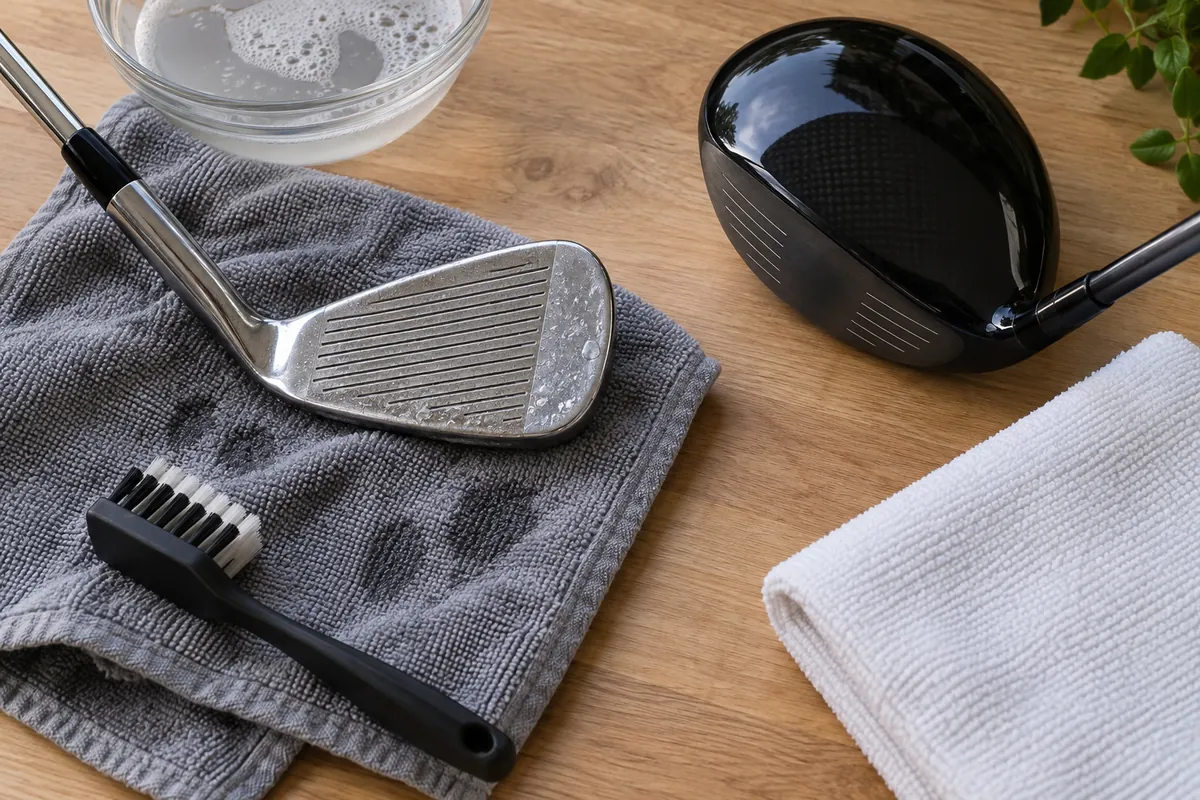
How to clean irons and wedges after a round
Prepare lukewarm water with a small amount of mild detergent, a soft nylon brush and a clean towel. Wipe off loose grit first. Moisten the club head or towel, brush the face and grooves gently, then wipe away soap and residue. Dry the face, back and sole thoroughly. Keep water away from the grip end and avoid prolonged soaking of the shaft, ferrule or any joint.
Work across the grooves instead of forcing a metal point into them. If a mark does not lift with light cleaning, stop and check the club maker’s finish guidance. A raw-finish wedge can be intended to develop surface rust; abrasive rust removal may change its finish. The aim is a clean playable face, not a refinishing treatment.
Drivers, fairway woods, hybrids and putters need a lighter touch
Modern heads can combine painted, composite and metal surfaces. Begin with a barely damp soft cloth and wipe the face, sole and crown separately. Use a soft brush only where the equipment maker allows it, and avoid scrubbing graphics, carbon areas, adjustable parts or decorative finishes. Dry around seams and weight ports without forcing water inside.
On a putter, clear loose debris with a cloth and clean the face insert according to that model’s care instructions. Keep cleaning liquid away from adhesive edges and cavities. When you are uncertain about a finish, test an inconspicuous area or contact the club maker before using a chemical or abrasive product.
Clean grips and shafts as separate surfaces
A grip accumulates hand oils and dirt even when the club head looks clean. Check its material and the grip maker’s instructions, then use a suitable damp cloth and mild soap when permitted. Rinse residue from the cloth and let the grip dry fully before play. Cracks, hard spots or a slick feel that remains after cleaning can indicate that replacement is more useful than more detergent. See our golf grip care guide for the full check.
Wipe the shaft with a clean damp cloth and dry it immediately, paying attention to the area near the ferrule. Do not use rust remover, polish or solvent on a shaft or club head unless the relevant maker approves it for that exact material and finish.
What to put in a compact golf club cleaning kit
- A microfiber towel with enough surface to reserve one cleaner area for drying.
- A soft nylon brush sized for iron and wedge faces, with a cover or storage position that keeps dirty bristles off other gear.
- A small source of clean water if the course does not provide one.
- A second dry cloth or towel section for the final wipe.
- A bag attachment that holds the tool securely but lets the player reach the club head.
For a club, event or retail program, approve the kit as a complete set. Check brush reach, attachment strength, towel size, the packed arrangement and whether every pictured component is actually included. The golf gift set guide explains how to specify combined accessories and packaging.
Avoid common cleaning mistakes
Avoid stiff wire brushes on an unknown finish, harsh household chemicals, abrasive pads and long soaking. Do not put a wet club into a closed cover for storage. Do not assume visible rust on every wedge is damage: some raw finishes change appearance by design. The safe method depends on the club model, so the manufacturer’s care advice takes priority over a general online tip.
Frequently asked questions
What is the best way to clean golf clubs after a round?
Wipe away loose dirt, use a soft nylon brush and mild soapy water only where the club maker permits it, then wipe and dry every cleaned surface. Treat painted or composite heads more gently than an ordinary iron face.
Can I soak golf clubs in water?
A long soak is unnecessary and can expose joints, ferrules, shafts and multi-material heads to moisture. Use a damp towel or briefly moisten the head according to the maker’s guidance instead.
Can I use a wire brush on golf clubs?
Do not use a wire brush as a default. Bristle material and pressure can affect a finish; begin with soft nylon and follow the club maker’s instructions for that specific head.
How do I clean golf club grooves?
Remove loose grit, brush the face gently with soft nylon when permitted, then wipe and dry. Do not force a sharp metal point into the grooves.
Should I remove rust from a raw wedge?
Not automatically. Some raw wedge finishes are designed to oxidize. Check the maker’s care instructions before trying to remove rust or polish the head.
How often should I clean golf clubs?
A brief face wipe during play and a check after each round prevents dirt from sitting on the equipment. A more thorough clean is useful when soil, oil or residue remains.
Plan a branded cleaning kit
Tell PASSEN which brush style, towel size, attachment, packing format and artwork you need, plus the quantity per SKU and delivery destination. Standard products generally start from 200 per SKU; logo, color or packaging customization starts from 500 per SKU. We will confirm the exact components, sample, price and schedule in the quotation.