
A golf caddy towel is a simple accessory, but a good one has to work in real use. It should be easy to reach on the golf bag, absorbent enough for clubs or balls, durable through washing, and secure at the attachment point. For a brand or event buyer, the product also needs to carry a logo cleanly and arrive in packaging that fits the sales channel.
This guide covers the decisions behind a private-label or bulk caddy towel program. The same points apply when the product is listed as a golf bag towel, tournament towel, resort gift, or branded club accessory.

Caddy Towel vs Golf Towel: What Changes?
“Golf towel” is the broad product name; “caddy towel” is used for more than one format. Do not choose by the label alone. Some caddie-style or tour towels are long and can drape over a club or bag, while compact towels attach with a clip or loop. For example, Titleist describes both a larger Tour Staff Towel and a smaller Players Towel. Those are examples, not standard dimensions for every supplier.
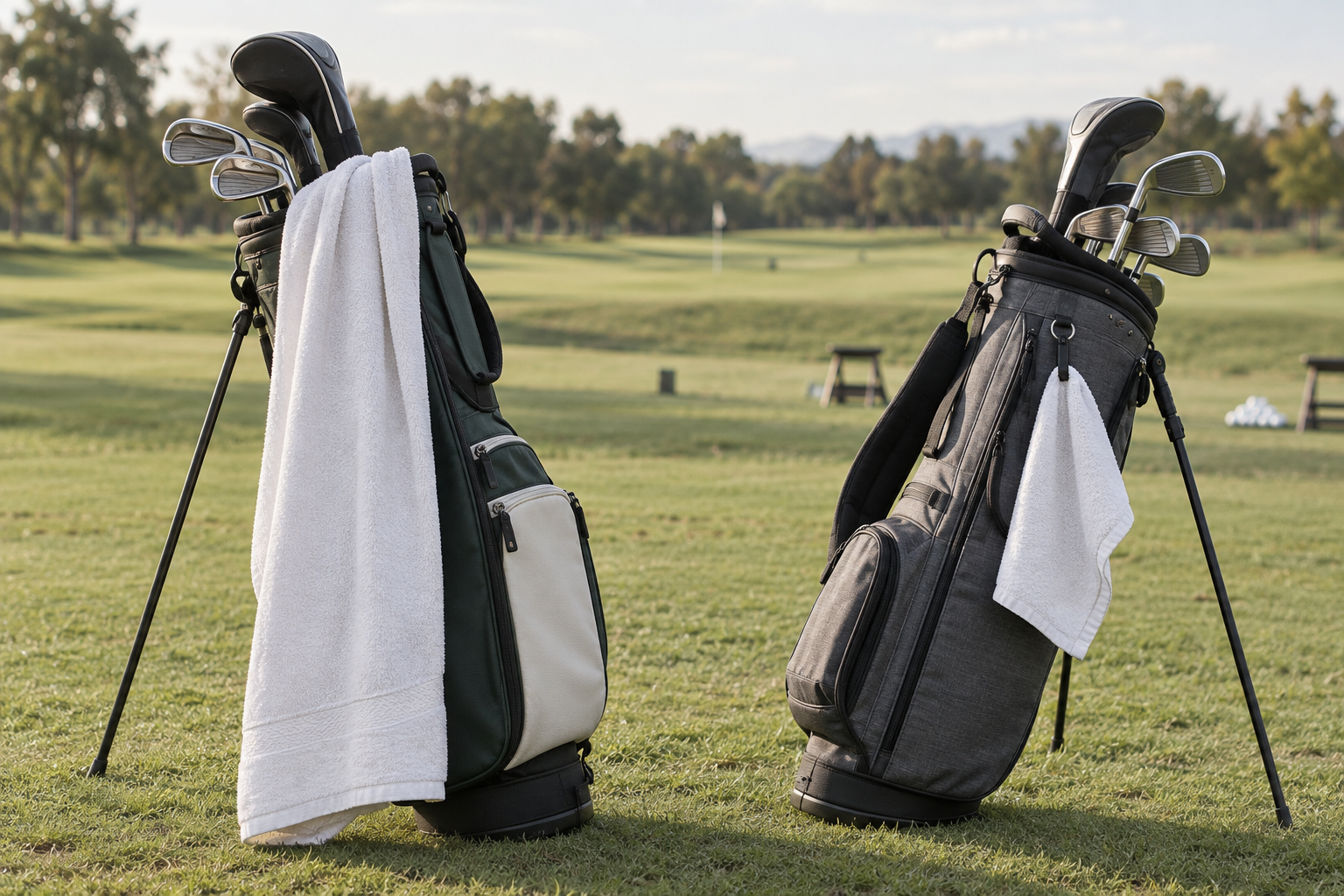
- Choose a draped format when generous wiping area and easy access across the bag matter; check how it hangs without touching the ground.
- Choose a clipped format when a fixed attachment point, compact packing or a smaller giveaway is more useful; test the clip, grommet or loop with the intended bag.
- For either format, specify finished size, fabric, edge finish, artwork area and attachment before requesting a sample. Compare the sample while hanging, folded and in the final pack.
Choose the Use Before the Fabric
A towel for a pro shop retail range may need a premium hand feel and a clean logo area. A tournament giveaway may prioritize quantity, color impact, and efficient individual packing. A resort or corporate program may want a coordinated towel that looks good on the bag and works as a practical take-home gift.
Clarify whether the towel is meant for wet club faces, quick wiping, hands, display, or a combination. That decision helps determine the fabric structure, size, weight, attachment, and decoration method.
Microfiber, Cotton, Waffle, and Terry Options
Microfiber can offer a light, quick-drying option with a smooth or fine surface that suits printed graphics. Cotton terry gives a familiar absorbent hand feel and can support a more substantial product. Waffle or textured weaves add visual interest and can dry differently from a flat surface. The best choice depends on the target customer and how the towel will be used, washed, displayed, and packed.
- Absorbency: consider the moisture and dirt the towel must handle rather than choosing fabric by appearance alone.
- Drying: a towel left on a bag needs a construction that does not stay unpleasantly wet for too long.
- Weight and bulk: larger or heavier towels feel more substantial but take more space in cartons.
- Color: dark colors can hide marks, while light colors can support a cleaner logo presentation.
- Wash behavior: test shrinkage, colorfastness, edge stability, and attachment security after representative washing.
- Decoration: embroidery, printing, labels, and patches have different effects on texture, cost, and artwork detail.

Size, Shape, and Edge Finishing
There is no single correct size for a caddy towel. A compact towel is easy to carry and pack, while a larger towel offers more cleaning area and a more visible branded surface. Rectangular, square, split, folded, and multi-layer constructions can all work when the finished product matches the use.
Define the finished size after hemming, the edge construction, corner shape, thickness, and the position of the attachment. These details affect the way the towel hangs, folds, and presents the logo. A sample should be checked both flat and attached to a representative golf bag.
Attachment Hardware Is Part of the Product
A hook or clip may look like a minor component, but it controls how the towel is used. Swivel hooks make access easy. Carabiner-style clips can feel secure and familiar. A grommet with a loop or webbing tab can create a simple, durable attachment with a different visual character.
Check the connection between the hardware and the fabric. The webbing, grommet, bar tack, or reinforcement should be sized for repeated pulling and movement on a golf bag. Confirm the hardware finish and test for sharp edges, opening function, rust risk, and attachment strength before bulk approval.
Logo Methods for a Towel Program
Embroidery can create a raised and durable brand mark, but stitch density and the fabric surface need to be considered. Printing can handle larger graphics or more colors on suitable surfaces. Woven labels and patches are useful when the brand wants a separate logo element or a consistent trim across several products.
Choose the logo position with the folded and hanging states in mind. Request a physical proof or sample, especially when the towel has a heavy texture or a border. The final result should be judged on the finished fabric, not only on a flat digital artwork file.

Packaging for Retail, Events, and Shipping
Packaging can be as simple as an individual poly bag and hang tag or as polished as a folded towel in a gift box. Decide whether the towel will hang on a retail rack, sit in a tournament welcome pack, ship as part of a golf gift set, or go directly to a warehouse. That determines the label, barcode, insert, carton quantity, and protection required.
Run a packing trial with the finished towel, attachment, and packaging. It is common for hardware or folded thickness to change the carton fit. A small trial also confirms that the logo remains visible and the towel arrives clean, dry, and free of crushed edges.
Sampling and Bulk Quality Checks
Approve the fabric, finished size, weight, color, edge finish, attachment, decoration, and packaging on a physical sample. Wash or stress-test the sample when the program depends on repeated use. Check the logo after handling and inspect the hardware connection from both sides of the towel.
For bulk production, the quality plan can include incoming fabric and hardware inspection, cutting, sewing, embroidery or printing, attachment strength, final appearance, quantity, and packing. Retain the approved sample and artwork for repeat orders so a later batch is compared with the same reference.
Why PASSEN Helps With a Complete Golf Accessory Program
PASSEN Craft&Tech was founded by manufacturing engineers and brings more than 20 years of golf manufacturing and supply-chain experience. The team has completed 500+ OEM projects for customers in 35+ countries, with a published 97% on-time delivery rate. That matters when towels need to match golf bags, head covers, grips, gift sets, or an event delivery schedule.
After the requirements are clear, PASSEN normally provides an initial feasibility response and quote within 24 hours. A physical sample is typically developed in 7-10 days, depending on the product. The service can cover fabric selection, logo development, packaging, sampling, and incoming, in-process, and final quality checkpoints. Review the custom golf towels OEM page, the OEM service process, or send a complete towel brief through the form below.
FAQ
What is a golf caddy towel used for?
A golf caddy towel is a compact towel carried on a golf bag for cleaning clubs, balls, hands, or small equipment during a round. Its attachment method and size should match how the target golfer will reach and use it.
Which fabric works best for a custom golf caddy towel?
Microfiber, cotton terry, waffle weave, and other constructions can work well. The choice depends on absorbency, drying speed, texture, weight, color, target price, and the branding process. A physical fabric comparison is useful before production.
How can a golf caddy towel be attached to a golf bag?
Common options include a swivel hook, carabiner-style clip, D-ring, grommet and loop, webbing tab, or other bag attachment. Buyers should check the hardware finish, load, corrosion resistance, and stitching around the attachment point.
Can caddy towels be customized with a logo and packaging?
Yes. Logos can be embroidered, printed, woven, or applied through a label or patch depending on the fabric and artwork. Individual bags, hang tags, sleeves, gift boxes, and coordinated cartons can also be specified.
What should be included in a bulk golf caddy towel specification?
Include towel size, fabric and weight, color, edge finish, attachment style, hardware, logo method and position, packaging, quantity, inspection points, destination, and required date. A reference towel or fabric swatch helps the supplier quote accurately.