

Golf grip weight matters when a clubmaker wants a consistent finished club and when a brand is comparing replacement grips across a range. Yet the gram figure is only one part of the decision. A grip must also fit the hand, install correctly on the shaft, deliver the requested texture and keep its shape from sample to bulk order.
This guide is for buyers planning a grip line, repair program or branded set. If size is the main question, start with the golf grip size chart and the midsize versus standard comparison.
Prepare a golf grip quotation brief
Send the intended club category, shaft butt size, grip size, taper preference, material direction, texture, requested weight target or allowable range, logo artwork, color reference, quantity per SKU, packing and destination. State whether the goal is to match an existing grip or develop a new feel.
Use the custom golf grips page to discuss construction and samples. PASSEN can review the requested configuration and quote against the approved brief; this article does not represent a fixed weight for an unselected product.
Why golf grip weight changes a club's feel
The grip sits at the handle end of the club. A different grip mass changes the club's total weight and can change a swing-weight scale reading because that scale responds to weight distribution. This does not automatically tell you whether a player will prefer the finished club. Texture, diameter, taper and firmness also influence perceived control.
Do not promise a particular swing-weight point change from a generic rule of thumb. The outcome depends on the complete club, exact grips and measuring method. When replacing a grip in a fitted club, record the original and replacement mass, install the proposed grip and measure the finished club again. Have a qualified club fitter decide whether any head-weight adjustment is appropriate.
What to measure before comparing grips
| Item | Request or check | Why it matters |
|---|---|---|
| Individual grip mass | Weigh the actual sample, including the end cap | Establishes a real baseline for the chosen model |
| Size and core | State outer size, core size and shaft butt compatibility | Prevents a lighter but incorrectly fitting substitution |
| Length and taper | Compare finished length and diameter profile | Changes hand position and perceived grip volume |
| Material and texture | Review compound, surface pattern, firmness and wet feel | Controls the actual use experience |
| Unit and batch variation | Agree how samples will be measured across a batch | Supports consistent regripping and retail packs |
A nominal product label should never replace a physical sample. Agree the measured unit, tolerance and test condition for the selected construction in the quotation. Do not apply a weight target from one grip size to another without a fresh review.
Compare golf grip weight across samples
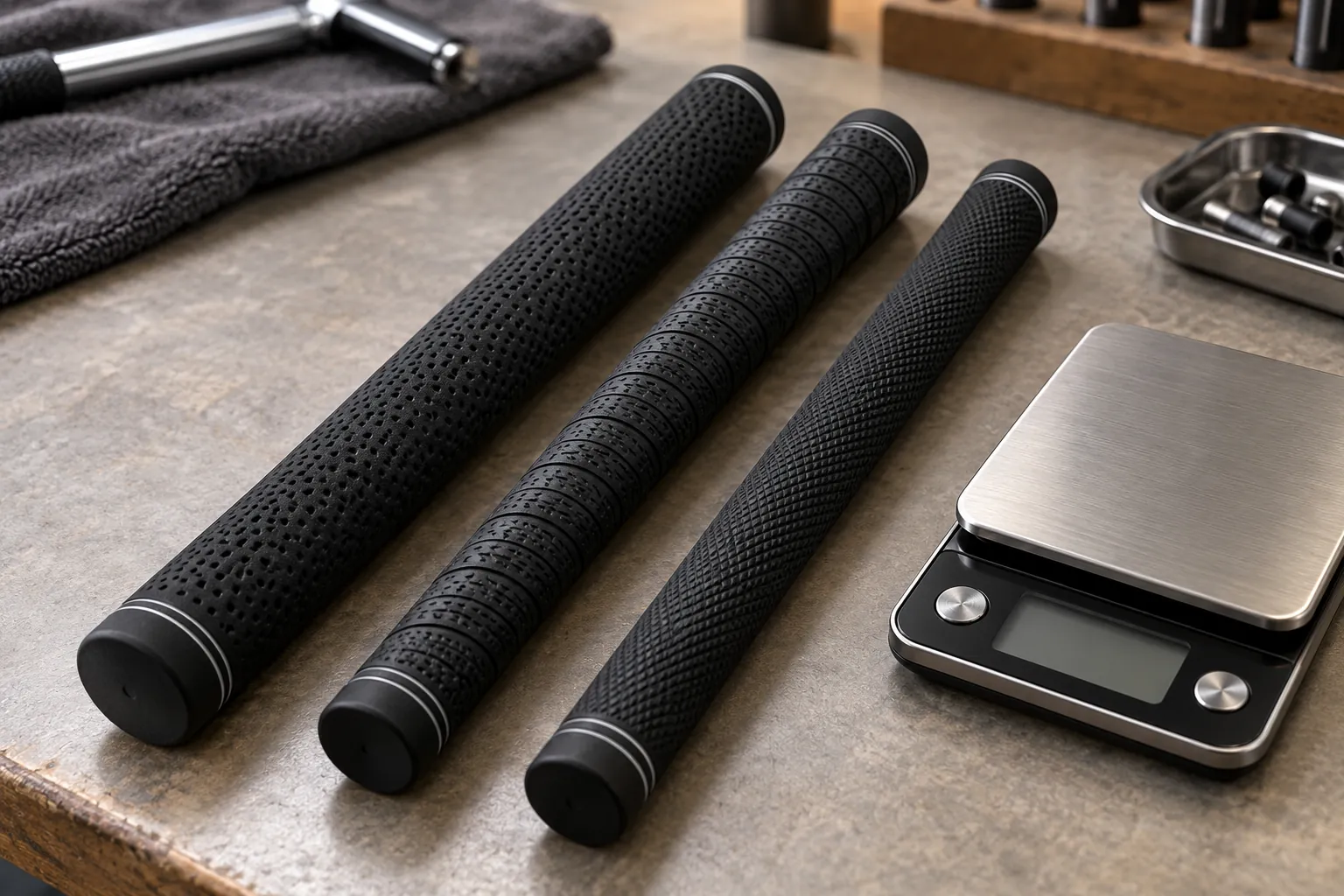
Match the installation
Use the same shaft type, tape method and club build for the sample comparison.
Weigh each grip
Record actual sample mass and model details rather than relying only on a catalog value.
Measure the clubs
Check finished total weight and swing-weight reading using one method.
Ask players to handle them
Test grip fit, tack, texture and comfort in the intended conditions before choosing the approved reference.
Keep the chosen installed sample as a reference for later production review. A loose grip may feel comfortable in a hand but perform differently when installed with the club's balance and shaft diameter.
Light, standard and heavier grip directions
A lighter design can help when total club mass is a priority. A heavier design may suit a different balance or feel preference. Neither is universally better. The useful decision is whether the mass suits the target club and whether the grip still meets durability, fit and appearance requirements.
For an OEM range, group candidate grips by club use and hand fit instead of marketing every model around grams alone. A repair shop may need a replacement close to the original specification, while a new club program can evaluate grip and clubhead choices together. A putter grip brings its own shape and weight considerations; see the putter grip guide.
Material and construction can change the result
Compound
Rubber, synthetic blends and other constructions differ in feel. Confirm the actual proposed compound rather than assuming one category has a fixed mass.
Core and wall
Core geometry and wall thickness affect both installation fit and mass. Verify shaft compatibility on the sample.
Surface pattern
Texture changes contact and cleaning. Choose the pattern for the intended player and conditions.
Taper
A reduced-taper profile changes the lower-hand feel. Compare it separately from weight.
Decoration
Embossing, printed marks and color details should remain legible and correctly positioned after installation.
Packing
Individual sleeves or kits protect the surface but change packed weight and logistics, not the grip's installed mass.
For material choices, read how to choose golf grip material. Keep material, size and weight as separate fields in the product brief so a change in one does not silently alter the others.
Bulk approval checks for grip weight
Agree a reference sample, target measurement method and acceptable variation before production. Inspect more than one grip from a batch. Check mass, appearance, end-cap finish, core fit, dimensions and surface consistency. Install representative samples to catch issues that weighing alone cannot reveal.
If a design uses multiple colorways or sizes, treat each as its own SKU. Do not assume a different pigment, surface pattern or size leaves the finished mass unchanged. Ask for a sample from the exact configuration being ordered. The wholesale grip checklist provides a wider supplier-review framework.
Frequently asked questions
Does a heavier golf grip change swing weight?
It can change the scale reading because mass is added near the handle. The exact result depends on the complete club, so measure the installed sample.
Is a lighter grip automatically better?
No. Evaluate hand fit, texture, durability and club balance with the intended user and club build.
Can two grips of the same size weigh differently?
Yes. Material, wall, core, pattern and construction may differ. Weigh the actual candidate samples.
Should I compare a putter grip with an iron grip?
They serve different club and hand-feel needs. Compare models within the intended club category.
What should a supplier specify for grip weight?
Ask for the measurement method, target mass and agreed variation for the selected size and construction.
What should I include in a custom grip request?
Include club use, shaft and grip sizes, material, surface, weight direction, artwork, quantity per SKU, packing and destination.
Compare the grip on the club, not just on the scale
Share your target club build, fit requirements, weight direction and artwork. PASSEN can review the sample specification and quotation.