

How to wash golf towels depends on the towel's fiber, decoration and attachment. A plain cotton towel, a printed microfiber towel and an embroidered magnetic towel should not all be treated as identical. Start with the care label for the exact product, remove loose dirt, protect hardware and dry the towel fully before packing it away.
This page explains a practical routine and the questions a club, brand or event buyer should settle before ordering. For fabric selection, compare microfiber, cotton and waffle construction; the cleaning steps below apply only where they match the specific towel's approved care label.
How to wash golf towels in a branded product program
Specify towel type, actual fiber composition, surface construction, finished size, fabric weight direction, color references, hem, attachment, logo method and placement. Add the desired care-label language only as a proposed requirement until the sample has passed that routine. Include quantity per SKU, packaging, destination and required date.
Visit the custom golf towels page to review available directions and send the brief. PASSEN can discuss the sample construction and care verification before a final label or bulk production decision.
Check the towel before washing
Look for the fiber composition, logo method and any care label. Remove a detachable carabiner or clip, and follow the maker's instructions for a magnetic assembly or non-removable attachment. Inspect grommets, straps and stitching. If a metal component is damaged or a magnet is loose, address that issue before machine washing.
Shake out loose sand and grass away from other laundry. Rinse heavy mud before a normal wash so abrasive particles do not stay trapped in the pile or waffle structure. Separate dark or newly colored towels from pale items when color transfer is a concern. Do not assume a towel is colorfast until its exact dyed and decorated sample has been checked.
How to wash golf towels step by step
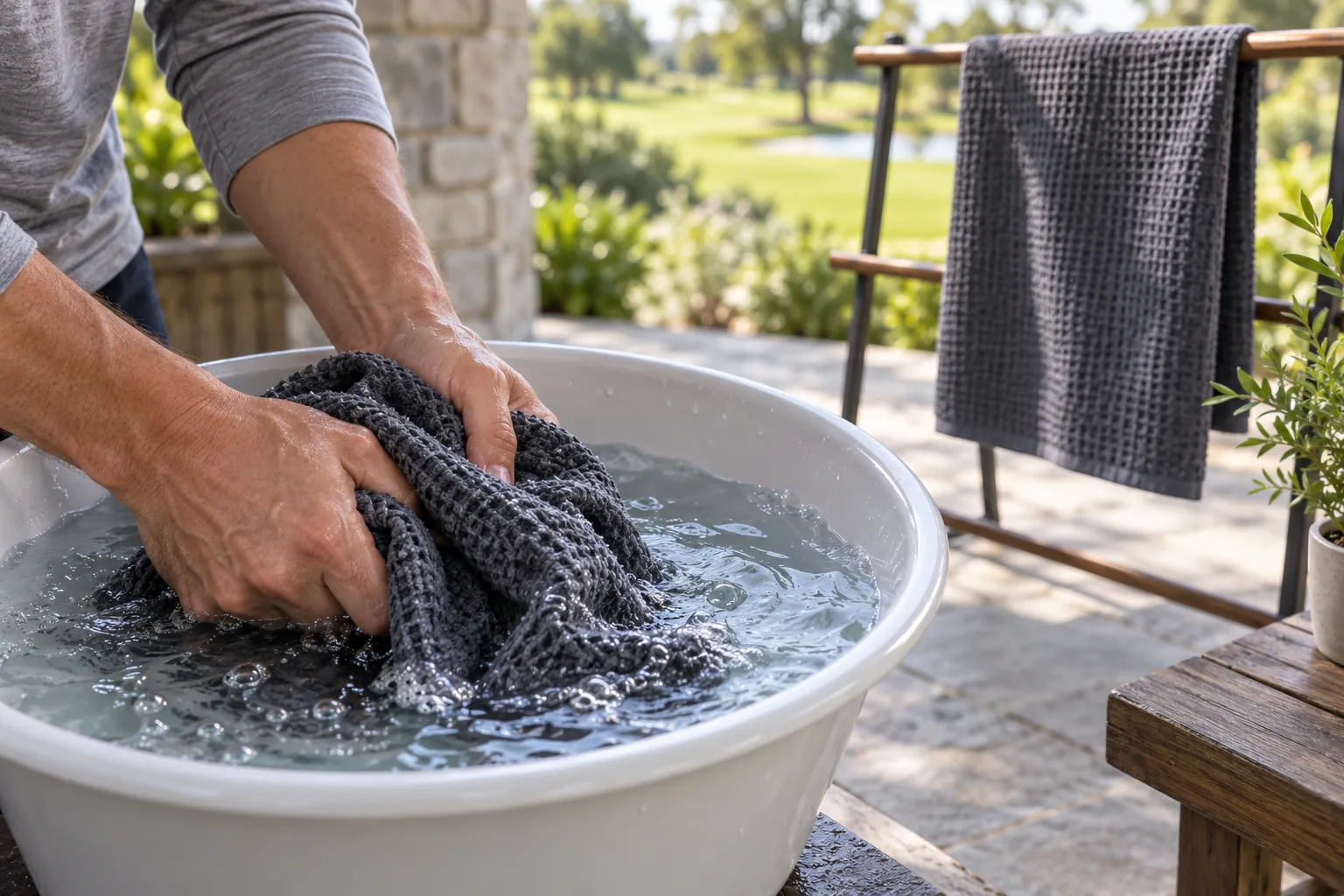
Remove loose grit
Shake and rinse the towel, paying attention to muddy folds and textured surfaces.
Protect attachments
Detach removable hardware. Follow the approved care instruction for any sewn-in magnet, patch or decorative part.
Wash by the label
Choose the permitted water temperature and cycle with an appropriate mild detergent. Do not overload the machine.
Dry fully
Use the approved drying method, then confirm the towel, hems and attachment area are dry before storage.
A gentle hand wash can be useful for an uncertain decorated sample while you confirm its care requirements. For a branded bulk order, test the chosen wash cycle on a decorated sample and record the result. The label should be written around validated construction, not a generic statement copied from another towel.
Microfiber, cotton and waffle towels need different attention
| Towel construction | What to inspect | Care-planning question |
|---|---|---|
| Microfiber | Fine fibers, surface feel and absorbency after washing | Does the approved care label prohibit softener or high heat? |
| Cotton loop or velour | Lint, shrinkage, pile appearance and hem shape | Has the finished towel been washed before size is approved? |
| Waffle texture | Texture, edge curl and debris held in recesses | Is the surface clean and flat after the proposed cycle? |
| Decorated towel | Artwork color, stitch, patch or print condition | Does the branding survive the agreed care test? |
| Attachment-led towel | Grommet, loop, snap or magnetic assembly | Can hardware be removed or safely washed as supplied? |
Waffle describes a surface construction, not a fiber composition. A waffle towel may be made with different fibers. Likewise, “microfiber” alone does not state the exact blend. Ask for the actual composition and finished sample before finalizing care language or labeling.
What to avoid
Do not use bleach, fabric softener or high drying heat unless the specific product label permits it. These treatments may affect fibers, color, absorbency or decoration. Keep hook-and-loop fasteners and rough hardware away from exposed loops where they can snag the towel. Never iron over a printed logo, plastic fitting or magnet assembly without a validated instruction.
A towel used to clean club grooves can collect grit and residue. Regular washing helps prevent soil from building up, but aggressive scrubbing at embroidered or printed artwork may wear the decoration. If a stain is difficult, test any spot treatment on an inconspicuous area or ask for product-specific guidance.
How to dry and store golf towels
Dry the full towel rather than just the visible face. Folds, thick hems and attachment corners can hold moisture. If the care label permits tumble drying, use its stated settings. Otherwise hang the towel where air can circulate. Avoid storing a damp towel inside a sealed golf bag pocket or shipping pouch.
Before retail packing, inspect for odor, staining, stretched loops, distorted edges and loose hardware. The golf towel size guide explains how a finished towel's dimensions, fold and hanging clearance work together; care testing should confirm those dimensions remain acceptable.
Care instructions are part of the custom specification
Fiber composition
Record the actual blend and selected construction. A generic surface name is not a substitute for a material statement.
Color and artwork
Test colorfastness and decoration with the approved wash method. Check the finished appearance after drying.
Edges and hanging point
Look for seam distortion, corner wear, grommet movement and strap or magnet security.
Label copy
Write the final care instruction only after confirming the sample and intended destination requirements.
Packaging
Pack only dry, clean towels. Place care information where the end user can find it.
Repeat orders
Keep the approved sample and care result so color, fabric and decoration can be compared on a reorder.
Logo placement and method matter here. Embroidery, print, patch and label each create different inspection points. See the embroidered towel guide and decoration comparison when preparing artwork.
Frequently asked questions
Can golf towels go in a washing machine?
Only if the care label for the exact towel permits it. Remove detachable hardware and follow the stated cycle, temperature and drying directions.
Should I use fabric softener on microfiber golf towels?
Follow the product label. Many microfiber care directions avoid softener because it can affect the surface; test the actual construction before issuing care copy.
Can I wash a towel with a magnetic attachment?
Follow the maker's instructions for that assembly. Detach removable parts and test any sewn-in construction before machine washing.
Why does a towel still smell after washing?
Trapped soil or incomplete drying can contribute. Rinse grit thoroughly and dry the towel, hems and attachment area fully before storage.
Will embroidered logos survive repeated washing?
That depends on the thread, backing, fabric and care cycle. Approve and test a decorated sample rather than assuming a generic result.
What care information should a custom towel order include?
Include composition, construction, decoration, hardware, proposed care cycle, test acceptance, quantity per SKU and packaging.
Choose a towel that stays presentable after use
Send your fabric, attachment, logo, care and packing requirements. PASSEN can review a sample plan and quote the chosen construction.