
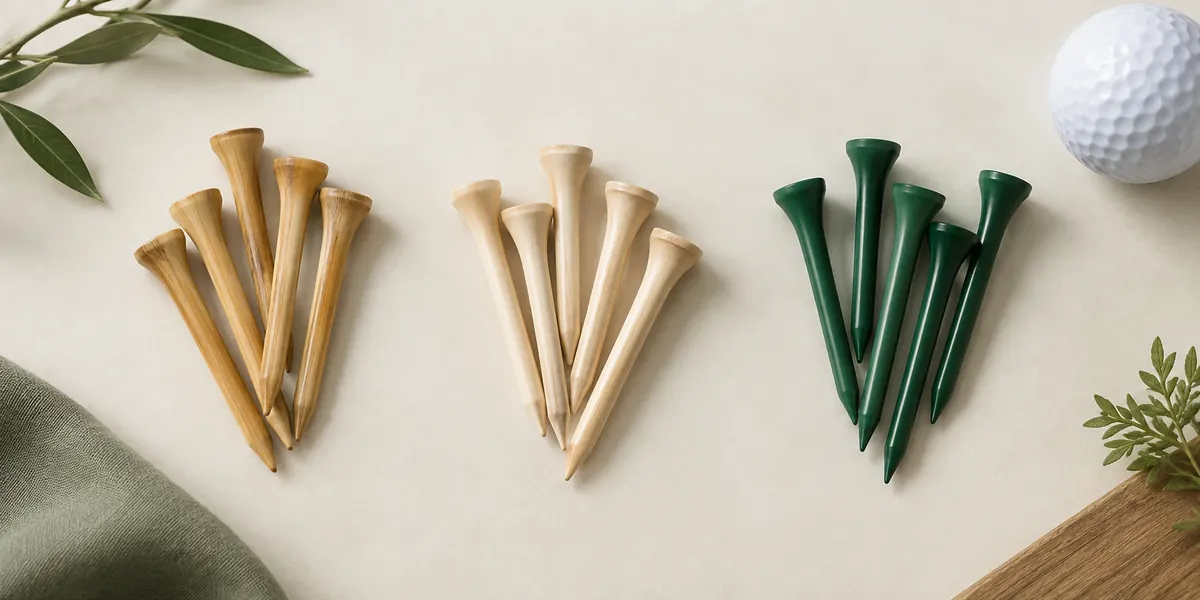
A golf tees buying guide for pro shops should connect player use with a clear stocking and reorder plan. Choose the core lengths and materials first, then decide pack count, artwork and display. Avoid building the assortment around unverified performance claims or a unit price that excludes packaging and freight.
This page focuses on retail and club-shop purchasing. For player setup, use the golf tee selection guide. For a deeper material comparison, see bamboo vs plastic vs wooden golf tees.
Start with the customer and the club mix
| Shop need | Assortment question | What to verify |
|---|---|---|
| Everyday replacement | Which lengths and materials do most customers request? | Clear pack label and easy-to-understand size information |
| Driver-focused purchase | Does the selected length provide enough exposed height for the intended setup? | Total tee length is not presented as a universal tee height |
| Iron or par-three use | Is a shorter option useful for the shop's customer mix? | Length, cup shape and package count are clearly separated |
| Course or event branding | Will one logo and color serve the whole order? | Artwork area, contrast, quantity per version and packing |
| Gift or welcome pack | How many tees belong in each assembled set? | Component count and finished set quantity both appear in the quotation |
Build a compact core assortment
Start with a small number of clearly different choices rather than several nearly identical SKUs. A core assortment may separate everyday packs, a longer driver-oriented option, a shorter option and a branded or gift-pack version. The exact range should follow the shop's customers and sales records.
Give each SKU one primary reason to exist. If two packs use the same tee but differ only in artwork, make the difference visible on the label. If two lengths look similar, use a clear length callout and a distinct reorder code. This reduces staff errors and helps customers select without opening the package.
When testing a new material or pack count, introduce it as a measured trial. Record units received, units sold, the time period and any customer questions. Reorder decisions should use the shop's actual movement rather than a universal sales claim.
Choose length by setup, then label it clearly
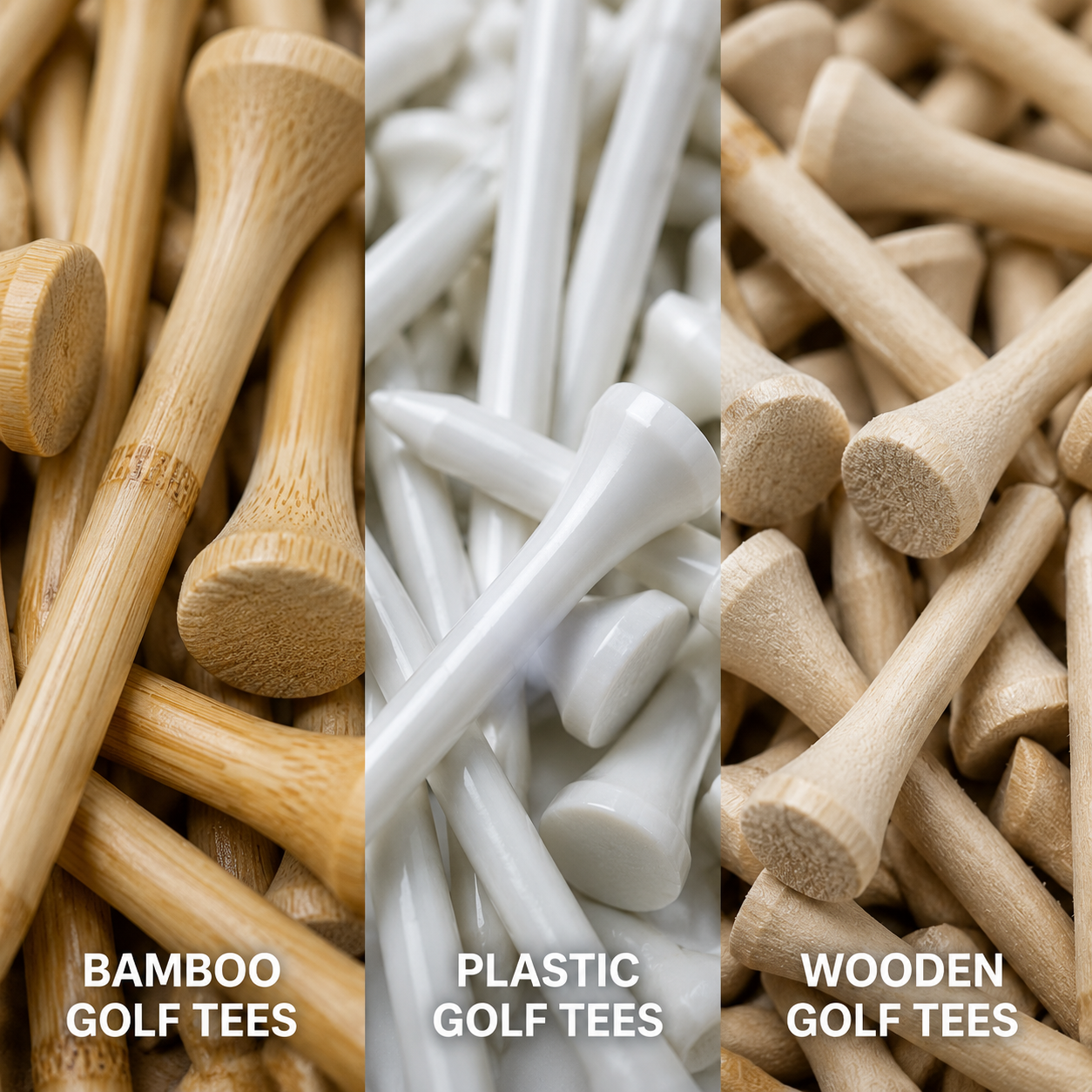
Total tee length tells the buyer how much material is available above and below the ground. Exposed height is the portion above the turf after insertion. The relationship between the ball and clubface is a separate setup check. Do not treat one printed stripe or one tee length as a universal answer for every player and club.
For retail packs, show the finished tee length in a familiar unit and make the pack count easy to find. If several lengths share similar packaging, use a clear color or label system so staff and customers can distinguish them without opening the pack.
Compare wood, bamboo and plastic as complete products
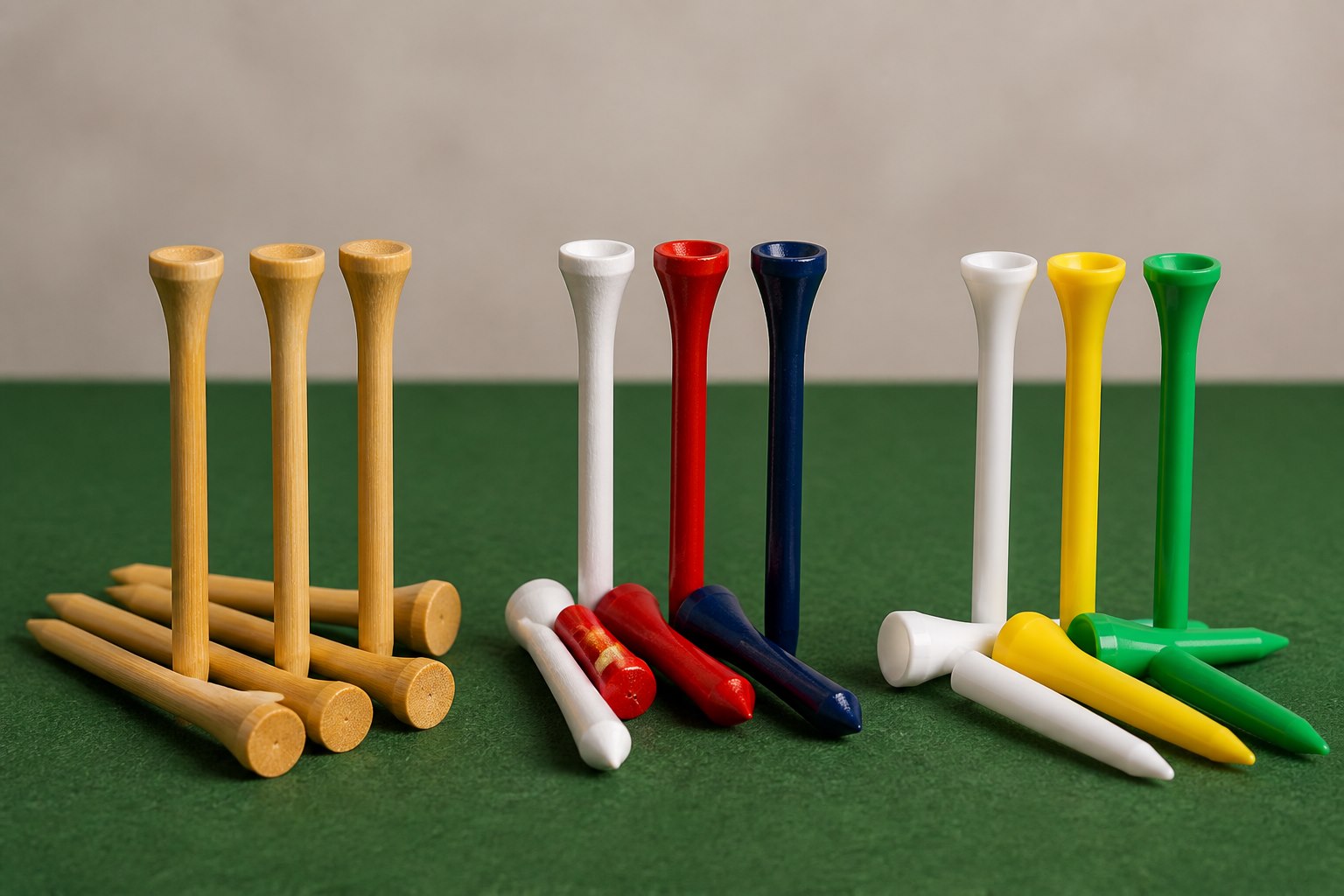
| Material direction | Buyer should compare | Claim to avoid without evidence |
|---|---|---|
| Wood | Grain, straightness, finish, breakage in the intended use and decoration consistency | A universal durability or performance result |
| Bamboo | Material identification, surface finish, print result, packaging and any environmental documentation | Automatic biodegradability or sustainability for every finished product |
| Plastic | Resin specification, shape consistency, flexibility, color and local disposal requirements | Guaranteed distance, accuracy or unlimited reuse |
Material alone does not establish the finished product's life, environmental impact or playing result. Compare samples under the same use and request support for any claim that will appear on retail packaging.
Separate tee count, pack count and SKU count
Write all three quantities in the purchasing brief. For example, a 100-piece retail pack is one pack containing 100 tees; it is not 100 packs. Different lengths, colors, materials or artwork versions may be separate SKUs and should be quoted separately.
Use current product references carefully
| Reference | Current listing distinction | What to confirm |
|---|---|---|
| 88-9K striped bamboo tees | 70 mm and 83 mm length references with stripe color options | Selected length, material, stripe purpose, artwork and pack format |
| KIB-5 100-piece tee pack | 70 mm and 83 mm references; white, red or natural color references | Material wording, total tee count, number of packs and customization scope |
These references help structure a request. The quotation and approved sample define the ordered SKU. A related image or article does not add an unlisted specification to the order.
Plan packaging and display together

Pack format
Choose bag, box, tube or another confirmed format around count, protection, label space and how staff will replenish it.
Display face
Keep material, length and quantity readable. Test the hanging hole, base stability or shelf footprint on the intended fixture.
Reorder code
Use a distinct SKU or label code for every approved combination of material, length, color, artwork and pack count.
Compare landed cost per finished retail pack, not only cost per loose tee. Include decoration, packaging, labels, cartons and freight where applicable. Set the retail price using the shop's actual costs and margin policy; no one percentage fits every market.
Make the display answer the first buying questions
A customer should be able to identify the material, length, quantity and intended use from the front and side of the pack. Keep required warnings or material statements readable and verify the barcode or SKU label after the final design is applied.
Test the package on the actual hook, shelf, counter tray or welcome-pack assembly. Check that it hangs straight, does not tear around the display hole and can be replenished without mixing variants. If a counter container is used, the individual pack still needs enough identification to support checkout and reordering.
Place complementary items together only when the grouping is useful. A tee pack near ball markers or a small towel can support an event or starter-set story, but each product and price should remain clear. Combined presentation does not mean the items are sold or quoted as one set.
Use sales and stock data for reorders
| Measure | What it tells the buyer | Decision it supports |
|---|---|---|
| Units sold by SKU | Which material, length and pack count customers select | Increase, maintain or reduce the next order |
| Weeks of cover | How long current stock may last at the recent sales rate | When to start quotation and production planning |
| Stockouts | Whether demand was missed or moved to another SKU | Adjust safety stock or assortment balance |
| Markdowns or aged stock | Which versions are slow or too similar | Simplify the range before reordering |
| Customer questions | Where labels or product differences are unclear | Improve the next package or display |
Allow time for artwork, samples, production and transport when the order is customized. Use the supplier's schedule for the confirmed configuration and destination. Do not wait for the shelf to be empty before starting a custom reorder.
Approve samples and bulk checks
- Measure finished length and check cup shape, point, straightness and surface.
- Review color, stripe and artwork at actual size.
- Count tees in the finished pack and verify the label.
- Check package closure and display fit.
- Confirm carton count, SKU marks and destination information.
For custom orders, keep the approved tee and packed sample with the written specification. This gives receiving teams a practical reference and makes reorders easier to compare.
At receiving, sample more than one carton where possible. Separate cosmetic variation from functional defects using the agreed acceptance criteria. Record any count or label problem by SKU and carton so the supplier can trace the affected quantity.
Frequently asked questions
What golf tee lengths should a pro shop stock?
Use customer demand, club mix and local playing conditions to choose the core range. Offer clear length labels and avoid presenting one length as universal for every driver or player.
Are bamboo tees automatically more sustainable?
No single material label proves the environmental result of every finished product. Confirm composition, coatings, packaging, sourcing information and the claims allowed in the target market.
Do plastic tees guarantee more distance or accuracy?
Do not make that promise without reliable evidence for the specific product and test. Select by fit, consistency, durability, customer preference and the approved specification.
Can tees be printed with a course or event logo?
Customization can be reviewed for the selected tee. Confirm the printable area, artwork, color, quantity per version and packaging before approval.
How should shops compare tee quotations?
Compare the same material, length, finish, decoration, pack count, packaging, carton quantity and delivery destination. Separate tee count from pack count.
What is the MOQ for custom golf tees?
Standard MOQ is 200 per SKU, while logo, color or packaging customization starts at 500 per SKU. The KIB-5 100-piece pack starts at 500 individual tees, equal to five packs.
Request a custom golf tee quotation
Send the material, length, color, artwork, pack count, number of SKUs, quantity per SKU, destination and required arrival date. PASSEN can review the specification and packing plan before quotation.