
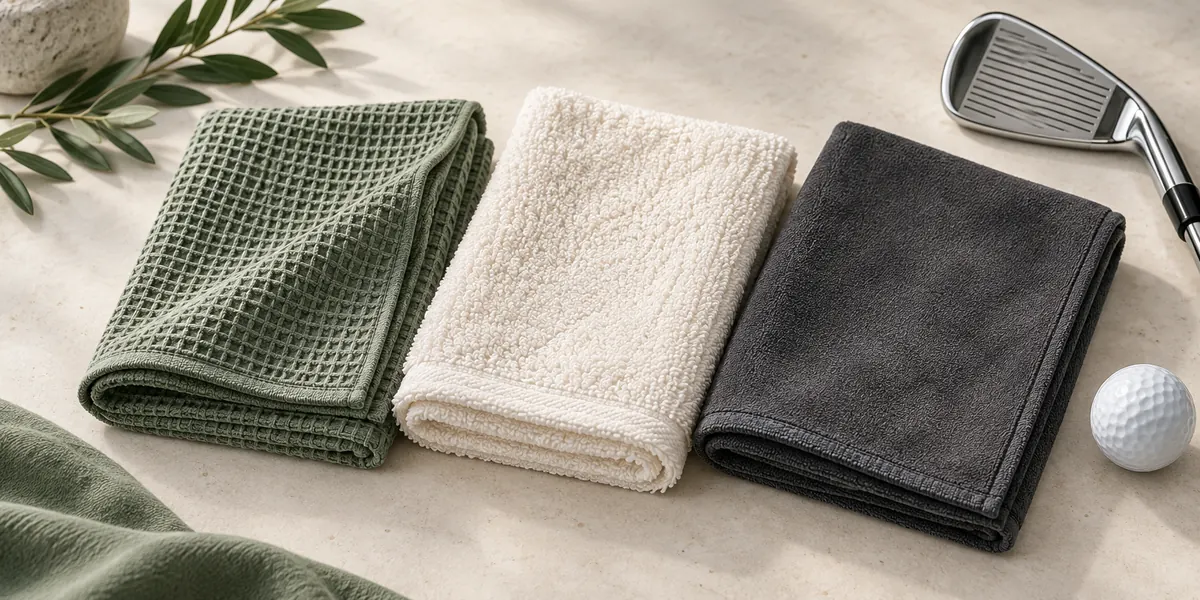
Choose the fiber and the fabric construction separately. Cotton describes a fiber. Microfiber describes very fine fibers and is commonly used for synthetic blends in golf towels. Waffle describes a textured construction, not a third competing fiber. A towel can therefore be both microfiber and waffle-textured, or cotton and waffle-textured.
The useful comparison is the complete towel: composition, texture, weight, size, edge finish, attachment and decoration. Neither a fiber name nor a textured surface proves a particular absorption, drying or service-life result.
Fiber versus construction: a simple comparison
Fiber specification
Ask for the actual composition, including blend percentages where applicable. “Microfiber” alone is not a complete composition statement.
Surface construction
Compare waffle texture, looped pile and smoother faces. The surface changes how the towel contacts the club and how artwork appears.
Finished towel
Assess size, fabric weight, edge finish and hanging hardware together. A towel that drags on the ground may be inconvenient even if the fabric performs well.
| Option | Useful selection reason | What to verify |
|---|---|---|
| Microfiber, waffle-textured | A textured cleaning face and a compact accessory format | Actual blend percentages, textured surface, printed logo sample and wash-care result |
| Cotton, looped construction | A familiar towel feel and absorbent fabric format | Cotton composition, looped pile, embroidered logo sample and wash-care result |
| Cotton, waffle-textured | A textured cotton presentation | Cotton composition, waffle stability, logo sample and care instructions |
Compare cleaning performance under the same conditions
Use matched sample sizes where possible and record the fabric weights. Clean the same type of dirt from comparable club surfaces with equal wetting and handling. Record how much dirt remains, whether the towel leaves lint and how the surface feels. Do not turn an informal sample comparison into a universal laboratory claim.
For absorption and drying comparisons, start with a defined dry condition, record the added water and keep airflow and temperature consistent. A percentage improvement is meaningful only when the samples, measurement method and conditions are identified. Recycled content by itself does not establish better absorption or faster drying than virgin material.
Choose around the way the towel will be used
| Use | Selection priority |
|---|---|
| Cleaning clubs during a round | Texture, accessible hanging position and manageable wet weight |
| Wiping hands | Comfort, clean usable area and convenient size |
| Retail or tournament gifts | Useful format, readable artwork and accurate care information |
| Club replenishment | Consistent specification, washing response and reliable size identification |
Review hanging length on the intended golf bag. Decide whether the user needs a single towel or separate clean and dirty areas. Check the ring, grommet and clip as a complete attachment, rather than assuming the fabric specification covers hardware durability.

Embroidery, printing and artwork
Choose decoration after selecting the fabric. Embroidery introduces thread and backing that can change the feel of the decorated area. Printing depends on the fiber, texture, finish and chosen process. Fine lettering may look different on a raised surface from a smooth mockup. Request an actual decorated sample and compare it before and after the agreed washing procedure.
Specify logo dimensions and position clear of folded edges or hardware. A full-color design does not automatically mean every print method works on every blend. Approve the towel, artwork and care instructions together before preparing retail packaging.
How to wash golf towels without damaging the finish
Start with the care label for the finished towel, not a rule based only on “microfiber,” “cotton” or “waffle.” Fabric composition, pile construction, embroidery, printing, binding and attached hardware may call for different treatment. The supplier's approved instructions should travel with the sample and retail pack.
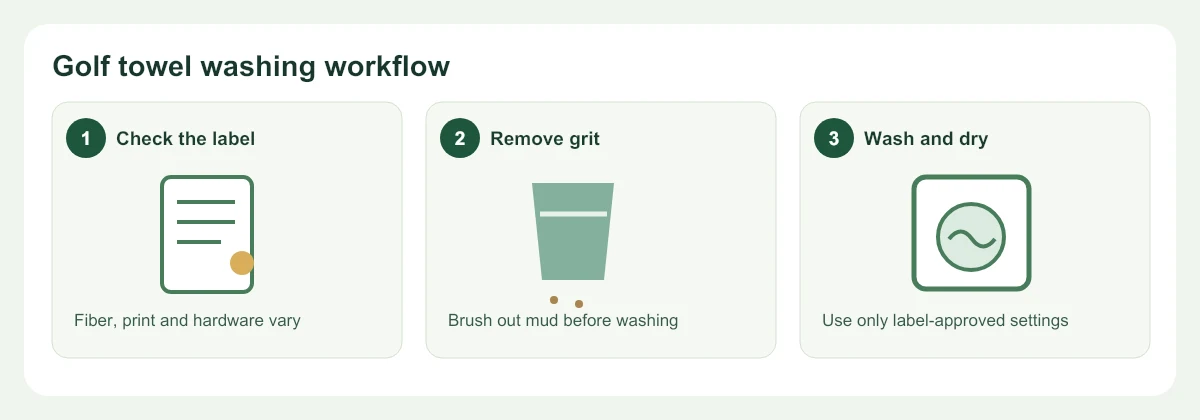
A safe washing sequence to confirm for each SKU
- Check and separate: read the label, inspect artwork and hardware, and remove detachable clips or accessories if the product instructions permit. Separate a muddy course towel from garments that could pick up grit.
- Remove loose soil: shake or brush away sand, grass and dried mud before washing. Work visible stains gently; avoid rubbing grit into the towel face or the decoration.
- Wash to the label: use the temperature, cycle and detergent the approved sample specifies. Ask whether bleach, fabric softener and tumble drying are allowed for the actual fabric and logo process. A method suitable for one microfiber towel should not automatically be applied to a cotton embroidered towel.
- Dry and inspect: follow the labelled drying method, then check feel, shape, edge, color, embroidery or print and attachment points. Do not pack the towel damp.
For bulk buyers, put one decorated towel through an agreed wash test before approving production. Compare it with an unwashed reference for dimensions, edge movement, absorbency, color transfer and logo condition. If a hang tag or care label is part of the order, approve its wording with the sample so the end customer receives the same instructions used in testing.
For how to position a towel on the bag between uses, see how to attach a golf towel to a bag. If you are still choosing material and texture, the comparison above explains why “waffle” describes a surface construction rather than a fiber.
Care and sample approval
Follow the selected towel’s care label for temperature, detergent and drying. Remove grit before using the towel again on club surfaces. Ask whether softeners, bleach or high heat are compatible with the actual material and decoration rather than adopting a generic wash recipe.
Record dimensions, color, edge condition, artwork and hardware before and after washing. Define the number of wash cycles and acceptance criteria with the supplier when repeat washing is important. This is an approval checklist, not a claim that PASSEN has performed an unstated test.
Prepare a quote-ready towel brief
Provide composition, construction, fabric weight, finished size, color, artwork, attachment, individual packing, quantity per SKU and destination. Keep recycled-content documentation separate from performance evidence, and request any supporting claim documents for the exact supplied material.
PASSEN standard orders start from 200 units per SKU. Logo, color or packaging customization starts from 500 units; sets are counted as complete sets. Different SKUs do not combine to meet the minimum. Confirm the actual specification, sample terms, price and delivery schedule in the quotation.
Frequently asked questions
Is waffle a material?
No. It describes the textured construction. Ask separately whether the towel is cotton, a synthetic microfiber blend or another composition.
Is microfiber always better than cotton?
No universal winner is established here. Compare actual towels for the intended cleaning task, comfort, drying and care requirements.
Does recycled microfiber automatically perform better?
No. Recycled content is a material-origin attribute; performance needs evidence from the selected fabric and test conditions.
Can both types carry a custom logo?
Request a decoration method suited to the actual fabric and artwork, then approve a physical sample.
Which size should a club order?
Choose around the intended bag, hanging position and use. Review a sample on the actual setup rather than assuming one size fits every program.
What should be tested before bulk approval?
Cleaning, wash response, size change, edge finish, artwork and the complete attachment arrangement.
Further reading: CottonWorks construction resources; a manufacturer example of microfiber with waffle texture. These references illustrate terminology and product construction, not PASSEN performance claims.
Request a custom golf towel quote
Send the towel size, fabric composition and texture, logo method, hanging hardware, quantity per SKU, packing and delivery destination. If wash performance matters, include the care or testing requirements in the brief.