
Golf Training Aids: What Actually Sells in Pro Shops vs What Sits on Shelves
Every pro shop has a corner where training aids go to gather dust. The products looked promising at the trade show. The margins were attractive. The demo seemed convincing. Six months later, they have sold exactly two units and collected more dust than revenue.
Here is the data on which training aids sell in real pro shops, not in catalogs or trade show booths. The analysis is based on the universal patterns observed across successful and unsuccessful training aid programs at private clubs, resort courses, and public facilities.
Key Takeaways
- Putting mirrors sell. Everything else is secondary. Across all pro shop types and sizes, putting mirrors account for 35-50% of training aid revenue. They sell because the problem they solve (alignment) is universal and the solution requires zero instruction.
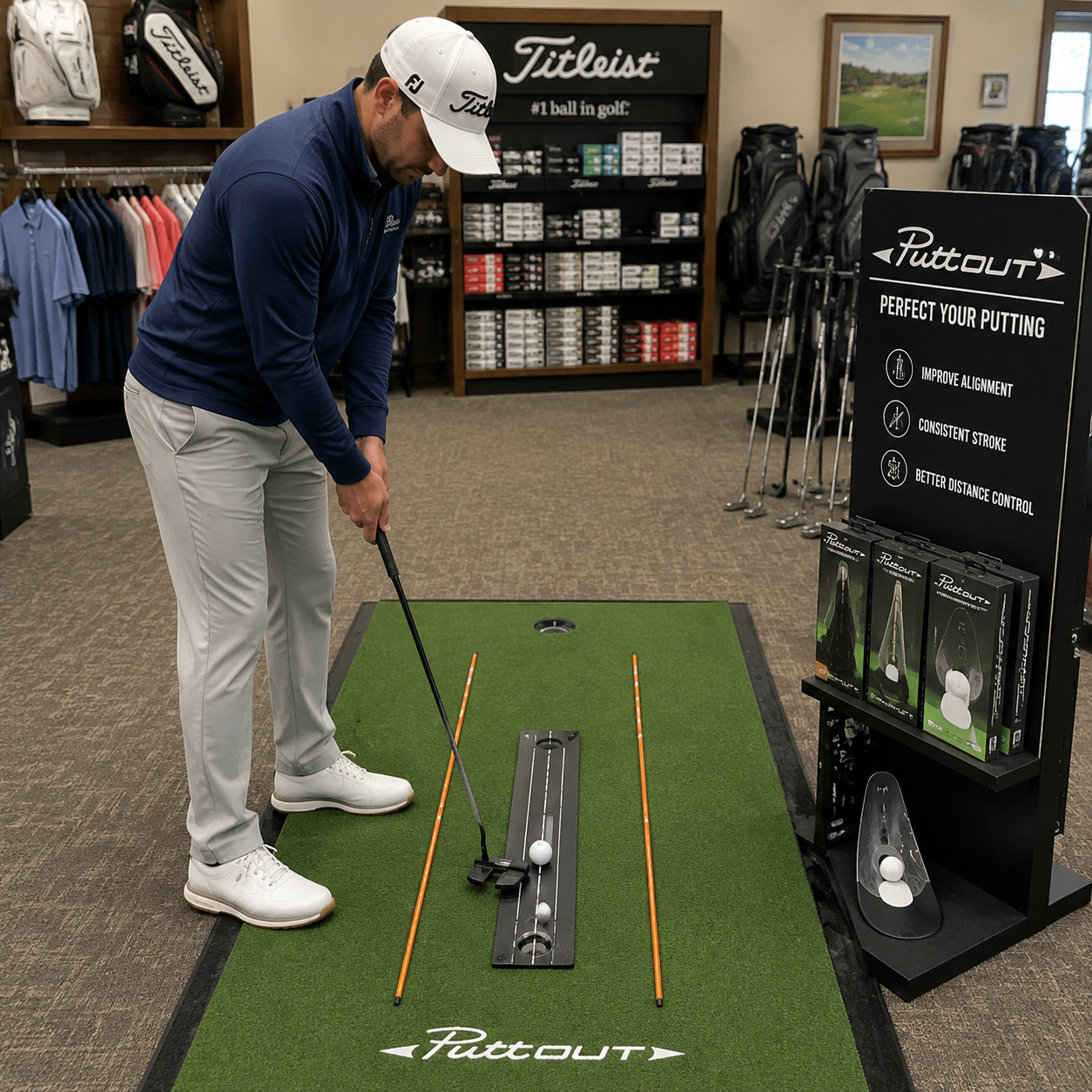
- The demo mat is the salesperson. Training aid sales are 5-8x higher in pro shops with a functional demo putting mat than in shops without one. The mat does the selling. All the staff needs to do is let members use it.
- Speed training products sell to a specific demographic. Male players aged 25-55 who carry a handicap of 5-18 are the core speed training customer. If this demographic represents less than 20% of your membership, do not stock speed training products.
- Swing trainers have the highest return rate. Products that promise to fix a slice or add 20 yards in 30 days generate initial sales and subsequent returns. Avoid products that make outcome-based promises. Stock products that provide feedback without promising specific results.
What Sells: The Top 4 Performers
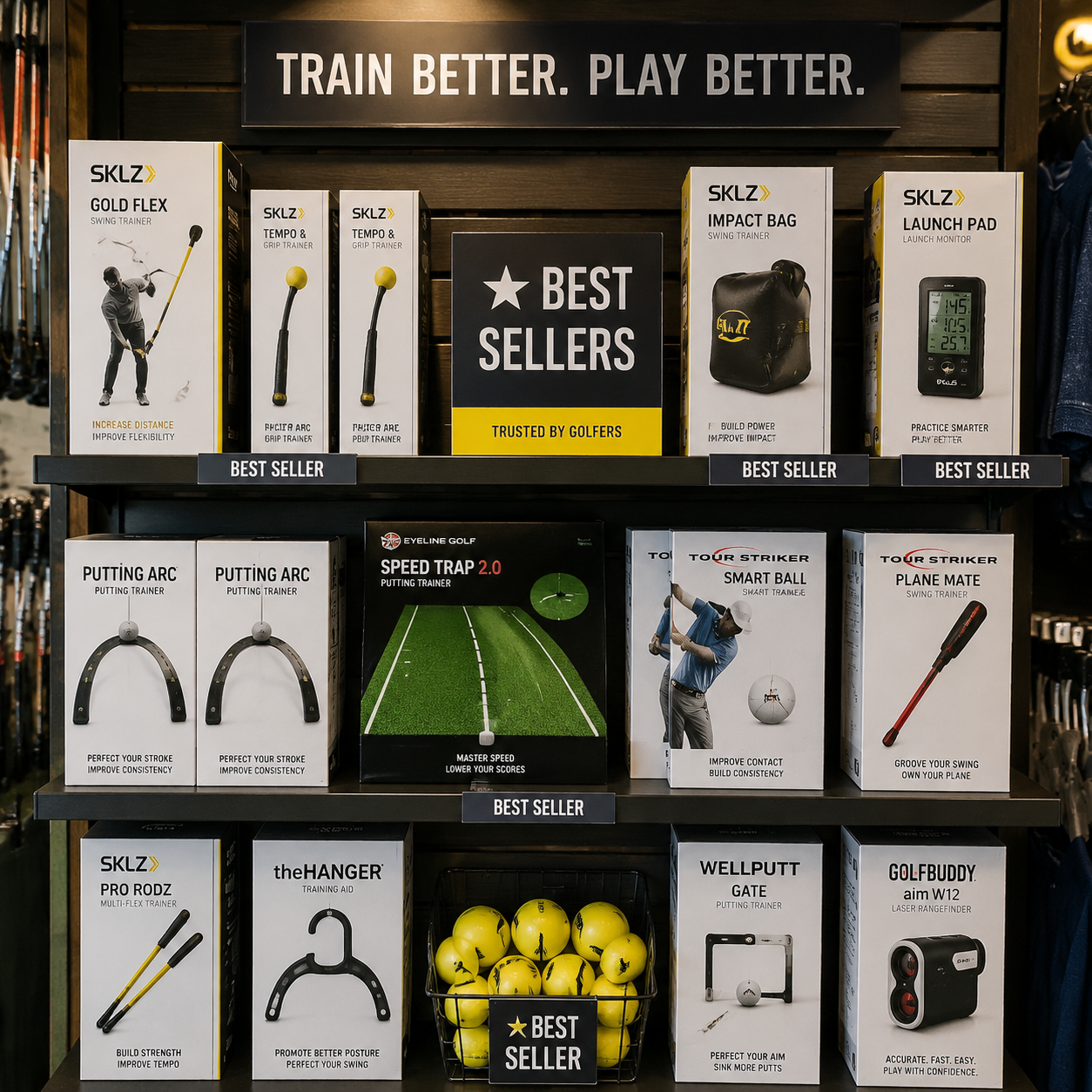
1. Putting Mirrors (35-50% of training aid revenue)
A putting mirror is a rectangular mirror with etched or printed alignment lines. The player places it on the ground, positions their eyes and shoulders according to the lines, and putts while maintaining alignment. It sells because it is obvious how to use it, it works immediately, and it provides clear feedback without interpretation. Wholesale $12-18, retail $25-35, margin 45-50%.
2. Alignment Sticks (20-30% of training aid revenue)
Two fiberglass sticks in a carrying tube. Used by teaching professionals in almost every lesson, which drives demand. Players see their instructor use them and want their own. The price point ($12-18 retail) makes them an impulse purchase. Margin is the highest in the category at 60-65%.
3. Putting Mats (15-20% of training aid revenue by dollar, 5-10% by units)
High-ticket, low-unit product driven entirely by the demo experience. A 10-foot mat with alignment markings and distance targets. Without a demo mat, sales approach zero. With a demo mat in a high-traffic area, sales can reach 2-4 units per month at a 300-member club. Wholesale $50-80, retail $120-200.
4. Speed Training Sticks (10-15% of training aid revenue)
Three weighted sticks used in a structured overspeed training protocol. Sales are driven by launch monitor adoption and the measurable nature of the results. The customer who buys speed training sticks typically owns a launch monitor and has data to track improvement. Wholesale $18-25, retail $40-60.
What Sits: The 3 Biggest Shelf Dust Collectors
1. Complicated Swing Trainers ($50+)
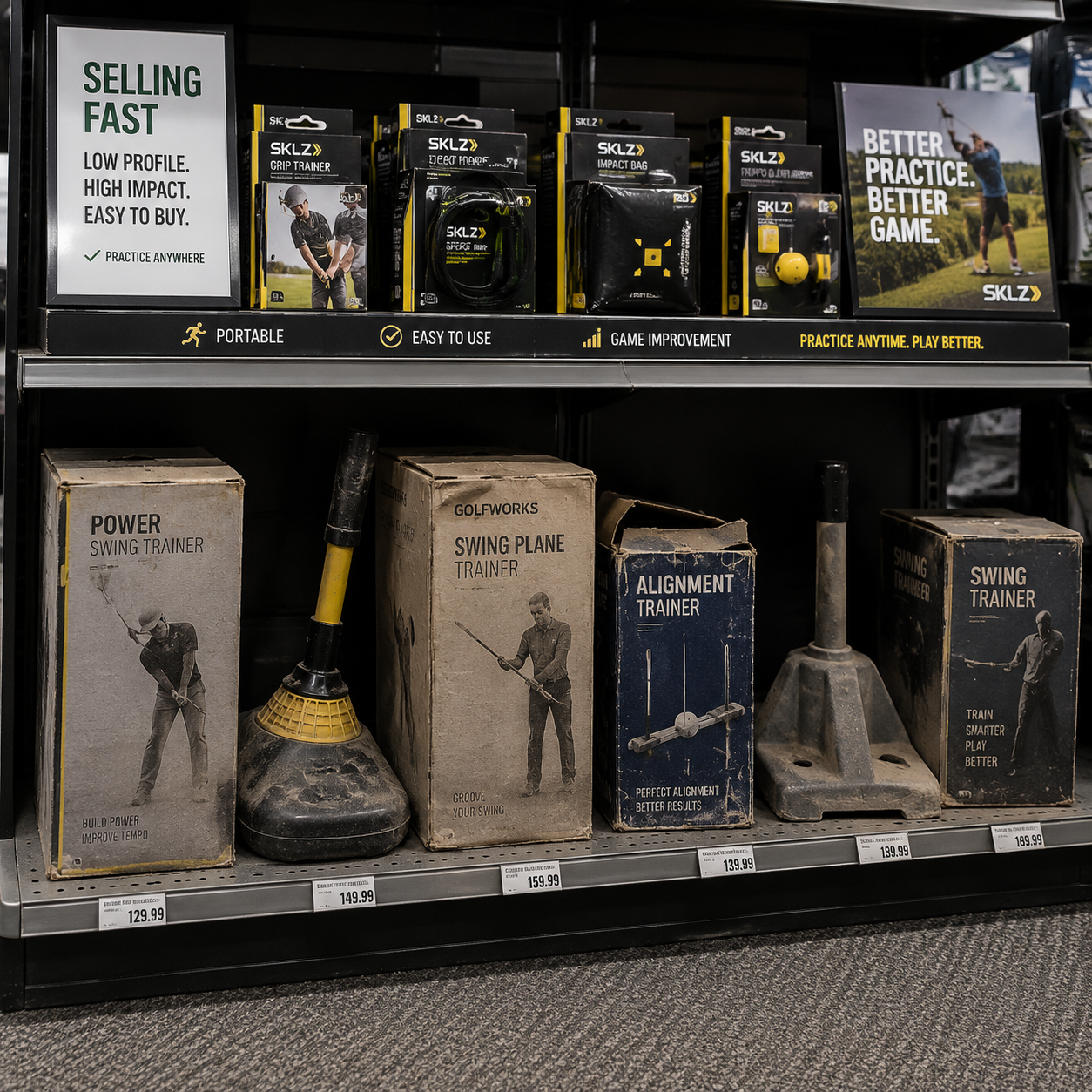
Products with multiple adjustment points, instructional DVDs, and 12-step setup processes. They sell at trade shows because the demonstrator makes them look easy. They sit on pro shop shelves because no one wants to read a 20-page manual before using a training aid. If the product requires more than 30 seconds of instruction, it will not sell in volume.
2. Single-Purpose Specialty Aids
Products that fix one specific swing fault (tempo trainers, wrist hinge trainers, weight shift plates). The market for each individual swing fault is too small to support retail inventory at a single pro shop. These products belong in specialty online stores with national reach, not on a shelf serving 300 members.
3. Novelty and Gimmick Products
Anything marketed as a "secret" or "trick" or "instant fix." These products generate initial curiosity sales and subsequent returns. They damage the pro shop's credibility and waste shelf space that could be occupied by proven products. If the product's marketing relies on a before-and-after claim that seems too good to be true, it does not belong on the shelf.
The Formula for Training Aid Success
Successful training aid programs share three characteristics regardless of club type or size: (1) A functional demo putting mat in a high-traffic area near the counter, (2) A product selection limited to 3-5 SKUs that cover putting, alignment, and speed without overlap, and (3) Endorsement from the teaching professional that the specific products stocked are the ones they recommend during lessons.
Clubs that implement all three elements see training aid revenue 3-5x higher than clubs that implement one or none. The elements are multiplicative, not additive. A demo mat with no instructor endorsement sells some products. An instructor recommendation with no demo mat sells some products. Both together sell significantly more than the sum of either alone.
FAQ
How many training aid SKUs should a pro shop carry?
Three to five SKUs covering three categories: putting (1-2 SKUs), alignment (1 SKU), and speed (1 SKU). More than five SKUs creates choice paralysis and fragments inventory dollars across too many slow-moving products. Less than three SKUs fails to establish the shop as a credible training aid destination.
What is the single biggest mistake pro shops make with training aids?
Stocking products without a demo strategy. Training aids are the most demo-dependent category in golf retail. Without a way for members to try the product, sales are a fraction of what they could be. Set up the demo mat before ordering the inventory. The mat is the prerequisite, not the afterthought.
What golf training aids usually sell best in pro shops?
Products that solve a clear problem, are easy to explain, and can be demonstrated quickly tend to sell better than complicated devices.
Why do some training aids sit on shelves?
They often require too much explanation, lack clear packaging, feel overpriced, or do not match the golfer problems that shop customers actually ask about.
How should retailers choose training aids for inventory?
Retailers should focus on simple benefits, compact packaging, staff demonstration ability, replacement demand, and compatibility with the shop's customer profile.