
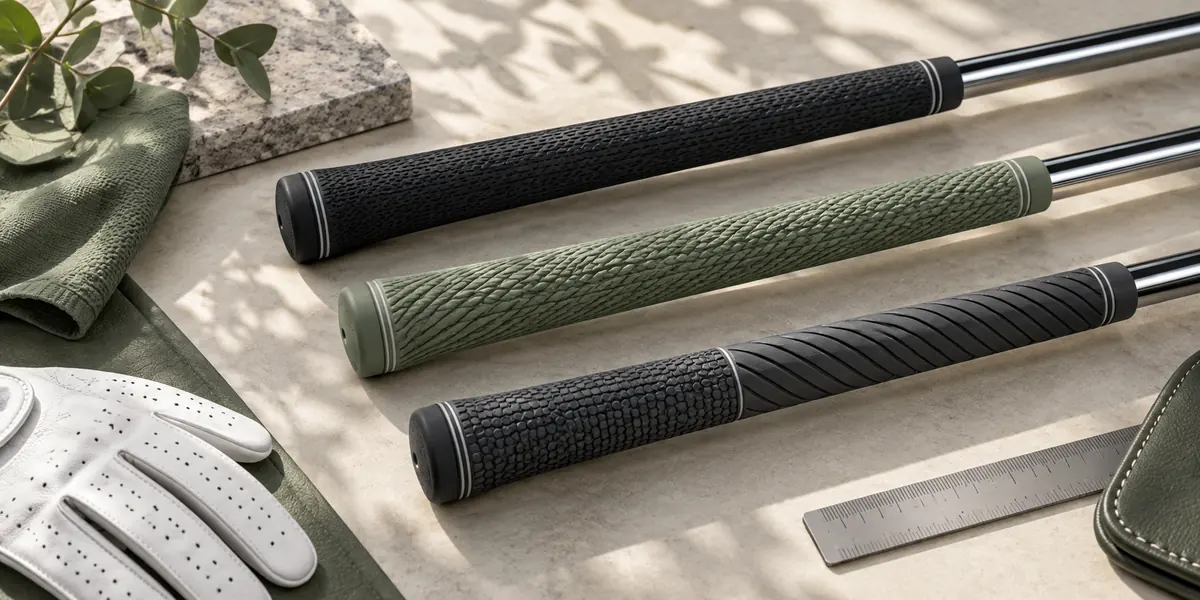
To decide what is the best golf grip for you, start with your hand fit, normal playing conditions and club setup. Begin with size and installed feel, then compare texture, firmness and taper. An expensive grip that feels uncomfortable is a poor match for that player.
Here, “grip” means the physical handle fitted to a club, rather than an overlapping, interlocking or ten-finger hand position. This is a selection guide, not a product test ranking. The practical goal is to narrow the field to a few candidates you can try on comparable clubs.
Choose a starting point for your priority
| Your priority | Start by comparing | Check before committing |
|---|---|---|
| Comfortable everyday feel | Non-cord rubber grips in a suitable size | Firmness, texture and how securely the grip feels without extra squeezing |
| Sweaty hands or damp rounds | Cord and hybrid constructions alongside your current grip | Traction when damp, skin comfort and glove interaction |
| A gentler surface feel | Softer-feeling compounds and less abrasive textures | Whether you still feel secure through a normal swing |
| A fuller lower-hand feel | Reduced-taper profiles | The complete installed shape, not just the size label |
| A putter change | Putter-specific shapes and weights | Hand placement, face alignment and how the putter feels as a whole |
These are useful trial directions, not guarantees. Two grips described as rubber or midsize can feel different. Keep your current grip as a reference, and change one variable at a time when possible.

Size, taper and core size are different decisions
Measure for a starting size
Measure your hand and compare it with the chosen manufacturer’s chart. Then hold a fitted sample to judge comfort and control.
Compare the taper
Taper describes how the grip narrows toward the shaft. Compare the upper- and lower-hand feel separately instead of assuming one label describes both.
Confirm the core fit
The inside opening must suit the shaft and installation system. Core size, shaft diameter and tape build-up can change the finished outside feel.
A hand measurement is a starting point for fitting, not a rule that every player must use the same model. Our golf grip size chart with inch and centimeter measurements explains the measurement process in more detail. Keep this selection page focused on the next decision: which construction and profile to try.
Golf Pride’s official sizing guide uses hand measurements and glove size to guide selection. Its product FAQ also distinguishes core size from outside feel. Tell the installer the shaft reference and desired finished size rather than asking for a fixed number of tape wraps without context.
Rubber, cord and hybrid: what to compare
| Construction | What you are comparing | Useful sample question |
|---|---|---|
| Non-cord rubber | Compound, molded pattern, tack and firmness | Does the surface feel secure and comfortable with your usual glove? |
| Cord | Fibers within the grip surface, plus the underlying compound and texture | How does the surface feel when damp, and is it comfortable for your hands? |
| Hybrid | Different surface or material zones on one grip | Do both hands suit the particular zone layout? |
| Wrap-style surface | A wrap-like surface pattern; construction still needs identification | Does the pattern suit your hand position and preferred feel? |
For a concrete manufacturer example, Golf Pride MCC combines a cord-containing upper-hand area with rubber in the lower-hand area. That illustrates a hybrid layout; it does not establish that every hybrid grip has the same feel or that it is the best choice for every player. A surface pattern visible in a photograph cannot establish its compound or moisture response.

How to compare grip feel without confusing the result
- Write down the problem with the current grip. Identify whether it is worn, too firm, uncomfortable in one hand, slippery in your usual conditions or simply the wrong size.
- Shortlist two or three candidates. Keep the intended size comparable while trying texture or firmness, then refine the profile.
- Use comparable clubs and installation. Record the grip model, size, weight, shaft and tape build-up. Otherwise, several changes may affect what you feel.
- Try your normal glove and hand placement. Hold and swing in a safe practice setting. Note comfort and security rather than judging only by squeezing an uninstalled grip.
- Recheck in relevant conditions. Include the damp or warm conditions that matter to you, following the manufacturer’s care and use guidance.
- Record the final setup. Keep the model, size, installation details and any remaining concerns before changing the rest of the set.
Use a simple comparison sheet: candidate, installed size, dry feel, damp feel, lower-hand comfort and decision. Leave an untested column blank. This is your fitting record, not a laboratory score or a promise of improved distance.
Do not overlook grip weight and the putter
Compare the replacement grip’s specified weight with the existing setup. A fitter can assess the effect on club balance and the feel you want to preserve. Avoid changing weight, profile and firmness simultaneously if you are trying to identify the reason for a preference.
Choose a putter grip separately from your swing grips. Compare how the shape supports your normal hand position, whether alignment feels natural and whether the weight suits the complete putter. A larger profile is not an automatic solution for every putting problem. Take the intended putter to the fitting rather than choosing from a photograph alone.
Installation and replacement checks
Even the preferred grip needs correct installation. Check that it is fully seated, aligned as intended and secure after the required curing period. Use the instructions for the actual grip, tape and solvent system. Our grip replacement guide covers tools, preparation, installation and final checks.
Inspect the existing grip for wear, damage and a surface that remains unsuitable after manufacturer-approved cleaning. If it twists or moves on the shaft, stop using that club until the installation is checked. Replacement timing depends on use, storage and condition; a universal calendar interval is less useful than inspecting your own set.
Build a useful assortment for a club or shop
Use fitting requests and actual customer preferences to choose the initial sizes and constructions. A smaller, clearly labeled assortment is easier for customers to compare than many nearly identical options. Keep a fitted demonstration sample where feasible and distinguish swing grips from putter grips.
| Record for each SKU | Why it matters |
|---|---|
| Size, taper and installed reference | Makes repeat fitting more consistent |
| Material, surface and grip weight | Separates feel choices from appearance |
| Shaft compatibility and installation guidance | Reduces avoidable installation questions |
| Color and logo position | Keeps the decorated result aligned with the approved sample |
| Unit or set contents and pack label | Prevents confusion between one grip and a complete set |
For a custom grip project, send these requirements with quantity per SKU and destination. Confirm the specific construction’s feasibility and sampling terms before ordering. Standard MOQ is 200 per SKU; logo, color or packaging customization starts at 500. Sets are counted as complete sets, and different SKUs do not combine to meet a minimum. Final pricing and timing belong in the project quotation.
Frequently asked questions
What is the best golf grip for a beginner?
Start with a comfortable size and a secure surface feel, then try a fitted sample. A simple comparison of a few suitable options is more useful than selecting the most expensive model.
Is a softer golf grip always better?
No. Comfort, firmness and perceived security are personal fitting questions. Try the grip on a club rather than judging softness alone.
Are cord grips worth trying for sweaty hands?
They are a useful candidate to compare, including their damp feel and skin comfort. The actual compound, cord construction and texture matter.
Does midsize mean the same thing in every grip?
Do not assume an identical installed feel. Check the manufacturer’s dimensions and chart, then consider profile, core, shaft and installation.
Can the same grip be used on irons and a putter?
Select swing and putter grips around their intended use. Putter shape, hand placement and complete-club feel deserve a separate review.
Should I replace the whole set at once?
When changing size or feel, first confirm the intended setup on a representative club. Once it suits you, record the specification before extending it to the rest of the set.
Discuss your project
Send your selected format, quantity per SKU, artwork, packaging and delivery destination for review.