
Top 10 Golf Accessories Trends for 2026-2027: What Customers and Pro Shops Need to Know
The golf accessories market is projected to grow from $8.2 billion in 2024 to over $12 billion by 2032. But the growth is not evenly distributed. Some categories are exploding while others are fading. The customers who understand the trends now will capture the market share that opens up over the next 24 months.
This article covers the 10 trends shaping the golf accessories industry in 2026-2027. Every trend includes data on what to expect, why it is happening, and how it affects purchasing decisions for pro shops, tournament organizers, and corporate gift programs.
Key Takeaways
- Sustainability has moved from niche to table stakes. In 2026, over 300 golf courses globally have committed to eco-friendly supply chains. Bamboo tees, recycled PET towels, and biodegradable packaging are no longer differentiators. They are expectations.
- Training aids are the fastest-growing category with 30%+ annual growth, driven by launch monitor adoption and the home simulator boom. Speed training alone grew 45% year-over-year in 2025.
- Customization expectations have shifted. Customers no longer consider a printed logo "custom." They want material choices, color matching, and individualized packaging. Suppliers who offer 50-piece MOQs with full customization are winning market share from legacy suppliers stuck at 500-piece minimums.
- The "tournament economy" is expanding. Corporate golf days, charity events, and member-guest tournaments are more frequent and more lavishly budgeted than any point in the last decade. Pre-assembled gift kits are the single most in-demand product category among event organizers.
- Multi-brand pro shops are declining while branded merchandise is rising. Pro shops are shifting shelf space from third-party brands to custom club-branded accessories because margins are 2-3x higher and the products differentiate the club from online retailers.
Trend 1: Sustainability Goes Mainstream
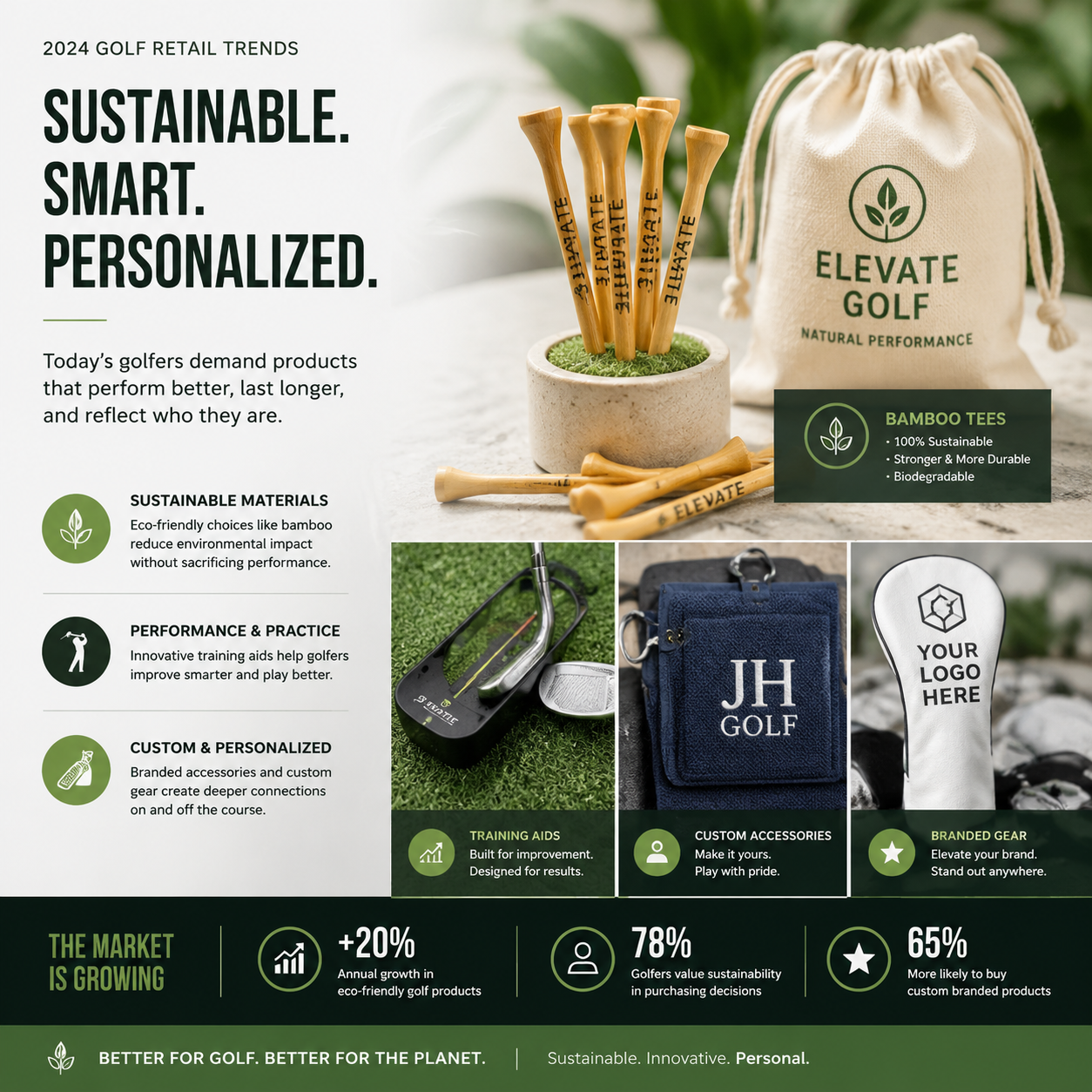
What it is: The replacement of plastic, wood, and virgin petroleum-based materials with bamboo, recycled PET, biodegradable plastics, and plant-based fabrics across the accessories category.
The data: Bamboo tee sales grew 65% in 2025. Recycled PET golf towels are now 40% of the custom towel market. Over 1,200 golf courses worldwide have signed sustainability pledges that explicitly include accessory procurement standards.
What to do: If you stock plastic tees as your primary option, add a bamboo line now. If your custom towels use virgin cotton, source recycled PET microfiber alternatives. The cost difference is negligible (3-5% premium at most) and the marketing value is substantial.
Trend 2: The Training Aid Explosion
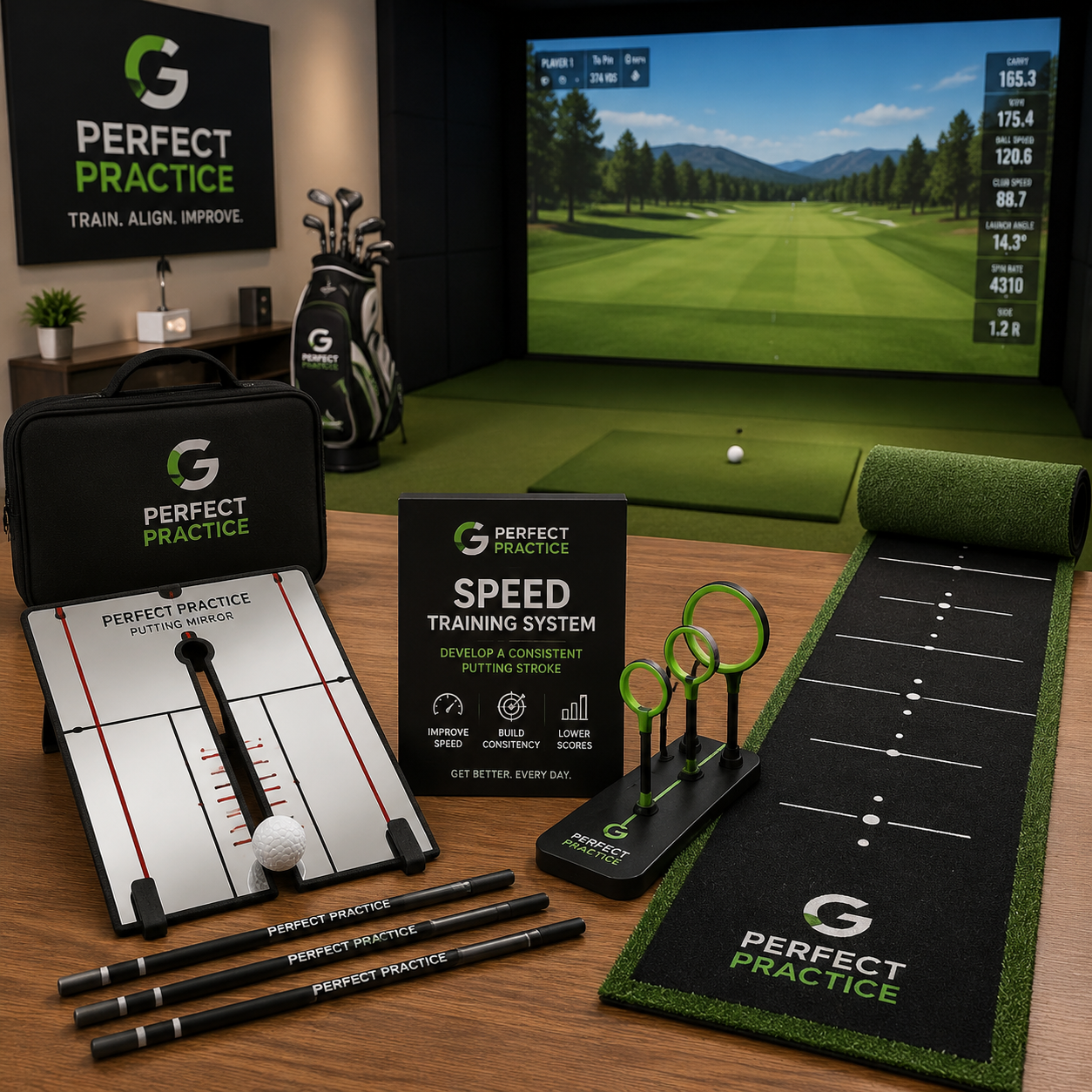
What it is: A 30%+ annual growth in putting mirrors, alignment sticks, speed training systems, launch monitors, and home putting mats. Fueled by the home simulator boom and data-driven practice culture.
The data: Speed training stick sets grew from a niche category to a $200 million segment in 3 years. Putting mirrors are now the #1 training aid sold in pro shops, overtaking swing trainers for the first time in 2025. Launch monitors under $500 have made data-driven practice accessible to the recreational player, increasing demand for complementary training aids.
What to do: Pro shops should stock a putting mirror and alignment sticks as a minimum. Teams planning corporate golf events should consider training aids as premium gift options — they are used more frequently than any other accessory and generate the highest brand recall of any promotional product tested.
Trend 3: Low MOQ Customization is Disrupting Legacy Supply Chains
What it is: Suppliers offering 25-100 piece MOQs with full customization options (logo, color, material, packaging) are capturing market share from traditional suppliers who require 500-1,000 piece minimums.
The data: 68% of pro shop customers surveyed in 2025 said they would switch suppliers if they could get the same quality at a lower MOQ. The primary complaint about legacy suppliers is not price. It is inventory risk. A 500-piece order for a 200-member club means 300 pieces sit in storage for 2 years.
What to do: When evaluating suppliers, ask about MOQ flexibility for reorders. The first order typically requires a higher minimum. The reorder MOQ should be significantly lower. Suppliers who offer 50% lower MOQ on reorders are signaling confidence in their product quality and customer retention.
Trend 4: The Tournament Economy is Booming
What it is: Corporate golf events, charity tournaments, and member-guest competitions are increasing in frequency and budget. The average corporate golf day budget for participant gifts and prizes grew from $35 per player in 2020 to $55 per player in 2025, a 57% increase.
The data: There were an estimated 1.1 million golf tournaments in the US in 2025, up 18% from 2019. Charity golf events alone raised over $4.5 billion. The largest growth segment is corporate client entertainment events, which grew 35% in 2 years as companies shifted from traditional entertainment to golf as a relationship-building platform.
What to do: Pre-assembled tournament gift kits (towel, ball marker, divot tool, tees in a branded bag or box) are the most requested format. Offer tiered options: bronze ($5-8 per player), silver ($12-18), gold ($25-40). Tournament organizers want decisions, not options. Give them three curated packages with clear pricing.
Trend 5: Club-Branded Merchandise is Replacing Multi-Brand Retail
What it is: Pro shops are dedicating less shelf space to Titleist, Callaway, and FootJoy accessories and more space to items carrying the club's own logo. The economics are irresistible: branded merchandise delivers 55-65% margins vs 25-35% for third-party products.
The data: A 2025 survey of 400 US golf pro shops found that club-branded merchandise now represents 42% of accessory revenue, up from 28% in 2020. The top-performing pro shops generate more net profit from a 4-foot branded display than from an entire wall of third-party gloves and balls.
What to do: Start with four categories: towels, ball markers, tees, and headcovers. These four alone can replace 60% of third-party accessory revenue within 12 months. Use the freed-up floor space for a putting mat demo area, which drives traffic and training aid sales.
Trend 6: Premium Materials at Accessible Price Points
What it is: Manufacturing improvements have closed the gap between premium and budget materials. PU leather headcovers now look and feel close to genuine leather at one-third the cost. Laser etching on stainless steel produces detail that was impossible on sub-$5 items five years ago.
The data: The "affordable premium" segment — products that look and feel high-end but cost $10-30 at retail — is the fastest-growing price bracket in golf accessories. Consumers are trading up from basic items but trading down from genuine luxury goods.
What to do: Source products that use premium materials in visible areas and cost-saving materials in hidden areas. A PU leather headcover with a genuine leather accent patch looks premium but costs $12 rather than $25. A zinc alloy ball marker with soft enamel fill and a presentation box feels luxury at $6 wholesale.
Trend 7: Digital-First Ordering Journeys
What it is: Pro shop customers and tournament organizers are researching suppliers online before ever making contact. The days of trade show-led purchasing are fading. A supplier without clear product information, pricing guidance, and visible product photography is easy for a prospective customer to overlook.
The data: 78% of commercial golf accessory customers start their search on Google, not at trade shows. 62% form an opinion about a supplier before submitting a quote request. The average customer visits 4-6 supplier websites before choosing one to contact.
What to do: Suppliers need to publish customer education content (MOQ guides, material comparisons, pricing frameworks) because that is what customers are searching for. A supplier that answers those questions early is easier to shortlist when the customer is ready to order.
Trend 8: Biodegradable and Plastic-Free Packaging
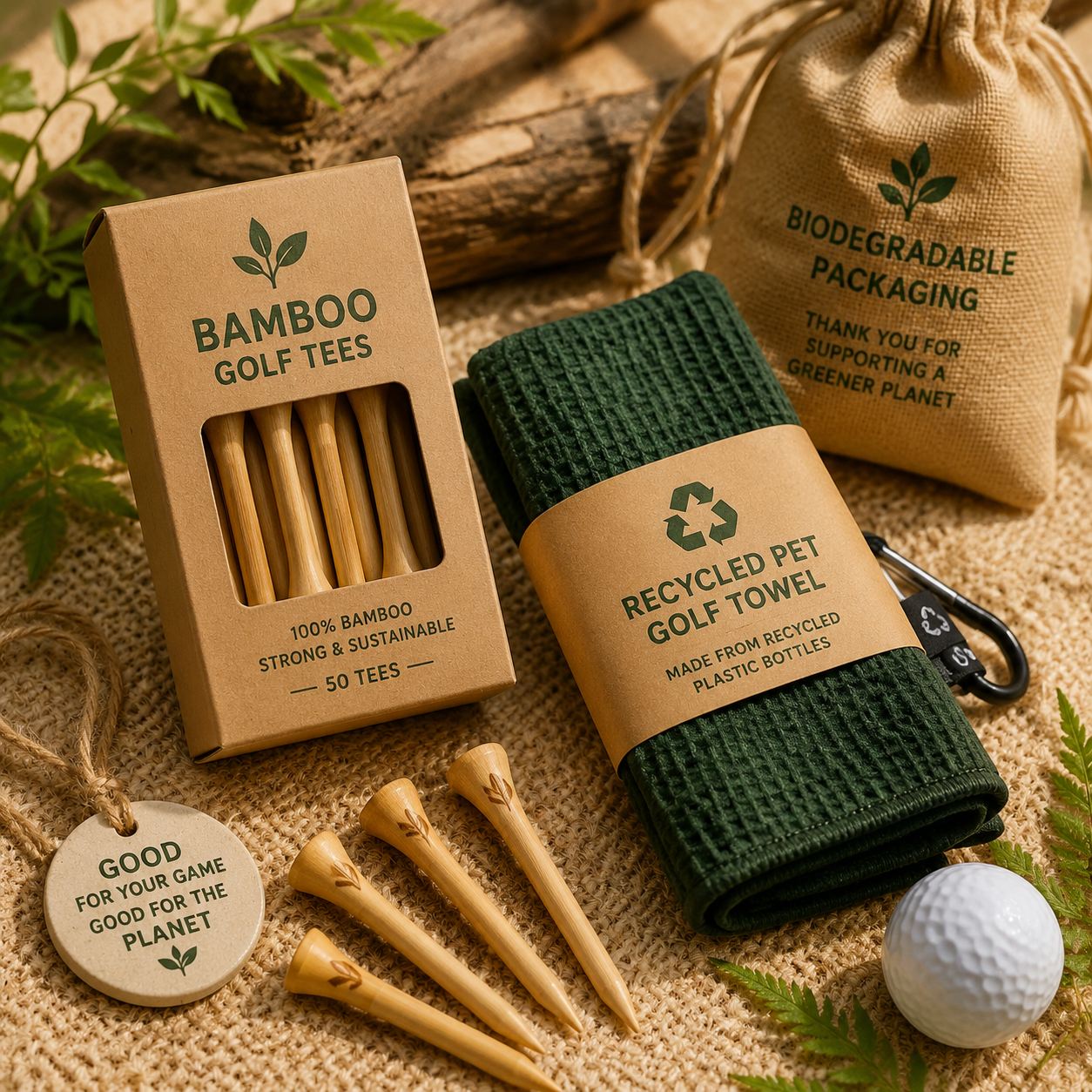
What it is: The push to eliminate single-use plastics from accessory packaging. Retail-ready packaging is transitioning from plastic clamshells and polybags to cardboard, bamboo fiber, and compostable materials.
The data: The PGA of America's sustainability initiative, adopted by 300+ courses by early 2026, includes packaging standards. Courses that fail to meet these standards risk losing preferred supplier status and tournament hosting eligibility.
What to do: When ordering custom accessories, specify packaging. Ask for kraft paper boxes instead of plastic clamshells. Request FSC-certified cardboard. If using polybags, specify biodegradable plastic. The packaging is part of the product experience and the environmental message.
Trend 9: Direct-to-Consumer from the Pro Shop
What it is: Pro shops are setting up online stores for members to purchase club-branded merchandise without visiting the physical shop. This extends the retail footprint and captures revenue from members who play at twilight or do not visit the clubhouse regularly.
The data: Clubs with online pro shops report 15-25% higher accessory revenue than clubs without. Member-buying behavior shifts from impulse purchases to planned purchases, increasing average order value by 30% or more.
What to do: If your club offers an online pro shop, ensure your accessory suppliers provide product photography and descriptions suitable for online display. White-background studio shots, material close-ups, and size reference images are the minimum requirements.
Trend 10: The Rise of "Experience" Gifts
What it is: Corporate gift customers are shifting from static merchandise to experience-linked products. A branded golf towel is a nice gesture. A branded towel inside a custom gift box with a personalized thank-you note and a QR code linking to a video message from the CEO is an experience.
The data: Corporate gift spending on golf-related items grew 28% in 2025. The average order value for "curated" or "experience" gift packages was 3.2x the value of standard merchandise orders. Customers are paying for presentation, not just product.
What to do: Offer "white glove" packaging options: custom gift boxes, personalized notes, QR code integration. These services add minimal cost ($2-5 per unit) but command significant price premiums ($10-20 additional per unit). The margin on presentation is higher than the margin on product.
How to Use These Trends: A Practical Framework
| If you are a... | Focus on trends | First action |
|---|---|---|
| Pro Shop Team | #1, #2, #5, #9 | Add bamboo tees and a putting mirror to your next order |
| Tournament Organizer | #3, #4, #6 | Switch to pre-assembled gift kits with tiered pricing |
| Corporate Gift Team | #6, #8, #10 | Request experience packaging options from your supplier |
| Golf Accessory Supplier | #3, #7, All | Publish customer education content and reduce MOQs |
These 10 trends share a common thread: the customer is becoming more sophisticated and the supplier who adapts fastest wins. Sustainability is no longer optional. Customization expectations have risen. Digital research is the new first impression. The suppliers, pro shops, and event organizers who understand these shifts now will be the ones writing the purchase orders in 2027.
FAQ
Which trend has the biggest immediate revenue impact for pro shops?
Trend #5 (club-branded merchandise replacing multi-brand retail). Shifting 20% of shelf space from third-party to branded accessories can increase net margin by 40-60% within 6 months. The products are less price-comparable to online retailers, and members specifically seek out club-branded items that cannot be purchased anywhere else.
Are sustainable accessories actually more expensive?
At the wholesale level, the premium for sustainable alternatives is 3-8% for most categories. Bamboo tees cost about $0.02 more per tee than plastic. Recycled PET towels are priced within 5% of virgin polyester towels. The premium is small enough that most pro shops absorb it without needing to raise retail prices, and the marketing value of the sustainability story justifies the negligible cost difference.
How do I know if a trend applies to my specific market?
Start with one product in one trend. Order 100 bamboo tees alongside your usual plastic tee order. Track sell-through rates for both. The data from your specific shop, course, or market will tell you more than any industry report. The safest approach to trend adoption is to test with a small order before committing to a full category shift.
When should I invest in online pro shop capabilities?
If your club has more than 300 members, an online pro shop likely pays for itself within 12 months. The infrastructure is increasingly simple: many club management platforms (Clubessential, Jonas, ForeTees) now include e-commerce modules. The key is having quality product photography and descriptions, which are one-time investments that pay dividends across both physical and online retail channels.
How should pro shops turn accessory trends into buying decisions?
Use trends to test focused product categories, not to overbuy. Start with products that fit your customer base, display space, event calendar, and reorder plan.