
Sustainability in Golf: Why Over 300 Courses Are Switching to Eco-Friendly Supplies and What It Means for Buyers
In 2024, the GEO Foundation for Sustainable Golf certified its 100th golf facility. By early 2026, that number passed 300. The R&A launched its "Golf Course 2030" sustainability initiative. The PGA of America introduced formal environmental standards for tournament hosting. What was once a niche conversation among a handful of environmentally conscious clubs has become a structural shift in how the golf industry procures everything from course maintenance supplies to pro shop accessories.
For buyers — pro shop managers, tournament organizers, corporate gift purchasers — this shift is not optional. It is a procurement requirement that will be standard at the majority of golf facilities within five years. Here is what is happening, why it matters to your supply chain, and how to get ahead of it.
Key Takeaways
- Over 300 golf courses globally now hold formal sustainability certifications such as GEO Certified, Audubon Cooperative Sanctuary, or equivalent national programs. These certifications include procurement standards that affect accessory buying decisions.
- The sustainability shift is being driven by three forces simultaneously: member demand (players want eco-friendly products), regulatory pressure (local and national environmental regulations on golf courses), and economic incentives (water and energy cost savings from sustainable practices).
- Accessory procurement is the lowest-effort, highest-visibility sustainability action a golf course can take. Switching to bamboo tees takes one purchase order change. Installing a new irrigation system takes years and six-figure budgets. Accessories are the quick win that shows visible commitment while larger infrastructure changes are underway.
- Suppliers who cannot offer eco-friendly product lines will lose access to certified courses within 2-3 years. Sustainability certification criteria are evolving to include supply chain requirements, not just on-course practices.
The Certification Landscape
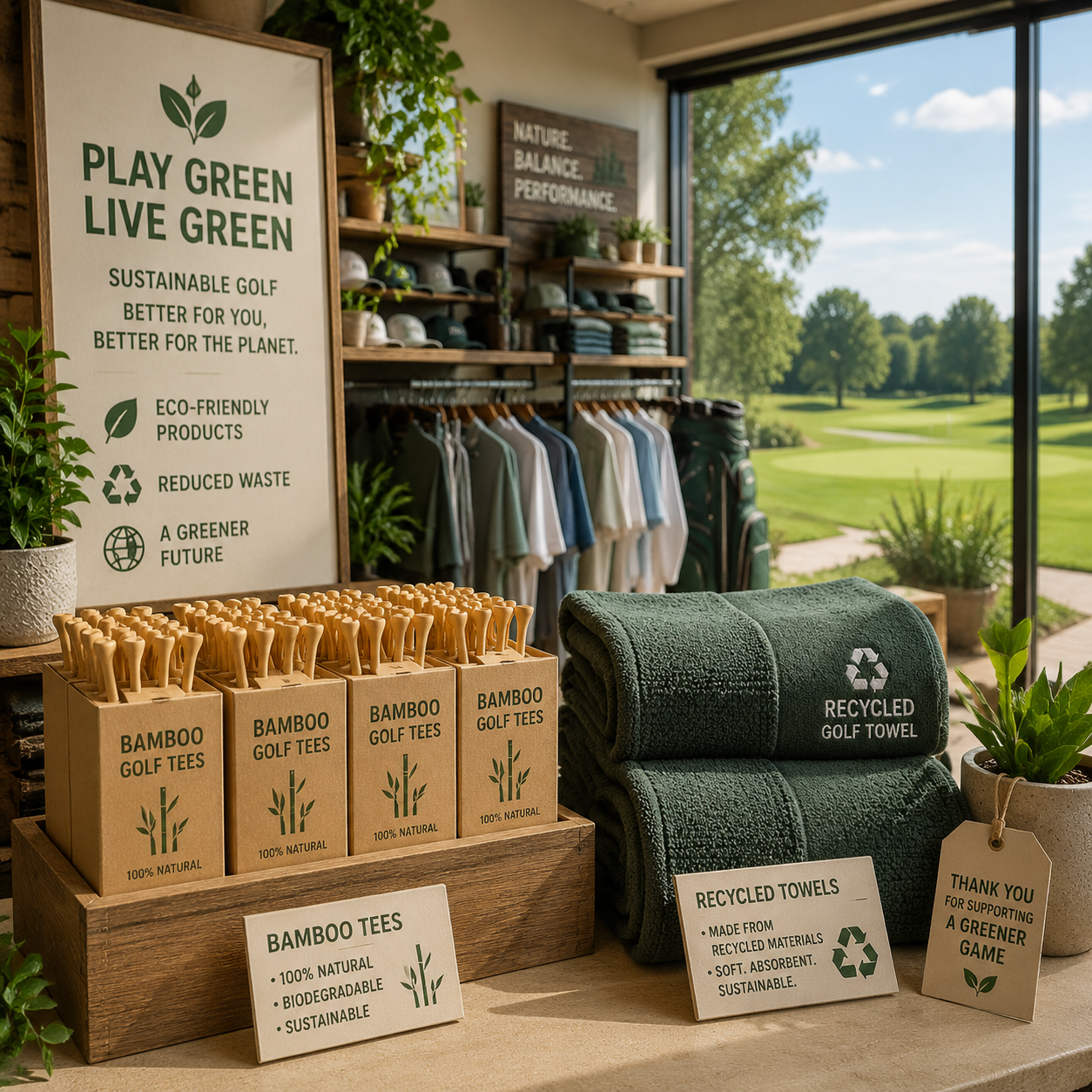
Golf course sustainability is not a single standard. Multiple certification programs exist, each with slightly different requirements. Understanding the major programs helps buyers know what their customers will need.
GEO Certified is the most widely recognized international standard. A GEO Certified course has demonstrated performance across six areas: nature, water, energy, supply chain, pollution control, and community. The supply chain category explicitly includes pro shop merchandise and accessory procurement. Over 150 courses in 30 countries hold this certification, with the fastest growth in Europe and Asia-Pacific.
Audubon Cooperative Sanctuary Program for Golf is the dominant US certification. Over 2,000 courses participate in the program, with approximately 900 having achieved full certification. The program focuses on environmental planning, wildlife and habitat management, water conservation, and outreach and education. Accessory procurement is less explicitly scored than in GEO, but the environmental ethos extends to all purchasing decisions.
National programs in various countries fill gaps. The STRI Golf Environment Awards in the UK, the e-par program in France, and the Nordic Swan Ecolabel for golf facilities in Scandinavia all include supply chain or procurement criteria to varying degrees.
What Certified Courses Are Changing in Their Pro Shops
The accessory procurement changes at certified courses follow a predictable pattern, starting with the easiest switches and progressing to more comprehensive changes.
Phase 1: Consumables. The first thing to change is always the easiest. Plastic tees are replaced with bamboo or biodegradable alternatives. Plastic packaging is replaced with kraft paper or FSC-certified cardboard. Single-use plastic products (water bottles, plastic bags) are eliminated from the pro shop entirely. These changes require minimal effort, produce immediate visible results, and cost almost nothing at the margin.
Phase 2: Textiles. Towels switch from virgin polyester or conventional cotton to recycled PET (rPET) or organic cotton. Headcover linings move to organic or recycled materials. Apparel accessories add sustainability labeling. These changes require supplier engagement but the cost premium is small and the marketing value is high.
Phase 3: Full supply chain transparency. The most advanced certified courses audit their accessory suppliers for environmental practices, labor standards, and material sourcing. This is currently rare (perhaps 5-10% of certified courses) but is the direction the certification standards are heading. Suppliers who can provide certifications (FSC, GOTS, Oeko-Tex, GRS) are building relationships that will become increasingly valuable.
The Business Case for Sustainability at the Pro Shop Level
The most common objection from pro shop buyers is that sustainable products cost more. The objection is technically true but practically irrelevant at the volumes most pro shops purchase.
| Product | Annual Volume (200-member club) | Sustainability Premium | Annual Cost Impact |
|---|---|---|---|
| Tees | 20,000 tees/year | $0.02/tee | $400 |
| Towels | 500 towels/year | $0.50/towel | $250 |
| Packaging | All products | $0.30/unit | $300-500 |
| Total Annual Premium | $950-1,150 |
The total annual premium for a 200-member club to switch its three highest-volume accessory categories to eco-friendly alternatives is approximately $1,000. This is roughly 2-3% of a typical pro shop accessory budget. The marketing value of being able to tell members — accurately — that the club uses sustainable accessories exceeds this cost by a wide margin. One new member retained because they value the club's environmental commitment pays for 10 years of eco-friendly tees.
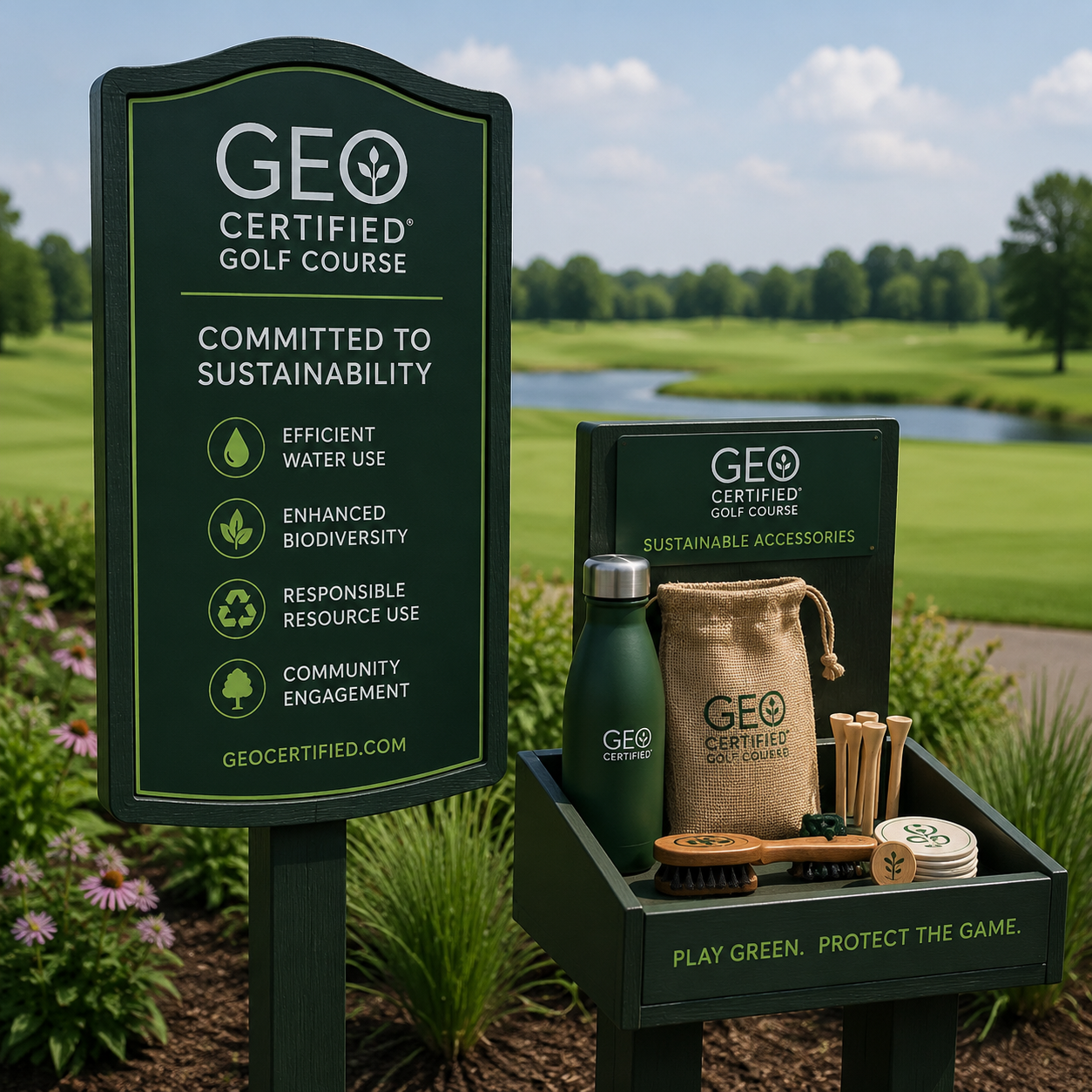
What Tournament Organizers Need to Know
Charity and corporate golf events face the same sustainability expectations as the courses that host them, and sometimes more. A charity event that gives away 144 plastic-wrapped gift bags filled with plastic tees and synthetic towels is making an environmental statement it probably does not intend to make.
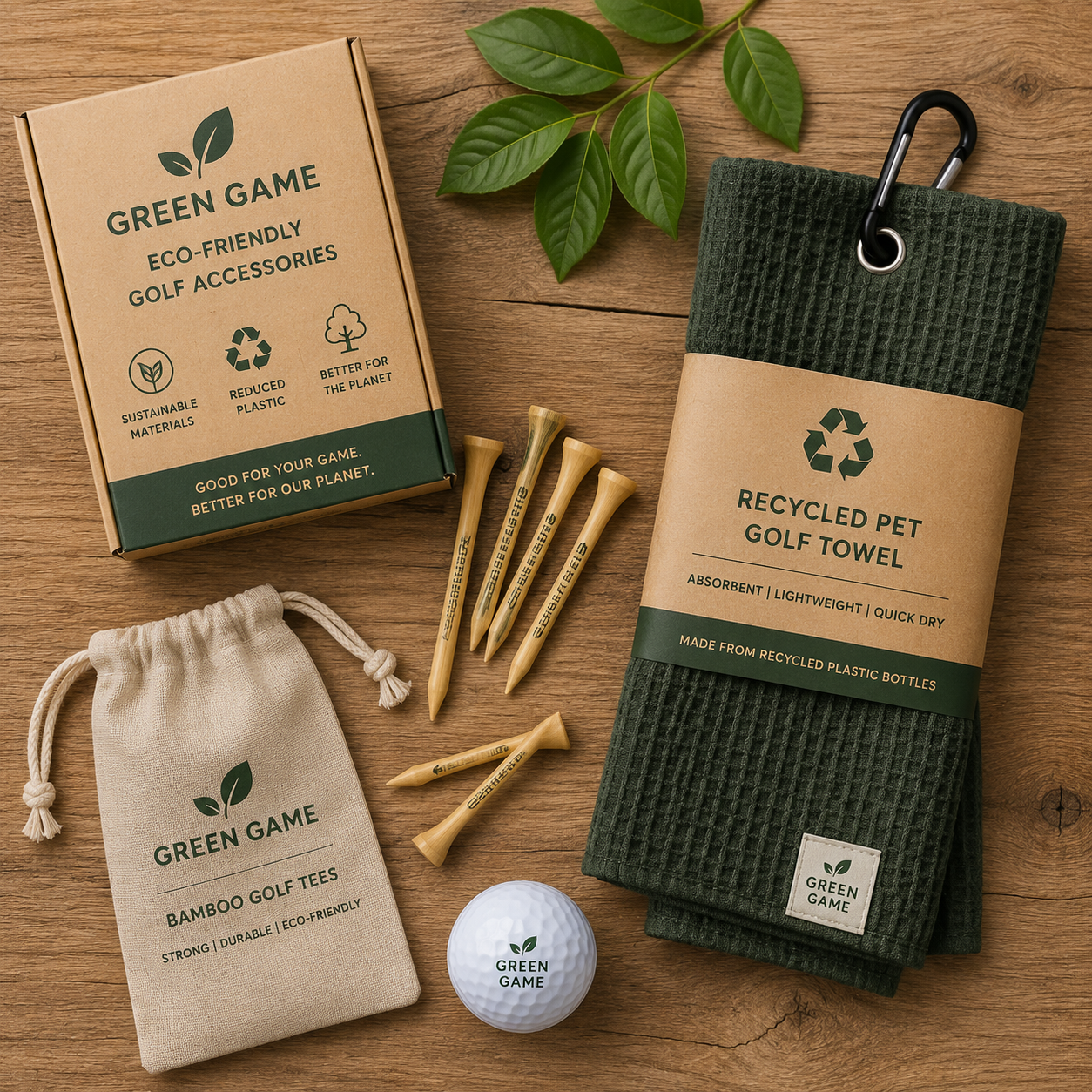
The tournament sustainability checklist is straightforward. Use bamboo tees. Use rPET towels or organic cotton. Use kraft paper or FSC-certified gift boxes instead of plastic bags. Print event collateral on recycled paper. Communicate the sustainability choices to participants. The last step is the most important. If you switch to sustainable merchandise but do not tell anyone, you have absorbed the small cost premium without realizing any of the marketing benefit.
A simple card in each gift bag that says "This gift bag is 100% plastic-free and made from sustainable materials" converts a procurement decision into a brand statement. Sponsors appreciate being associated with environmentally responsible events. Participants share the story with friends. The sustainability choice becomes a differentiator rather than a cost.
Where the Industry Is Heading: 2027-2030
Five predictions for the next five years, based on current trajectory:
Prediction 1: Sustainability certification will become a competitive requirement, not a differentiator. By 2030, an uncertified golf course will be at a measurable disadvantage in attracting members, hosting tournaments, and recruiting staff. The certification itself will not be the selling point. The absence of certification will be a warning sign.
Prediction 2: Accessory sustainability standards will be formalized. The GEO Foundation and the R&A are developing specific procurement guidelines for pro shop merchandise. By 2028, certified courses will have a checklist of do's and don'ts for accessory purchasing, with suppliers rated on their environmental practices.
Prediction 3: Bamboo tees will become the default, not the alternative. The market share trajectory suggests bamboo tees will surpass plastic tees in total units sold by 2028. The manufacturing scale advantages that currently favor plastic are eroding as bamboo production capacity expands.
Prediction 4: Plastic packaging will be banned at certified courses by 2028. Multiple certification standards are considering explicit bans on single-use plastic packaging in pro shop merchandise. This will affect not just accessory packaging but also golf ball sleeves, glove packaging, and apparel bags.
Prediction 5: The cost premium for sustainable accessories will approach zero by 2029. As manufacturing scale increases and more suppliers enter the market, the price gap between conventional and sustainable accessories will narrow to the point of irrelevance. Early adopters who built supplier relationships and customer messaging around sustainability will have a first-mover advantage when the market reaches parity.
FAQ
Does sustainability certification actually influence member decisions?
Yes, and the influence is growing. A 2025 survey of US private club members found that 42% consider environmental practices when evaluating club membership, up from 28% in 2020. Among members under 40, the figure was 58%. The trend is generational: younger members care more about sustainability and that cohort's influence on club governance will only increase over time. Pro shops that lead on sustainability are building loyalty with the members who will run the club in 10 years.
How do I communicate our sustainability efforts without greenwashing?
Be specific and verifiable. "We use eco-friendly products" is greenwashing because it is vague and unverifiable. "Our pro shop tees are made from FSC-certified bamboo and our towels are manufactured from 100% recycled PET (GRS certified)" is credible because it names specific standards that can be independently verified. If you cannot cite a certification, do not make the claim. Specificity is the defense against greenwashing accusations.
What should I ask suppliers about their sustainability practices?
Five questions every pro shop buyer should ask: (1) What certifications do your products carry? (2) Can you provide documentation of your material sources? (3) What is your packaging made of and is it recyclable or compostable? (4) Do you have a formal environmental policy? (5) How do you monitor labor and environmental practices in your supply chain? A supplier who cannot answer all five questions coherently is not prepared for the procurement standards that will be standard within five years.