
The Rise of Golf Training Aids: What Retailers Should Stock in 2026 and Why the Category Is Exploding
Five years ago, a pro shop training aid section was a putting cup and maybe a weighted club. Today the training aid category is projected to surpass $500 million in global sales by 2027, growing at 30%+ annually. It is the fastest-growing segment in golf accessories by a significant margin, and it is being driven by forces that show no sign of slowing down.
Here is what changed, which products are driving the growth, and what retailers, pro shops, and corporate customers need to know to capture the opportunity.
Key Takeaways
- Speed training is the #1 growth subcategory with 45% year-over-year growth in 2025. The SuperSpeed system proved the market exists. Affordable alternatives ($22-40 wholesale) are now capturing the majority of volume.
- Putting mirrors outsold swing trainers for the first time in 2025. Putting is the skill recreational players are most willing to practice because it requires no physical fitness, no range balls, and a 10-foot mat fits in any home or office.
- Launch monitor adoption under $500 is the catalyst. When a player can see their swing speed, club path, and ball flight data on a $400 device, they immediately want tools to improve those numbers. Training aid sales follow launch monitor sales by 3-6 months.
- Demo stations convert at 5-8x the rate of shelf displays. A putting mat in the pro shop floor generates more training aid revenue than an entire wall display of boxed products. Players need to try before they buy.
- Corporate customers are discovering training aids as premium gifts. A speed training stick set or putting mirror is the most-used corporate golf gift tested. Recipients use training aids 4-6x more frequently than any other golf accessory.
Why Training Aids Are Exploding Now
Three structural shifts are driving this growth, and none of them appear to be temporary.
First, launch monitors went mainstream. The Rapsodo MLM2PRO at $400-700 and the Garmin Approach R10 at $500-600 put launch monitor technology in the hands of recreational players. Before 2022, launch monitors cost $2,000 minimum. Now a player can see their club head speed, ball speed, smash factor, and launch angle for the price of a new driver. Once a player sees their data, they naturally want tools to improve it. Speed training aids sell because launch monitors make speed measurable. Putting aids sell because launch monitors reveal how small the margin between a made and missed putt really is.
Second, the home simulator boom created a captive training environment. An estimated 1.2 million home golf simulators are now in use in the US, up from approximately 300,000 in 2020. Every simulator owner is a potential training aid customer. When practice is available 24/7 in the garage or basement, the demand for structured practice tools increases dramatically.
Third, golf instruction itself has become data-driven. Teaching professionals now use TrackMan, FlightScope, and video analysis as standard tools. Students leave lessons with specific drills and data-driven prescriptions. A coach who says "your club path is 4 degrees out-to-in" creates a customer for an alignment stick set or swing plane trainer. The training aid is the homework.
The Products Driving the Growth
Speed Training Systems
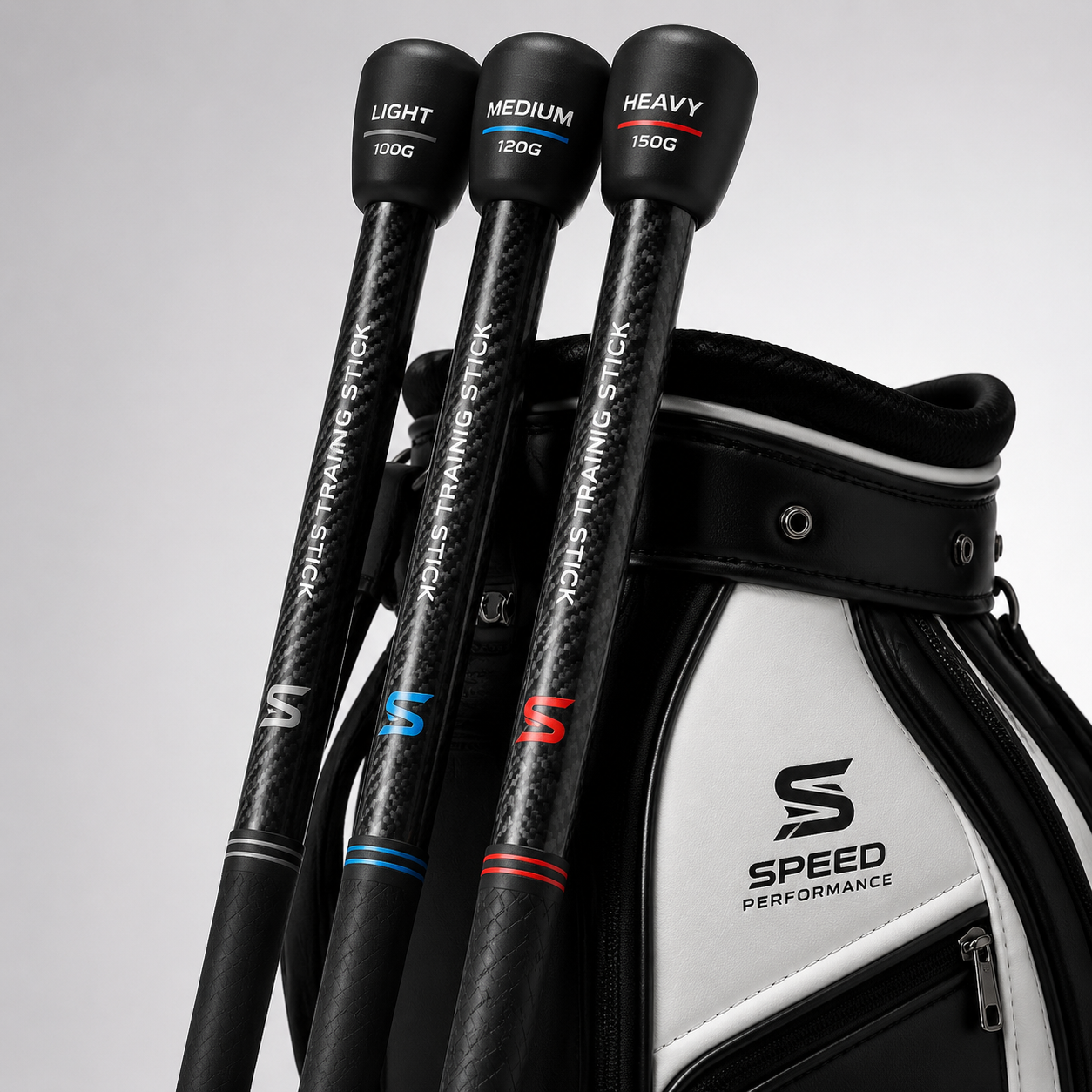
The SuperSpeed Golf system established this category. Three weighted sticks (light, medium, heavy) used in a structured protocol to increase swing speed. The original system retails at $199. The market has since expanded with alternatives priced at $40-80 retail that deliver similar results. The protocol matters more than the specific product. Any decent set of weighted training sticks combined with the SuperSpeed protocol will produce measurable speed gains in 4-6 weeks.
For retailers, speed training is the highest-ticket training aid category. A set of 3 carbon fiber training sticks wholesales at $18-22 and retails at $40-60. The margin is healthy and the average customer buys additional training aids within 60 days of purchasing a speed system because the speed training mindset creates demand for other tools.
Putting Trainers
The putting aid category is bifurcating into two distinct segments: alignment tools and stroke trainers.
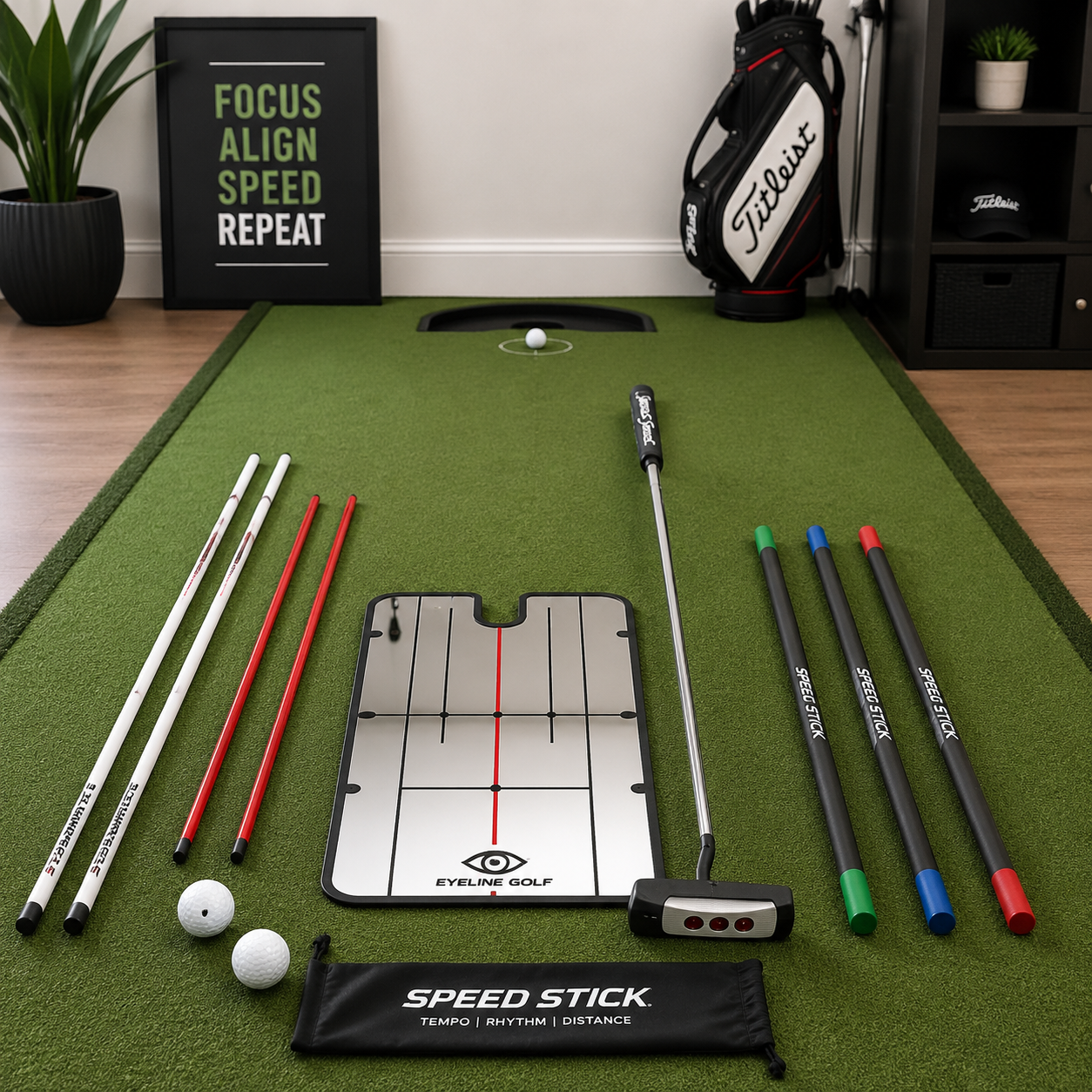
Alignment mirrors are the #1 seller. A putting mirror ($12-18 wholesale) with alignment lines and a gate for the putter path solves the most common putting fault (misalignment) with a tool that requires zero instruction to use. Put the mirror on the ground. Line up the putter with the lines on the mirror. Stroke through the gate. The simplicity is the selling point.
Putting mats have evolved from simple roll-out strips to multi-surface training stations. The top-end mats now include alignment markings, distance control targets, and variable speed surfaces. A quality indoor putting mat wholesales at $50-80 and retails at $120-200. The demo unit in the pro shop is the single most important sales tool for this category.
Alignment and Swing Plane Tools
Alignment sticks are the cheapest training aid and one of the most versatile. A set of two fiberglass alignment sticks wholesales at $4-6 and retails at $12-18. They are used for alignment drills, swing plane training, and as improvised teaching tools. Every pro shop should stock these because they are an impulse purchase that every serious player wants.
Swing plane trainers and impact bags are higher-ticket items ($25-50 retail) that sell primarily through instructor recommendations. If the club pro recommends it during a lesson, the student buys it immediately after. Stock these items near the lesson booking area, not hidden in a corner display.

What to Stock: The Training Aid Starter Kit
| Product | Wholesale | Retail | Turns/Month | Priority |
|---|---|---|---|---|
| Alignment Sticks (2pc) | $4-6 | $12-18 | 8-12 | Stock first |
| Putting Mirror | $12-18 | $25-35 | 4-6 | Stock first |
| Speed Training Sticks (3pc) | $18-25 | $40-60 | 2-4 | Stock early |
| Putting Mat (10ft) | $50-80 | $120-200 | 1-2 | Demo first |
| Impact Bag | $12-18 | $25-35 | 1-2 | Instructor-driven |
| Swing Plane Trainer | $15-25 | $35-50 | 1-2 | Instructor-driven |
The turn rates above are estimates based on a 300-member semi-private club. Larger clubs and resort courses will see higher volumes. Smaller clubs should start with the first two products and expand from there.
The Demo Station Strategy
Training aids are the most demo-dependent category in golf retail. A boxed putting mirror on a shelf sells 1-2 units per month. The same mirror set up on a putting mat near the counter, available for anyone to try while waiting for their tee time, sells 6-10 units per month. The difference is not subtle.
Set up a 10-foot putting mat near the pro shop counter. Place an alignment mirror, alignment sticks, and a putting training gate on or near the mat. Let members use it freely. Do not pressure them. The tools sell themselves once a player sees how they work.
For training aids that cannot be demoed on a mat (speed trainers, impact bags), create a short video loop playing on a tablet or small screen near the display. A 60-second video of a teaching pro demonstrating the product is the next best thing to a physical demo.
Corporate Gift Applications
Training aids are an under-exploited corporate gift category. Most corporate golf gifts are consumables (balls, tees) or accessories (towels, headcovers). Training aids are different. A speed training stick set or a putting mirror is something the recipient will use 3-5 times per week for months or years. Every use is a brand impression.
For corporate orders, suggest a putting mirror with the company logo on the mirror frame or carrying case. At $15-20 wholesale per unit with logo, it is competitive with premium towel pricing but generates significantly more usage and brand exposure. For a premium option, a branded alignment stick set with a custom carry bag is unique and memorable.
FAQ
Do training aids actually work, or are they just gimmicks?
The data is clear for the major categories. Speed training protocols produce measurable swing speed gains of 3-8 mph over 4-8 weeks in controlled studies. Putting mirrors improve alignment accuracy by 40-60% with consistent use. The key variable is not the product. It is the user's consistency. A $15 putting mirror used 3 times per week outperforms a $200 launch monitor used once per month.
What is the minimum inventory a pro shop should start with?
Three SKUs: alignment sticks (2pc set), putting mirror, and speed training sticks (3pc set). These three products cover the three main training categories (alignment, putting, speed) at three distinct price points ($12, $30, $50). Total initial inventory investment is approximately $200-300 wholesale. If these three sell, expand. If they do not, the category does not fit your membership demographic and further investment is not warranted.
How do I compete with online training aid retailers?
You cannot compete on price or selection. Compete on the one thing online retailers cannot offer: the demo. A member who tries a putting mirror on your demo mat will buy it from you even if it costs $5 more than Amazon. The convenience of walking out with the product and the confidence from having tested it outweigh a $5 price difference for most members. Do not try to be the cheapest training aid retailer. Be the only one where the customer can try before buying.
Should I stock branded or unbranded training aids?
Start with unbranded or house-branded products. The major brand names (SuperSpeed, PuttOut, Wellputt) command name recognition but also demand minimum advertised pricing policies that limit margins. A quality unbranded putting mirror at $15 wholesale retails at $30 with a 50% margin. A branded equivalent might wholesale at $25 and retail at $40 with MAP restrictions, yielding a 37.5% margin on more inventory dollars. For most pro shops, the unbranded option is the better business decision for the first 12 months.
Can training aids be part of a broader pro shop accessory plan?
Yes. Training aids work best when they sit beside practical accessories, clear packaging, and staff recommendations that connect the product to player improvement.