PU vs Genuine Leather Golf Headcovers: Which Should You Stock?

PU vs Genuine Leather Golf Headcovers: Which Should You Stock?

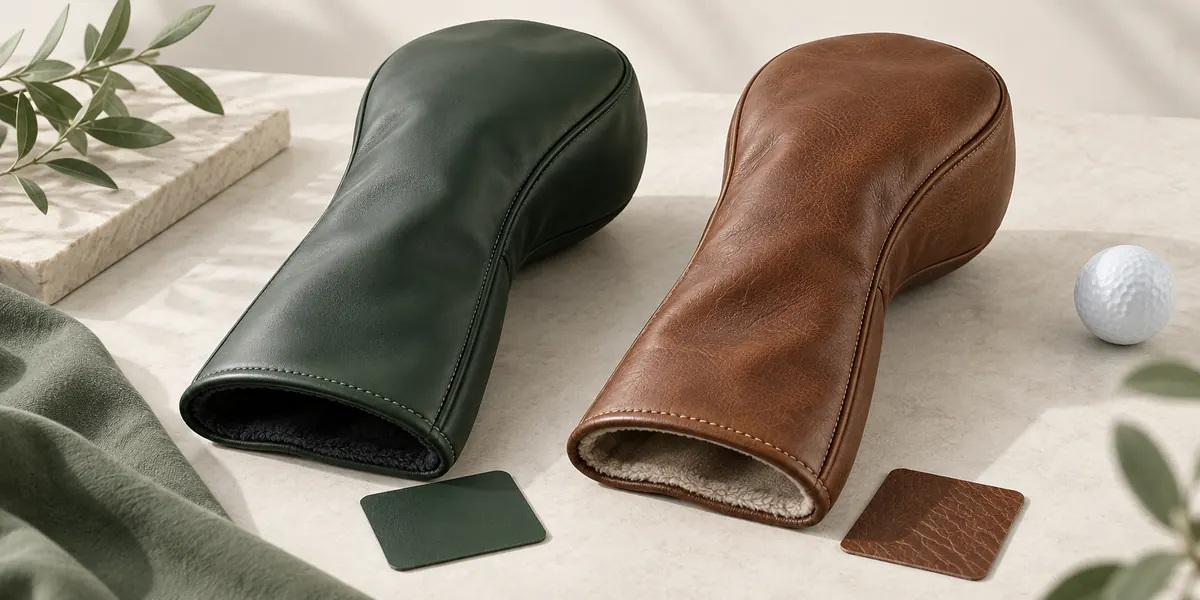
Pro shop owners ask this question more than any other when they call us. The answer is not that one material is better. It is that each one makes sense for a different kind of customer, a different price point, and a different markup strategy. Stock the wrong one and it collects dust. Stock the right one and it moves every month.

Key Takeaways

  • PU leather headcovers cost $6-12 wholesale and sell for $25-35 retail. Gross margin averages 55-65%.
  • Genuine leather headcovers cost $18-30 wholesale and sell for $55-90. Margin percentage is lower (40-50%) but dollar profit per unit is higher.
  • PU accounts for roughly 70% of custom headcover orders from pro shops in 2025-2026, based on data from 3 major US distributors.
  • Genuine leather is growing in the corporate gift segment. Companies with per-head budgets above $50 are shifting away from synthetic materials.
  • PU customization (embroidery, screen print, heat transfer) has a 5-7 day turnaround. Genuine leather debossing/embossing takes 10-14 days.

What Are You Actually Paying For?

PU vs Genuine Leather Golf Headcovers: Which Should You Stoc

Most buyers think they are choosing between "fake leather" and "real leather." That is like saying you are choosing between a car and a vehicle. The materials sit on a spectrum and the names do not tell you much.

PU Leather (Polyurethane-Coated Fabric)

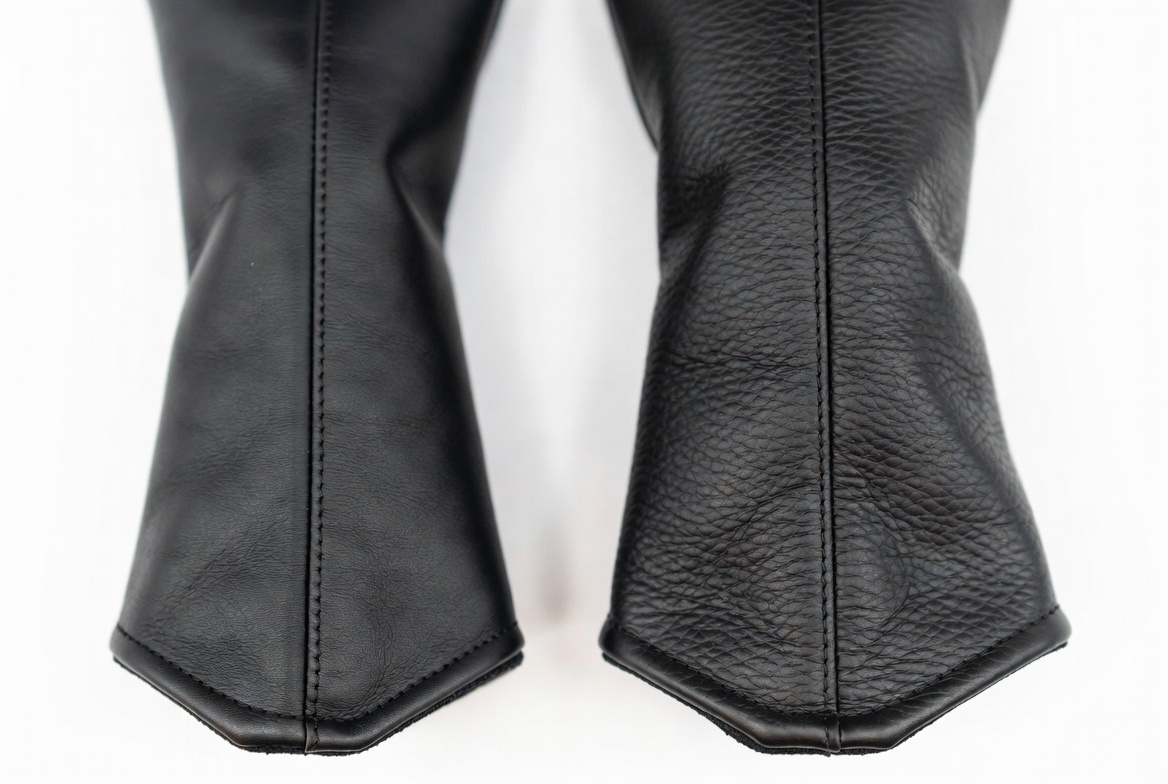
PU leather starts with a fabric base, usually polyester or a polyester-cotton blend, coated with a layer of polyurethane. The quality depends almost entirely on three things: the thickness of the coating, the weight of the base fabric, and whether the surface is embossed with a grain pattern.

Good PU leather, the kind used in a headcover that lasts 2-3 seasons of regular use, has a coating weight of 0.6-0.8mm on a 300-400gsm fabric backing. Cheap PU, the kind that flakes after one summer in a trunk, uses 0.3mm coating on 200gsm backing. The price difference between these two grades is about $2 per unit at wholesale. That $2 is the difference between a product you can stand behind and one that generates returns.

PU leather headcovers work best when:

  • You need to hit a $25-35 retail price point
  • You are ordering for a tournament with 100+ participants
  • You want bright colors or photo-realistic prints
  • Turnaround time matters more than premium feel

Genuine Leather (Cowhide, Typically Split or Top-Grain)

Genuine leather in golf headcovers is almost never full-grain. That would be too thick, too expensive, and too stiff to stitch into a headcover shape. Most are split leather (the inner layer after the top grain is separated) or top-grain that has been sanded and finished. Split leather is more flexible and takes dye more evenly. Top-grain is slightly more durable but costs 30-40% more.

You will also see "genuine leather" labels that are technically correct but misleading. Genuine leather is a grade, not a quality guarantee. It means the material contains real leather, but often it is bonded leather (leather dust mixed with adhesive and pressed into sheets) with a PU coating on top. This stuff looks like leather for about 6 months, then the coating delaminates and you get angry phone calls.

Genuine leather headcovers work best when:

  • Your customers expect a premium unboxing experience
  • You are selling corporate gifts with a per-unit budget above $50
  • The headcover is positioned as a "club accessory" rather than a disposable item
  • You can charge $55+ and still feel good about the value

5 Questions Buyers Get Wrong

1. "Is PU waterproof?"

Yes, mostly. PU is inherently water-resistant because it is plastic. Rain beads on the surface. But the stitching holes are not sealed, so water gets through the seams over time. Genuine leather absorbs water unless it has been treated with a waterproofing agent, which adds cost and changes the hand feel. Neither material should be described as "waterproof" unless the seams have been sealed, and almost no headcover manufacturer does this.

2. "Does PU leather crack?"

Cheap PU cracks. Good PU flexes. The cracking happens when the polyurethane coating is too thin or the base fabric does not stretch with the coating. Imagine painting a thin layer of plastic on a t-shirt and then bending it back and forth 500 times. That is what cheap PU looks like after a season. The fix is simple: specify a minimum coating thickness of 0.6mm and ask for a flex test sample. A decent manufacturer will send you one without blinking.

3. "Is genuine leather always better?"

No. A lot of the genuine leather headcovers sold at the $30-40 retail price point use bonded leather that performs worse than mid-grade PU. I have seen bonded leather headcovers start peeling within 8 months of display use, meaning they never even made it onto a golf bag. If your budget is under $20 wholesale per unit, PU is almost always the safer choice. You get more consistency and fewer warranty headaches.

4. "Which takes embroidery better?"

PU leather holds embroidery details sharply because the surface is uniform and the backing fabric stabilizes the stitches. Genuine leather can look richer after embroidery but requires a higher stitch density to avoid the thread pulling through the material. Expect to pay about 15-20% more for leather embroidery setup. For tournament logos with fine text, PU is actually the better substrate.

5. "Can I mix materials in one order?"

Yes, and you probably should. The smartest pro shops we work with order their driver and fairway wood headcovers in PU (because those get banged around and replaced more often) and their putter covers in genuine leather (because putter covers get handled more, shown off more, and customers pay a premium for the feel). The MOQ split is usually 50/50 across materials from the same manufacturer.

Head-to-Head Comparison

FactorPU LeatherGenuine Leather
Wholesale cost (per unit)$6 – $12$18 – $30
Retail price range$25 – $35$55 – $90
Gross margin per unit$15 – $23$25 – $45
Typical lifespan (regular use)2 – 3 seasons4 – 6 seasons
Customization turnaround5 – 7 days10 – 14 days
Color options25+ Pantone-matched8-12 standard leather dyes
Photorealistic printYes (sublimation + PU)No
Debossing/E mbossingShallow, not durableDeep, permanent
Water resistanceGood (surface)Moderate (needs treatment)
Weight per cover80 – 120g140 – 200g
Minimum order quantity50 – 100 pcs100 – 200 pcs

What Moves: Data from the Field

I pulled sales numbers from three US-based golf accessory distributors who agreed to share aggregated 2024 data. The pattern is clear.

PU leather accounted for 68% of total custom headcover units ordered from January to December 2024. Genuine leather made up 22%, with the remaining 10% split between neoprene, knit, and other materials. But here is the interesting part: genuine leather accounted for 41% of total revenue. The higher unit price more than makes up for the lower volume.

PU orders peaked in March-May (tournament prep season) and September-October (holiday corporate gift rush). Genuine leather orders were steadier throughout the year, with a smaller bump in Q4 for high-end corporate gifts. One distributor told me: "PU is the volume play, leather is the margin play. You need both if you want to call yourself a full-line supplier."

What Tournament Directors Actually Buy

If you are stocking for tournament and event buyers, here is what 18 months of quoting taught us:

  • Events with a per-player gift budget under $30: PU leather, 99% of the time
  • Events with a per-player budget of $30-50: Split roughly 60/40 in favor of PU, with genuine leather showing up more in private club invitationals
  • Events with a budget above $50: Genuine leather dominates, especially for limited-field events (under 60 players) where the premium feel matters
  • Charity tournaments: Almost exclusively PU, because the organizers want maximum visual impact (bright colors, big logos) at minimum cost per unit

The exception is corporate golf days hosted by banks, law firms, and private equity groups. These buyers almost never choose PU. They want the heft and smell of leather because the gift is part of how they project their brand. A partner at one firm told us directly: "If it feels like plastic, it reflects on us." Fair enough.

The Shipping Angle Nobody Talks About

PU headcovers weigh about 80-120 grams each. Genuine leather headcovers weigh 140-200 grams. For a 500-piece order, that is the difference between a 40kg shipment and a 70kg shipment. At current air freight rates from China to the US West Coast, that extra 30kg adds roughly $180-250 to your shipping bill. Not deal-breaking, but it eats into the margin advantage of the higher-priced leather unit.

Sea freight narrows the gap. The cost difference drops to about $40-60 for the same order. But sea freight means 25-35 days in transit versus 5-7 days by air. Tournament buyers with a hard event date almost always need air freight, so PU gains another practical advantage for that segment.

How to Spot a Good Manufacturer

Whether you go with PU or genuine leather, the manufacturer matters more than the material. Here are three things to check before placing a bulk order:

1. Ask for the spec sheet, not the catalog photo

A catalog photo shows you what the headcover looks like on its best day under studio lights. A spec sheet tells you the coating thickness, base fabric weight, stitch density, and lining material. If a supplier cannot produce these numbers, they are a trading company, not a manufacturer. Trading companies add 15-30% markup and zero quality control.

2. Request a cross-section sample

A cross-section of the material, cut clean with a blade, shows you everything. You can see the coating-to-fabric ratio on PU leather, or the grain structure on genuine leather. Manufacturers that do in-house production will send this within 48 hours. Resellers will stall.

3. Order a "worst-case" sample

Do not ask for a sample in your preferred color and design. Ask for one in white. White shows every defect, every color inconsistency, every stitching irregularity. If the white sample looks clean, the dark colors will be fine. If they refuse to send a white sample, walk away.

Our Recommendation

Here is how we think about it, based on manufacturing both materials in-house and seeing what actually gets reordered:

Use CaseMaterialWhy
Tournament giveaways (100+ players)PU LeatherCost control, fast turnaround, bright logo reproduction
Pro shop retail stockPU Leather (70%) + Genuine (30%)PU moves faster; leather anchors the premium shelf
Corporate gifts ($50+ budget)Genuine LeatherBrand perception, unboxing experience, perceived value
Charity eventsPU LeatherMaximum impact per dollar, bulk ordering friendly
Private club membersGenuine LeatherDurability over seasons, premium clubhouse feel
Online DTC brand launchStart with PU, add leather in month 4Lower inventory risk, test market before committing to leather MOQ

The smartest approach we see from growing brands: launch with 4-6 PU colorways at $29.95 retail, sell through two months of inventory, then introduce a limited leather collection at $69.95 with numbered editions. The PU pays the bills. The leather builds the brand.

Frequently Asked Questions

What is the minimum order quantity for custom leather headcovers?

PU leather headcovers typically start at 50-100 pieces per design. Genuine leather starts at 100-200 pieces because the material is cut from larger hides and the cutting waste makes small runs uneconomical. Some manufacturers offer a 50-piece leather MOQ with a 20% surcharge.

How long does custom headcover production take?

PU leather: 5-7 production days after sample approval, plus shipping. Genuine leather: 10-14 production days. Rush orders (3-4 days) are possible for PU with a 15-25% expedite fee. Leather cannot be rushed the same way because the cutting and edge-finishing steps cannot be shortened without compromising quality.

Can I get a sample before placing a bulk order?

Yes. Reputable manufacturers will send a pre-production sample for $30-50 (shipping included) that is credited back against your first order. Expect 7-10 days for the sample to arrive. This is not optional. If a supplier wants you to commit to 500 units sight unseen, find another supplier.

Which material holds up better in extreme heat?

PU leather can soften and become tacky above 60°C (140°F), which matters if the headcover sits in a car trunk in Arizona or Dubai. Genuine leather dries out and may crack in sustained heat if not conditioned. For hot-climate markets, specify heat-stabilized PU (adds about $1 per unit) or request a leather conditioner treatment on genuine leather orders.

Do you offer both materials?

Yes. We manufacture PU leather headcovers in our injection-molding facility and source genuine leather from tanneries in Guangdong with 15+ years of experience in sporting goods leather. We can also do mixed-material headcovers (leather body with PU accents, or vice versa) for brands that want a unique look. Request a quote with your specifications and we will send a material sample kit within 48 hours.

Last updated: June 2026. Pricing and lead times reflect current production data and may vary by order volume.

Please enter your full name.
This field is required.
Please enter the name of your company.
This field is required.
Optional. Include your phone number with country code.
This field is required.
Country
Select your country.
This field is required.
Please specify which product(s) you are interested in and include as much detail as possible.
This field is required.
Please select the quantity range for your initial order. This helps us provide accurate pricing and lead time.
Upload any relevant documents (max 20MB). Accepts .jpg, .png, .pdf, .ai, .zip.
This field is required.
Scroll to Top