

Golf grip tape should be selected as part of a complete installation system. Tape width, thickness, adhesive, backing, shaft preparation, grip core and the approved installation method all affect the finished result. A roll label alone does not confirm fit or performance.
This guide helps buyers compare samples, define roll or strip packaging and prepare an OEM quotation without assuming one adhesive or solvent is suitable for every grip and shaft.
Start with the regripping method
Describe whether the tape is supplied in rolls, pre-cut strips or another format, and whether the installation uses a specified activating liquid, a water-based system or a different approved process. Follow the tape, grip and shaft instructions for the selected system.
| Installation input | Information to provide | Why it matters |
|---|---|---|
| Shaft | Material, butt diameter, surface condition and preparation method | Affects adhesion, wrapping and removal |
| Grip | Model, core size, length and internal condition | Determines tape coverage and finished fit |
| Tape format | Roll or strip, width, length, thickness and coated sides | Controls handling, overlap and purchasing unit |
| Activation method | Approved liquid or installation process and working time | Affects slide, alignment and setting |
| Workshop process | Tools, ventilation, protective equipment and waste handling | Supports safe, repeatable installation |
Do not substitute an unapproved liquid or cleaning chemical based on appearance alone. Review the relevant instructions and safety information for the complete system used by the workshop.
Specify adhesive, thickness, width and backing
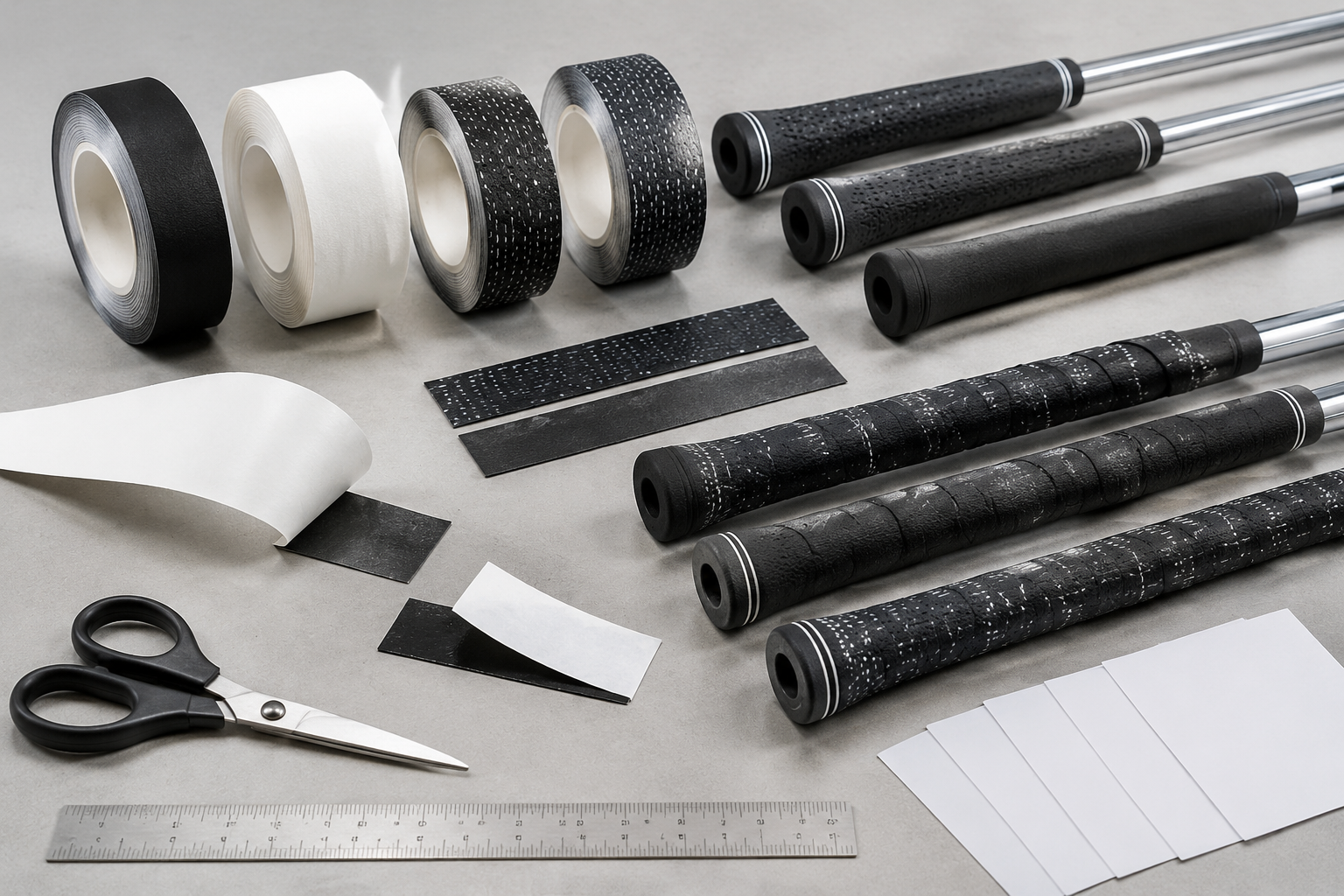
Record tape width and thickness with units, measurement method and tolerance. State the adhesive configuration, carrier or backing material, release liner and roll core. For pre-cut strips, add finished strip length and liner split or tab details where applicable.
Coverage
Confirm the tape reaches the intended grip area without exposing unwanted adhesive or blocking the shaft opening.
Build-up
Record each tape layer and placement. Do not use a universal wrap-to-size formula across different tapes, grips and shafts.
Release liner
Check liner removal, tearing, curl and handling during the workshop's normal installation sequence.
If the buyer needs a particular finished grip size, measure the installed assembly at defined points. Tape thickness is one input; grip wall, core-to-shaft relationship and installation variation also affect the result.
Test on the actual grip and shaft
Prepare samples using the intended shaft, grip, tape and installation method. Record the tape direction, overlap or gap, liquid amount where applicable, working time, grip alignment and time before handling or use. Compare the same conditions across samples.
| Sample check | What to observe | Acceptance record |
|---|---|---|
| Application | Tape unwinds, cuts, wraps and releases from the liner consistently | Operator notes and photos |
| Installation | Grip can be seated and aligned using the approved method | Working sequence and time |
| Finished assembly | Position, outside dimensions, twist or movement and surface condition | Measurement sheet and reference sample |
| Removal | Peel behavior, residue and shaft-cleaning requirement | Removal method and observations |
| Storage | Roll blocking, liner lift, edge damage or contamination | Storage condition and inspection date |
A short bench check does not establish long-term adhesion under every climate and storage condition. If aging, temperature or humidity performance is required, define the conditioning and evaluation method before approval.
Control roll length, splices and lot traceability
State whether length is measured as usable tape, total wound length or number of pre-cut strips. Define the permitted splice policy, roll core, edge condition and winding direction. For workshop use, confirm the roll fits the intended dispenser and can unwind without telescoping or edge damage.
Use a lot code that connects the finished roll or box to the production batch. Keep the approved sample, specification and installation record together so a reorder can be compared under the same method.
Compare rolls and strips on the same purchasing basis
A roll quotation and a pre-cut strip quotation cannot be compared by package price alone. Convert both to usable installations using the approved tape length per grip, allowed waste and any unusable material at roll ends or splices. Keep that calculation separate from the physical acceptance criteria.
| Purchasing unit | Buyer should confirm | Workshop consideration |
|---|---|---|
| Roll | Usable length, width, core, splice policy and rolls per carton | Cutting time, dispenser fit and end waste |
| Pre-cut strip | Strip dimensions, pieces per pack and liner design | Faster preparation but fixed coverage per piece |
| Kit allocation | Tape quantity, any included items and number of intended installations | Contents must match the documented installation process |
When private labeling, state whether the selling unit is one roll, one box of strips or a complete kit. The label quantity, barcode and carton count should follow that unit.
Control storage before the tape reaches the installer
Ask for the approved storage range and shelf-life information for the selected product. During sample and receiving checks, inspect for liner lift, edge contamination, blocking between layers, adhesive transfer and changes in unwind behavior.
Keep rolls in their protective packaging until required and use a first-in, first-out system when lot age matters. If the workshop receives tape after unusual heat or cold exposure, condition and inspect it according to the approved guidance before comparing installation performance.
Plan labels, cartons and workshop storage
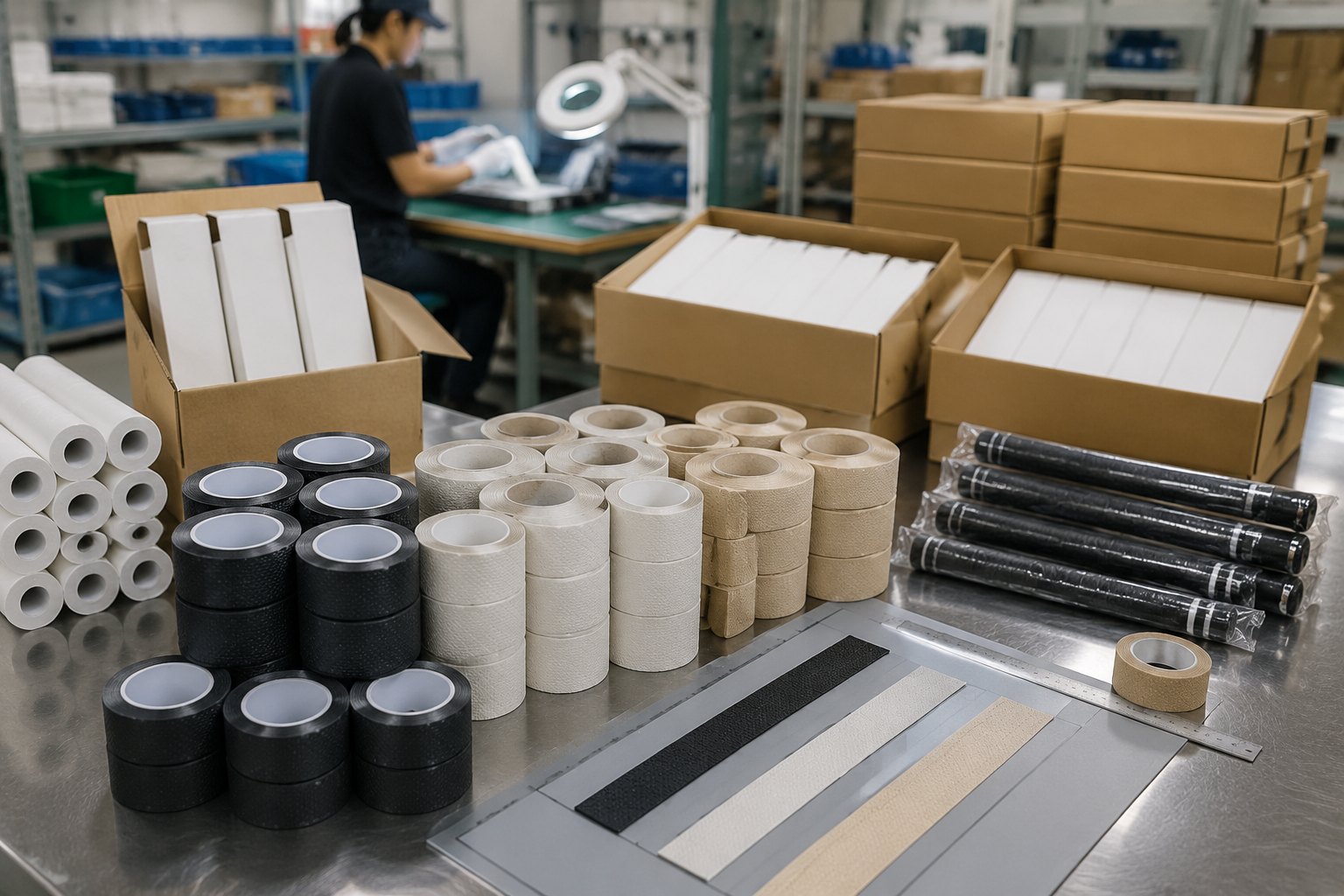
The unit label should identify the SKU, dimensions, quantity, lot and any approved storage or installation information. Protect roll edges and release liners from dust, moisture, pressure and heat during packing and transport. Define the number of rolls or strips per inner pack and master carton.
Request packed weight and carton dimensions for the selected order. During receiving, compare labels and counts before opening mixed lots, then sample rolls from more than one carton where possible.
Connect tape selection to the grip program
Use the grip replacement guide for the complete installation sequence and the custom golf grips page when the tape is part of a broader grip program. Tape and grips remain separate items unless both are included in the quotation.
Send the tape format, width, thickness, length, adhesive and backing requirements, installation system, grip and shaft references, label, packing, quantity per SKU and destination. Include the required sample or test method.
Frequently asked questions
What width of golf grip tape should I use?
Choose the width around the shaft, grip length and wrapping method. Verify coverage and installation on the actual shaft and grip rather than relying on one universal width.
Can tape wraps be used to change finished grip size?
Tape build-up can change the installed result, but the effect depends on tape thickness, placement, grip wall, core and shaft. Record and measure the complete assembly.
Is every installation liquid compatible with every grip tape?
No compatibility should be assumed. Use the approved process and review the relevant product and safety instructions for the selected system.
Should grip tape be tested for removal?
Yes when clean removal or workshop time matters. Record peel behavior, residue and the approved shaft-cleaning method on the actual assembly.
What should appear on a private-label tape package?
Identify the SKU, dimensions, quantity, lot and approved storage or installation information, plus any market-specific label requirements.
What is the MOQ for golf grip tape?
Standard MOQ is 200 per SKU. Logo, color or packaging customization starts at 500 per SKU.
Request a golf grip tape quotation
Send the tape format and dimensions, grip and shaft references, installation method, label, packing, quantity and destination. PASSEN can review the sampling and QC points before quotation.