
How to Design Custom Golf Ball Markers: Materials, Techniques & Pricing
Custom golf ball markers are one of the easiest custom products to sell, but one of the easiest to get wrong. They are small, they are everywhere, and buyers constantly overpay for basic metal markers without understanding what makes one design better than another.
This guide walks through the materials, manufacturing techniques, pricing tiers, and design decisions that determine whether your custom ball markers fly off the shelf or sit in a pro shop drawer for two seasons. If you are ordering 50 markers for a member-guest tournament or 5,000 markers for a national retail chain, the same rules apply.
Key Takeaways
- Metal markers (zinc alloy, brass, stainless steel) account for 80%+ of the pro shop market. Enamel fill and 3D stamping add perceived value without much cost.
- CNC machining gives the sharpest detail. Die casting is cheaper at scale. Laser engraving works best for simple logos and text.
- Soft enamel markers cost around $0.80–$1.50 wholesale. Hard enamel runs $1.50–$3.00. Prices drop significantly above 500 units.
- The most common mistake is ordering markers that are too large or too heavy. The sweet spot is 25–28mm diameter and under 12 grams.
- Presentation packaging (velvet pouch, magnetic box) can double the perceived value for a $0.30–$0.60 per-unit increase.
Why Ball Markers Are the Highest-Margin Custom Golf Item
Among all custom golf accessories, ball markers have the best cost-to-perceived-value ratio. A wholesale zinc alloy marker with soft enamel and a simple logo costs roughly $1.00 to produce. Place it in a small velvet pouch, and it sells for $6–$12 at a pro shop counter or goes into a $30 tournament gift bag without anyone blinking.
For B2B buyers, this means strong margins at every point in the chain. For tournament organizers, it means an affordable item that players genuinely appreciate. For retailers, it means an impulse purchase that sits next to the register and moves.
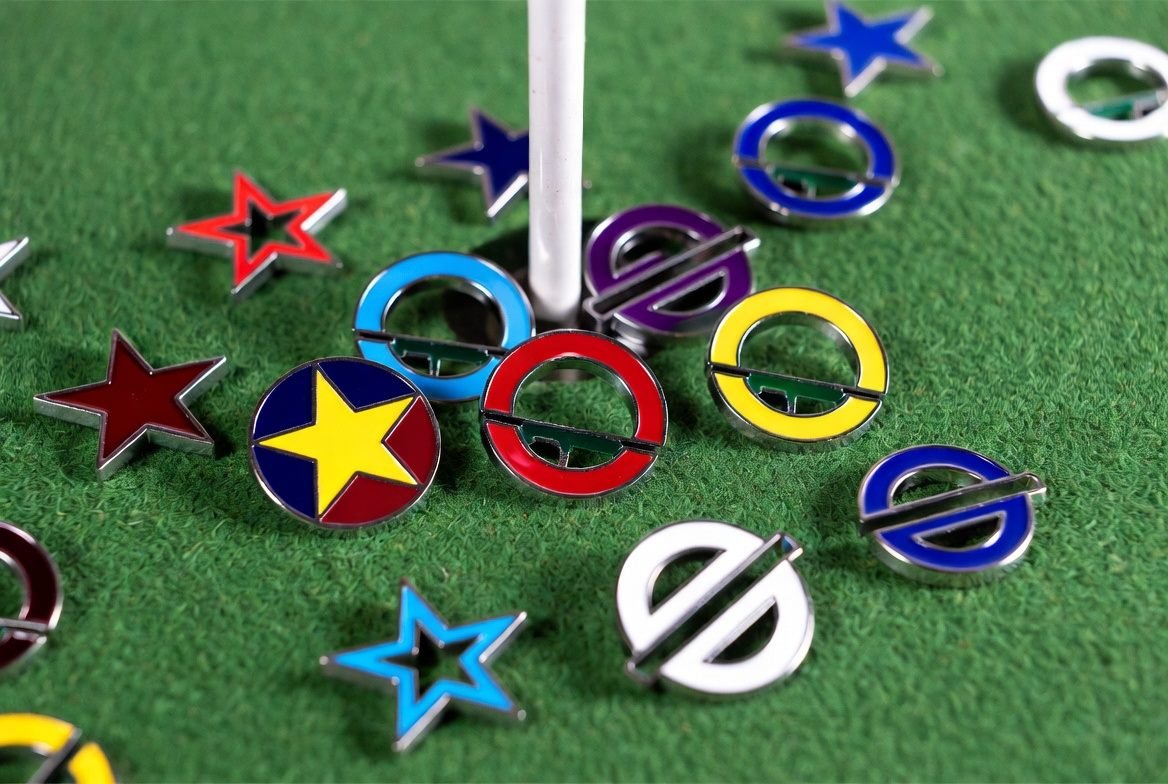
Material Options: What Each One Costs and Where It Fits
The material decision drives everything else: cost, durability, design flexibility, and minimum order quantity. Here is how the four main options stack up.
Zinc Alloy (Best All-Rounder)
- Wholesale cost: $0.60–$1.20 per piece
- MOQ: 100–300 units
- Best for: Tournament giveaways, pro shop retail, corporate gifts
- Pros: Takes enamel well, good heft, die-cast friendly for complex shapes
- Cons: Can tarnish over time without plating
Brass (Premium Pick)
- Wholesale cost: $1.50–$3.00 per piece
- MOQ: 200–500 units
- Best for: High-end clubs, PGA-certified events, luxury corporate gifts
- Pros: Classic look, ages well, feels substantial, CNC-friendly
- Cons: Heavier, more expensive, slower production
Stainless Steel (Durable Workhorse)
- Wholesale cost: $0.80–$2.00 per piece
- MOQ: 200–500 units
- Best for: High-volume retail, courses that want durability over flash
- Pros: Rust-proof, consistent color, strong for thin designs
- Cons: Harder to achieve intricate detail without CNC
Acrylic / Resin (Budget-Friendly)
- Wholesale cost: $0.30–$0.80 per piece
- MOQ: 100–300 units
- Best for: Junior tournaments, charity events, mass giveaways
- Pros: Lightweight, colorful, very low cost
- Cons: Feels cheap, scratches easily, limited design complexity
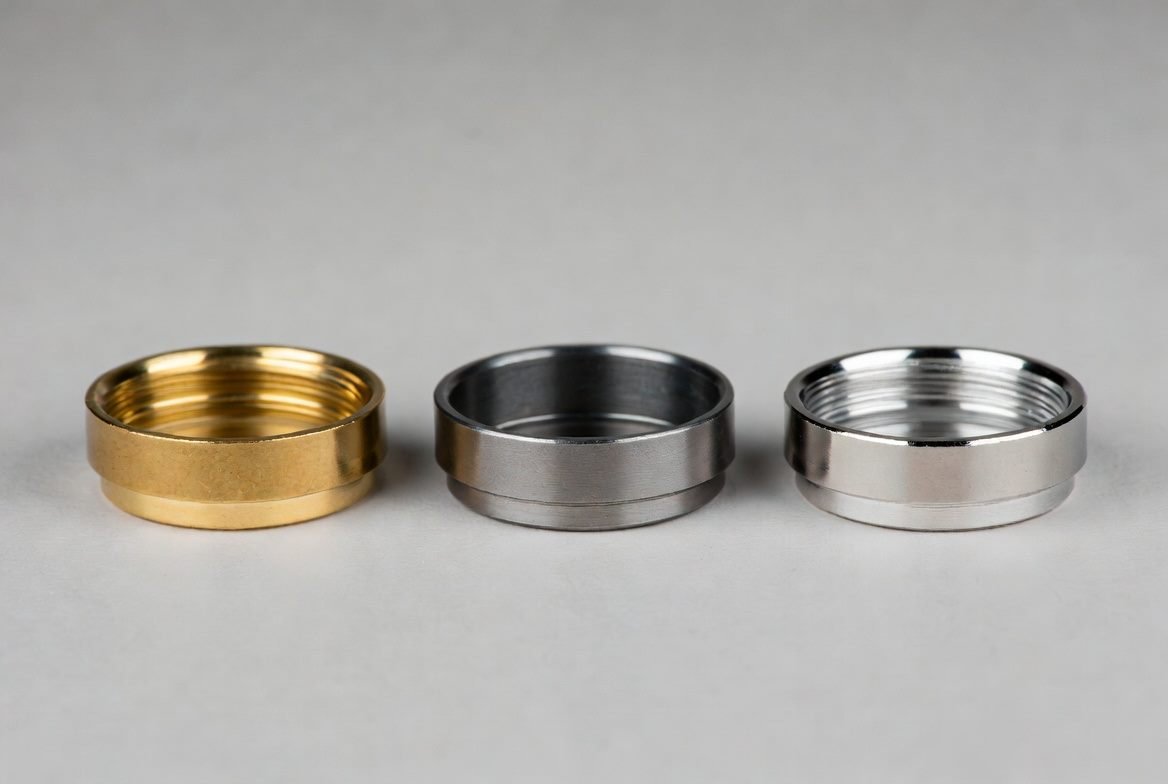
Manufacturing Techniques: Stamping, Casting, Engraving
Die Casting (Volume-Friendly)
Molten metal is injected into a mold. Best for complex 3D shapes and production runs above 500 units. The mold cost ($200–$800) is a one-time expense, but per-unit cost drops sharply with volume. Most tournament markers use die-cast zinc alloy.
CNC Machining (Highest Precision)
A CNC machine cuts the design from a solid metal blank. Best for fine detail, sharp edges, and small runs where mold investment does not make sense. Per-unit cost is higher, but there is no mold fee.
Stamping (Simple & Fast)
A hardened die presses the shape and design into a metal blank in one stroke. Fast and cheap for simple designs. Common for basic round markers with a single raised logo.
Laser Engraving (Detail on a Budget)
A laser etches the design onto the marker surface. Works on any metal but looks best on darker surfaces where contrast is high. Good for text-heavy designs and personalized markers where each unit is unique.
Enamel Fill: Soft vs Hard and Why It Matters
| Feature | Soft Enamel | Hard Enamel |
|---|---|---|
| Surface feel | Textured, recessed areas | Smooth, flush finish |
| Durability | Good | Excellent |
| Cost per piece | $0.80–$1.50 | $1.50–$3.00 |
| Color options | Full Pantone range | Pantone, slightly muted |
| Best use | Tournaments, giveaways | Pro shop retail, premium gifts |
Soft enamel is the default choice for most orders. The colors pop, the textured surface hides minor imperfections, and the price fits tournament budgets. Hard enamel is worth the upgrade when the marker will sit on a retail shelf next to other premium merchandise. The smooth, jewelry-like finish makes a difference buyers can feel.
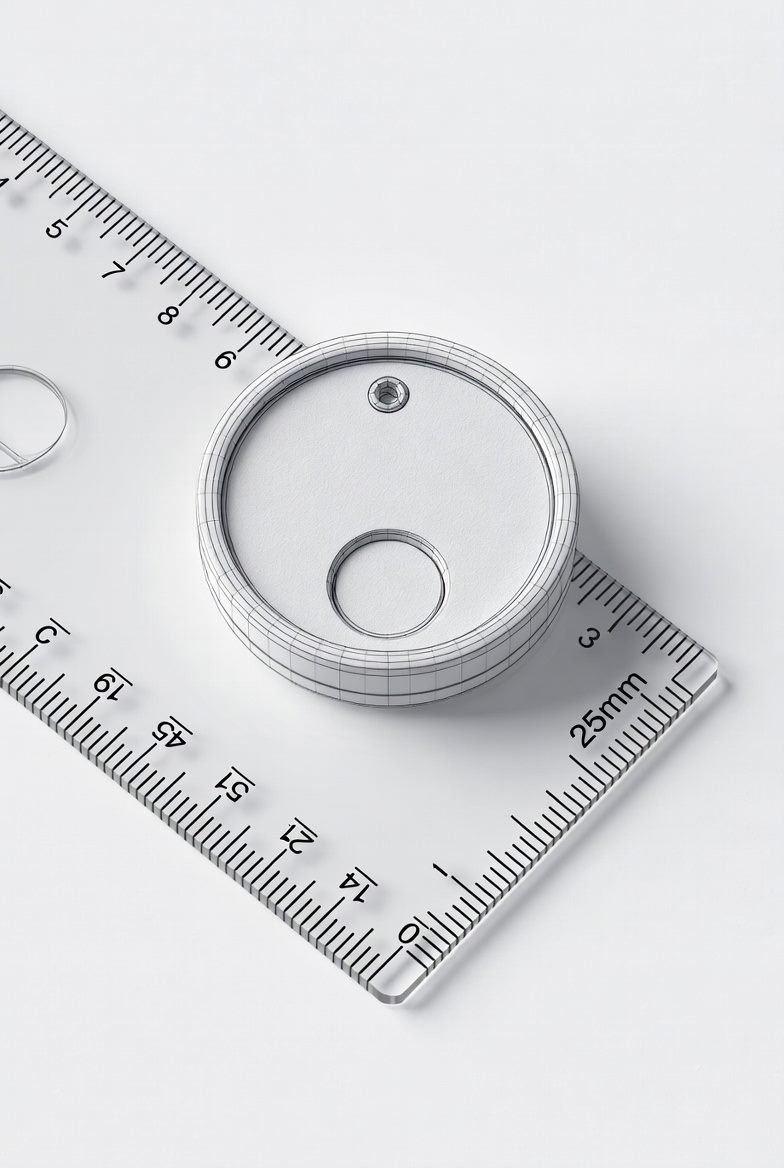
Design Rules That Save Money and Avoid Rejects
1. Keep It 25–28mm in Diameter
Anything under 25mm feels like a coin and is easy to lose. Anything over 30mm starts to look like a poker chip and does not fit standard ball marker clips. The 25–28mm range is where most retail markers sit.
2. Stay Under 3mm Thick
Thicker markers are harder to stamp cleanly and more expensive to ship. A 2.5–3mm thickness gives enough weight without feeling bulky.
3. Limit Colors to 3–4 for Soft Enamel
Every additional enamel color adds a production step and cost. Three to four colors deliver a clean look without driving up the per-unit price.
4. Adding a Magnetic Back Adds $0.20–$0.30
A magnetic cap on the back lets the marker attach to a divot tool or hat clip. For tournament gift sets almost always worth it and easy to upsell.
5. Avoid Tiny Text
Text under 2mm in height will not stamp or engrave cleanly. Keep lettering simple and bold. If you need fine print, use laser engraving on a flat stainless steel blank.
Packaging: The $0.50 Upgrade That Changes Everything
A bare ball marker in a plastic bag sells for $3. The same marker in a velvet pouch sells for $8. In a magnetic gift box, it sells for $12. The packaging controls the perceived value more than the marker itself.
| Packaging Type | Cost Per Unit | Best Use |
|---|---|---|
| Individual poly bag | $0.05 | Bulk orders, giveaways |
| Velvet pouch | $0.30–$0.50 | Tournament gifts, pro shop |
| Cardboard display card | $0.15–$0.25 | Retail peg hook display |
| Magnetic gift box | $0.60–$1.00 | Premium corporate gifts |
| Custom tin | $0.80–$1.50 | Limited editions, VIP events |
Ball Marker Sets: Upselling Beyond the Single Piece
Selling markers as sets multiplies the order value with minimal extra production cost. The three most common formats:
- 2-Piece Player Set: One marker plus one divot tool. Wholesale $3–$5. Retail $12–$18.
- 4-Piece Foursome Set: Four markers in a gift box, one for each player. Wholesale $8–$12. Retail $25–$35.
- Tournament Pack: 144 markers in bulk packaging for event distribution. Wholesale $1.00–$1.50 per marker. Sold as a single line item to the tournament director.
FAQ
What is the standard size for a golf ball marker?
The industry standard is 25–28mm in diameter and 2.5–3mm thick. This fits most ball marker clips and divot tool accessories.
How much do custom ball markers cost wholesale?
For zinc alloy soft enamel: $0.80–$1.50 each at 500+ units. Brass or hard enamel: $1.50–$3.00 each. Acrylic: $0.30–$0.80 each. Prices include basic logo design.
What is the minimum order quantity?
Most suppliers set MOQ at 100–300 units for metal markers. Acrylic markers can sometimes go as low as 50 units.
How long does production take?
Standard production is 10–14 days after artwork approval. Rush orders can ship in 7 days with an expedite fee. Add 5–7 days for international shipping.
Can I order markers with multiple designs in one order?
Yes, but each unique design usually requires its own mold or CNC setup. Mixing designs is more feasible with laser engraving than with die casting.
Bottom Line
Custom ball markers are a no-brainer for any golf business. The margins are strong, the production is straightforward, and they appear in nearly every golf bag on the planet. The difference between a forgettable marker and one players keep for years comes down to material choice, enamel quality, and packaging.
Pick zinc alloy with soft enamel for most orders. Upgrade to brass or hard enamel for premium retail. And never skip the velvet pouch. If you want help selecting the right material, finish, and packaging for your next custom ball marker order, request a quote here.