
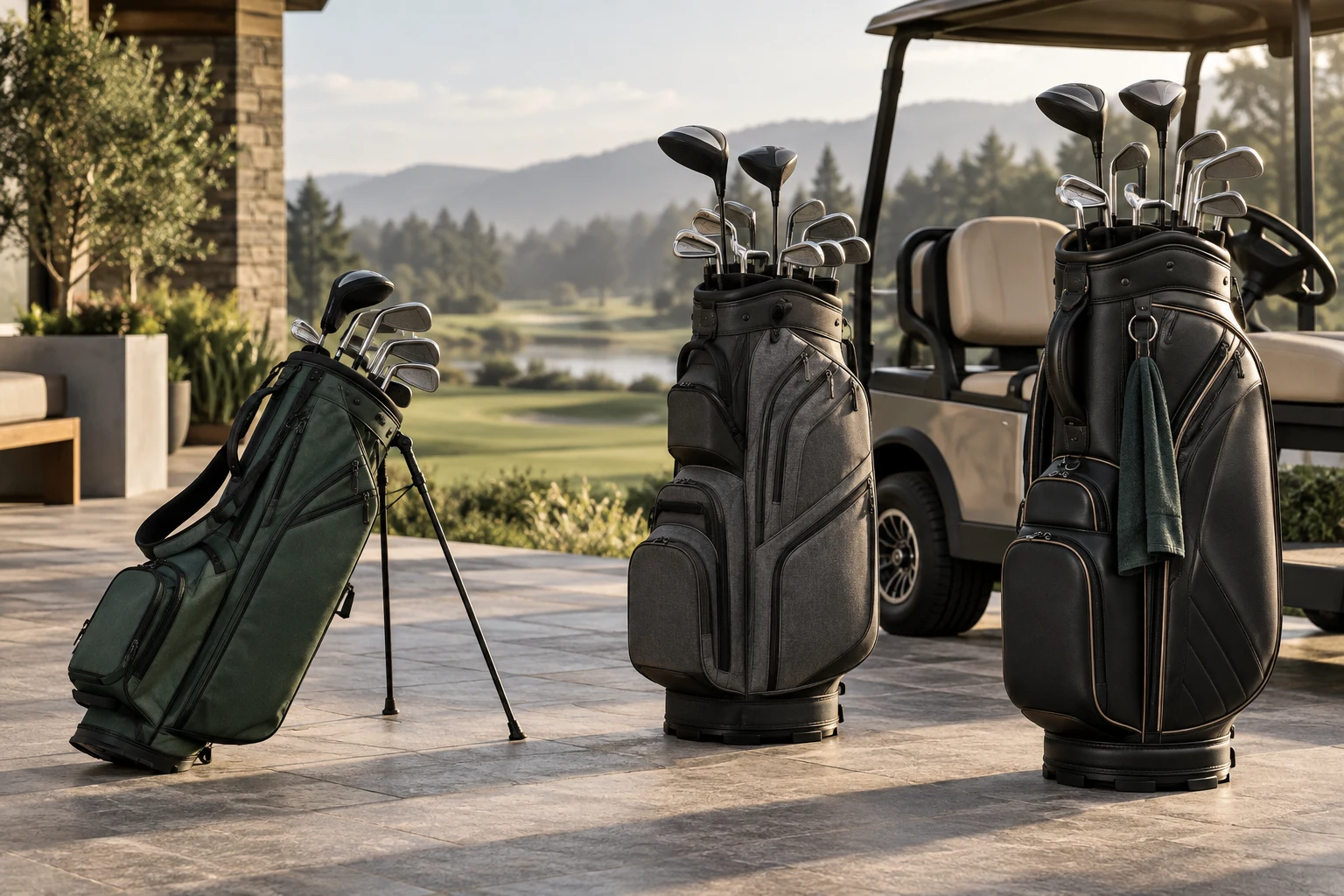
The main types of golf bags are stand bags, cart bags, staff bags, Sunday bags and travel covers. The right choice depends on how the bag will be carried, where it will be used, how much equipment it must hold, and how the buyer wants the brand to appear.
For clubs, resorts, retailers and golf brands, selecting a bag format is also a specification decision. Divider layout, pocket access, strap position, stability and logo placement all change with the format. Use this guide to narrow the model before requesting a custom sample or quotation.
Three core golf bag formats at a glance
Stand or carry bag
Prioritizes carrying comfort, balance and reliable leg action for walking rounds.
Cart bag
Prioritizes upright stability, organized storage and pocket access while strapped to a cart.
Staff bag
Prioritizes presentation, capacity and large branding panels, with more weight and packing volume.
| Bag type | Typical use | Key specification checks | Buyer fit |
|---|---|---|---|
| Stand bag | Walking and practice | Leg mechanism, strap system, balance, base and weight | Teams, clubs and brands serving walkers |
| Cart bag | Riding or push carts | Strap channel, pocket access, top orientation and base fit | Resorts, retailers and cart-focused programs |
| Staff bag | Premium presentation and high capacity | Panel structure, handles, base, embroidery area and carton volume | Brand displays, sponsorship and premium collections |
| Sunday bag | Practice, short courses and lighter club sets | Club capacity, compact storage, strap comfort and simple pocket plan | Events, practice ranges and compact collections |
| Travel cover | Transporting another golf bag | Internal fit, padding, wheel path, handles, zipper and closure | Travel retail and coordinated luggage programs |
Stand bag vs cart bag: choose around the carrying method
Choose a stand bag for a program centered on walking, carrying and practice. Choose a cart bag when strapped storage and pocket access are the priority. A stand mechanism does not guarantee comfortable carrying or cart compatibility; review the completed bag under its intended load and on the intended cart.
| Review point | Stand bag | Cart bag |
|---|---|---|
| Primary use | Carrying between shots; supported access at rest. | Equipment carried by a riding or push cart. |
| Sample priority | Loaded balance, strap adjustment, leg deployment and base stability. | Base fit, restraint position, top orientation and access while strapped. |
| Brand placement | Check artwork with straps fitted and the bag carried. | Check artwork against cart straps and filled pockets. |
| Quotation basis | Carry system, stand assembly, divider layout, fabric and packing. | Cart interface, storage layout, divider construction, fabric and packing. |
Staff bag vs cart bag: start with a staff format when broad branding panels and presentation are the main purpose. Start with a cart format for practical storage on a specified cart. Do not assume a larger staff bag will fit that cart or share the same shipping cost; confirm the base, handles and packed dimensions.
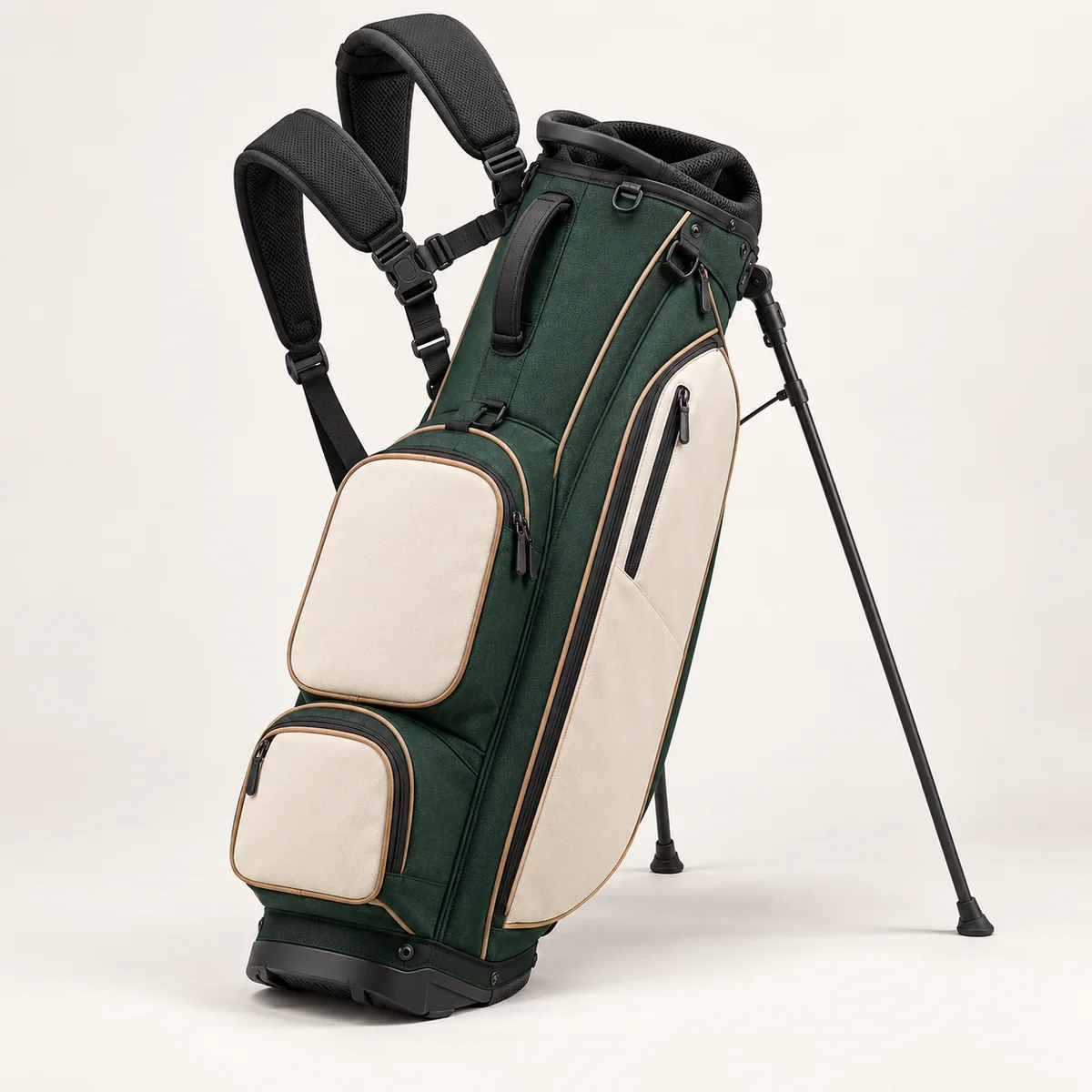
Stand bag program
Walking, club retail and coordinated carry collections.
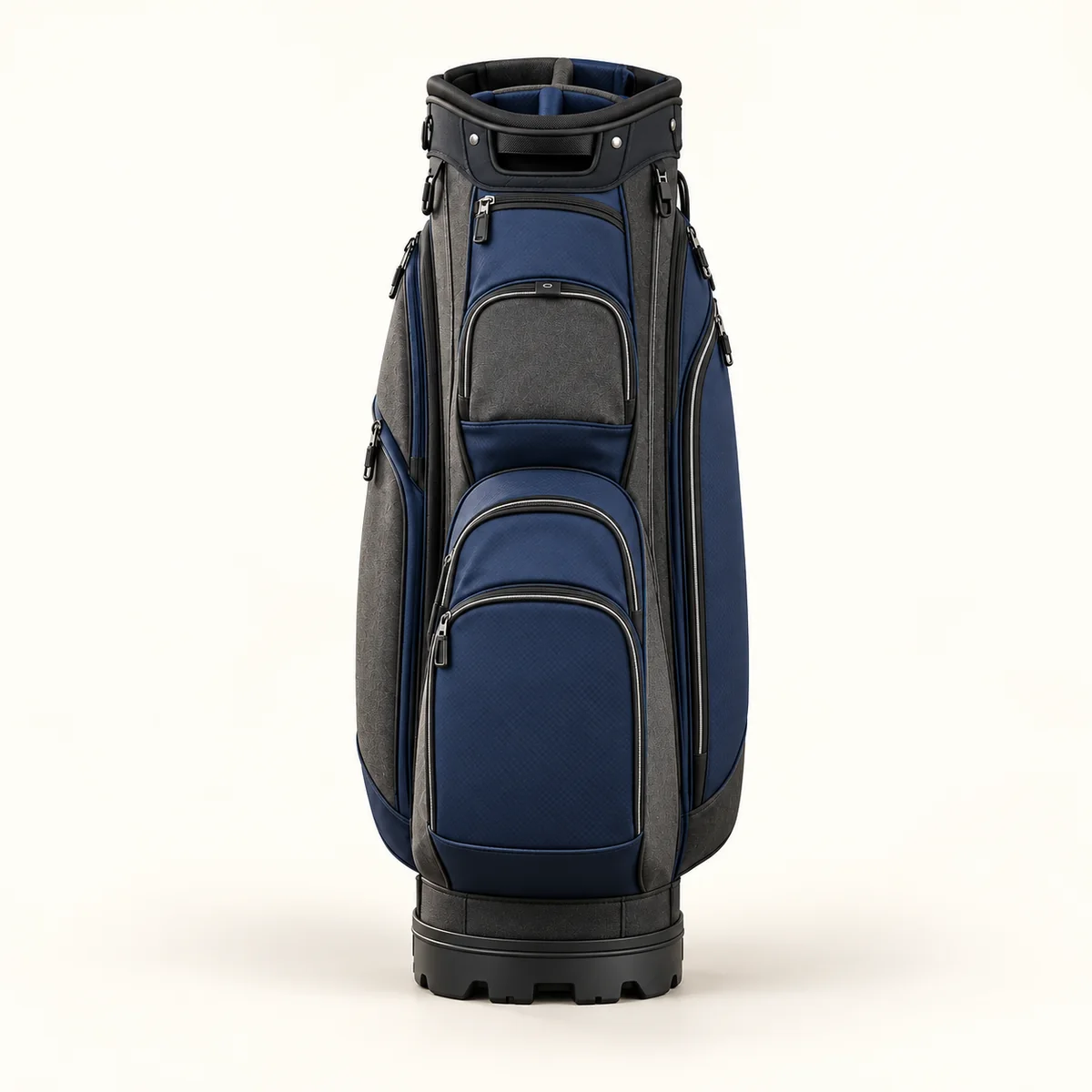
Cart bag program
Clubs, resorts and ranges built around strapped storage.
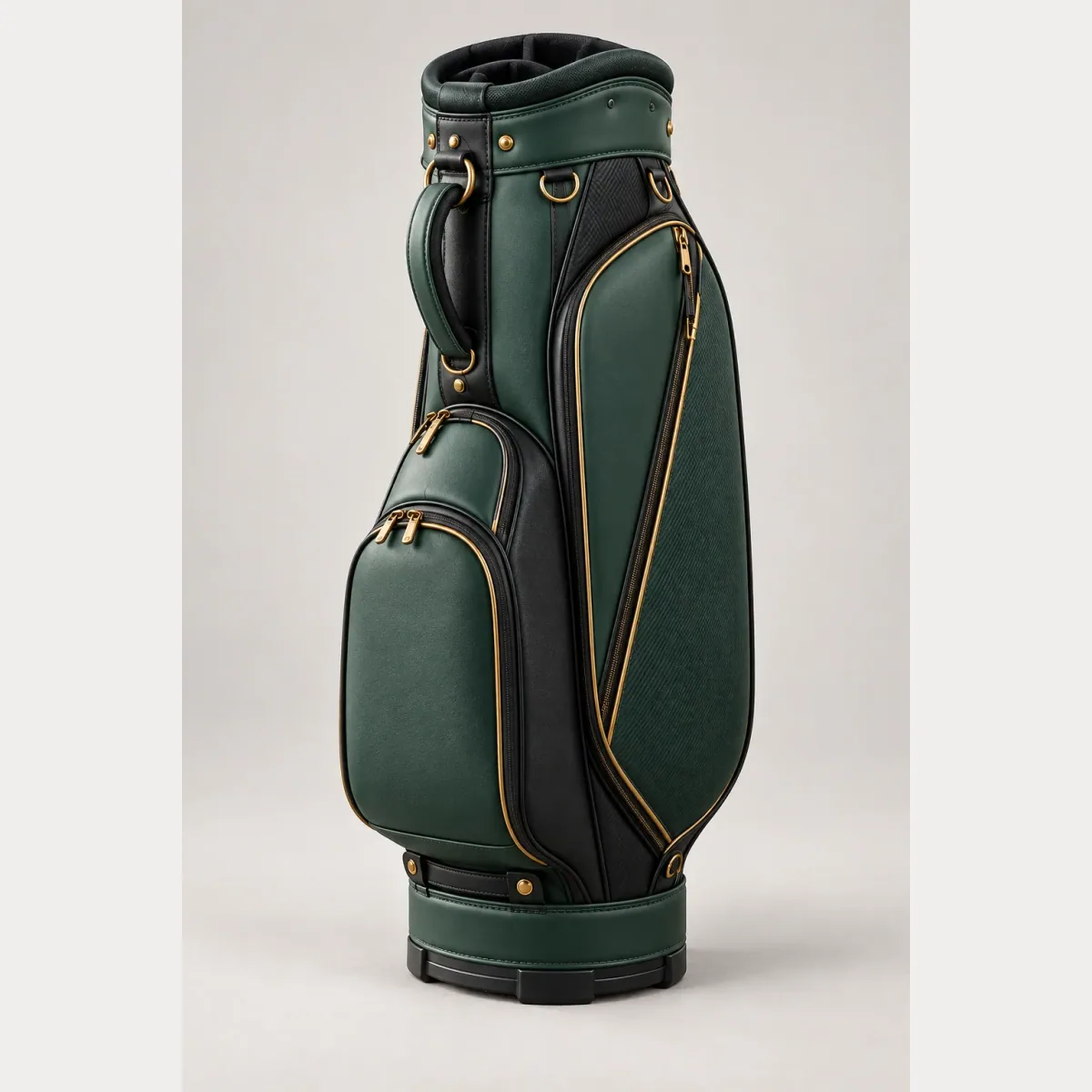
Sun Mountain's stand and cart bag comparison also separates mobility from strapped storage. PASSEN quotations should be based on the selected construction rather than another brand's model specifications.
For a comparable quotation, send: intended carrying method, divider layout, pocket priorities, logo panels, colors, quantity per SKU, packaging and destination. Ask for a sample review in the actual carried or strapped position.
Stand bags: check comfort and leg action together
A stand bag must work while moving and while resting. Review the strap system with the bag loaded, then set it down repeatedly on the surfaces the golfer is likely to encounter. The legs should deploy and return without catching, and the base should remain stable without making the bag awkward to carry.
Pocket count alone does not make a stand bag useful. Check whether a jacket, balls, valuables and a bottle can be reached without upsetting the balance. If the program needs a custom logo, approve its position with the bag both upright and carried so straps or folds do not hide the artwork. See PASSEN’s stand bag construction guide for a more detailed sample checklist.
Cart bags: design around the strapped position
A cart bag should be reviewed on the intended riding or push cart. The strap must hold the bag without covering the pockets buyers need most. Club openings should face the golfer, the base should sit securely, and handles should remain usable during loading and unloading.
Map every pocket before approving the outer panels. Large decoration can look strong on a flat mockup but become difficult to read when a pocket is filled or a strap crosses the panel. The cart bag buying guide explains the related mounting and access checks.
Staff bags: balance presentation with handling
Staff bags provide broad panels and generous storage, which makes them useful for premium presentation. That scale also increases filled weight and carton volume. Confirm handle reinforcement, base stability, panel structure and the way the bag is moved before finalizing embroidery or appliqué.
Use actual artwork at the intended size during sample review. Curved panels, piping and pocket openings can change how a logo reads. If the bag will be displayed, carried by staff or used for sponsorship, write that use into the brief so construction and branding are evaluated in the correct position. Our guide to staff golf bags covers these trade-offs in more detail.
Sunday bags and travel covers serve different jobs
A Sunday bag is a compact playing bag. Define the club count, pocket load and walking distance before deciding how simple the construction can be. A travel cover is protective luggage for another bag. Its internal dimensions, padding, wheels, zipper path and external handles should be tested with the intended golf bag inside.
Keep these two products separate in the specification. A lightweight playing bag and a protective travel cover may share colors and branding, but they solve different handling problems. Buyers planning a luggage line can continue with the golf travel bag sourcing guide.
Choose the bag type around the sales program
- Club or team program: start with how players carry or ride, then confirm uniform logo placement and name options.
- Resort or pro shop: compare storage, display footprint, target price and the formats already used by guests.
- Corporate event: define presentation, shipping, recipient use and whether the bag is the main gift or part of a set.
- Golf brand collection: decide which construction elements create a consistent family across stand, cart and staff models.
When a range includes several bag types, do not force the same panel map onto every model. Keep the brand system consistent through color, artwork and selected details, then adapt placement to each construction.
Five construction details that change the quotation
- Top and dividers: specify opening shape, divider count, full-length separation and any dedicated putter well.
- Body materials: list face fabric, backing, lining, reinforcement and cleaning expectations instead of relying on a material name alone.
- Straps and handles: define carry position, adjustment range, padding and the loads each handle must support.
- Pocket map and hardware: provide the purpose of every pocket, zipper direction, puller, buckle and attachment point.
- Branding and packing: state artwork size, method, color references, name variation, packaging and carton identification.
These choices affect sample work and production control. They also determine whether two visually similar bags are actually comparable quotations.
Approve the sample in its real use position
Load the sample with the intended clubs and normal pocket contents. Carry it, stand it, strap it to the cart or place it inside the travel setup. Open every pocket, move every zipper, operate the legs where present, lift each handle and inspect the base after repeated placement.
For branding, view the filled bag from normal distance and under ordinary light. Confirm logo position, edge clearance, stitch or print quality, panel distortion and color consistency. Record the approved sample with a written specification so bulk inspection can compare the same details.
Prepare a quote-ready custom golf bag brief
Send the bag type, target user, divider plan, pocket list, materials, colors, logo artwork, quantity per SKU, packaging, destination and required arrival date. Include reference photos or a physical sample when proportions or pocket positions matter. If you are still deciding between models, list the two alternatives and the use case so the quotation can separate the construction choices.
Review PASSEN’s custom golf bag options, then use the form below to request a specification review and quotation.
Frequently asked questions
What are the main types of golf bags?
The main formats are stand or carry bags, cart bags, staff or tour bags, Sunday bags, and travel covers. Each format changes carrying method, storage, structure, weight, and branding space.
What is the difference between a stand bag and a cart bag?
A stand bag is designed to be carried and uses deployable legs. A cart bag is designed to remain upright on a cart and usually provides more structured storage. Check pocket access and strap position on the intended cart.
When does a staff bag make sense?
A staff bag suits programs that value a large presentation surface, generous storage, and a premium presence. Buyers should also account for its weight, handling, packing volume, and actual use environment.
Is a Sunday bag suitable for a full club set?
Many Sunday bags are designed for a lighter practice or short-course setup. Capacity varies, so approve the intended club count, club-head clearance, pocket load, and carry comfort on a sample.
Which details should be checked on a custom golf bag sample?
Check divider layout, balance, strap comfort, leg action where applicable, base stability, pocket access, zipper paths, handle reinforcement, logo position, filled appearance, and fit on the intended cart or travel setup.
What information helps PASSEN quote a custom golf bag?
Send the bag format, target user, divider plan, pocket list, materials, colors, artwork, quantity per SKU, packaging, destination, and required arrival date. Reference photos or a physical sample can clarify proportions and construction.