
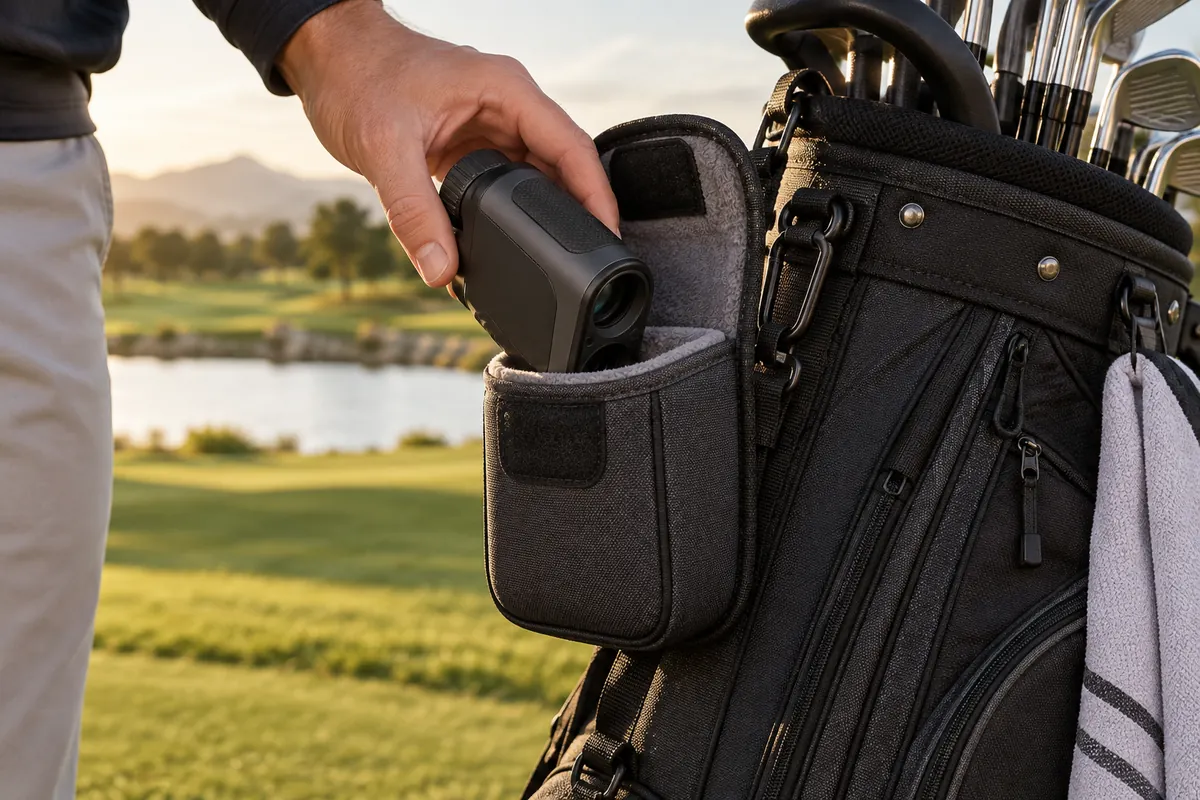
A golf rangefinder case should fit the actual device, stay attached to the intended bag and allow one-handed access without exposing the optics to hard hardware. Start with the rangefinder model and carrying position, then choose a case shape, closure and lining. A photograph of a pouch alone cannot establish device fit or the items included in a quote.
This guide is for clubs, retailers and brands planning a case or pouch program. It compares common constructions and gives a sample-check list that helps prevent a good-looking case from failing during play.
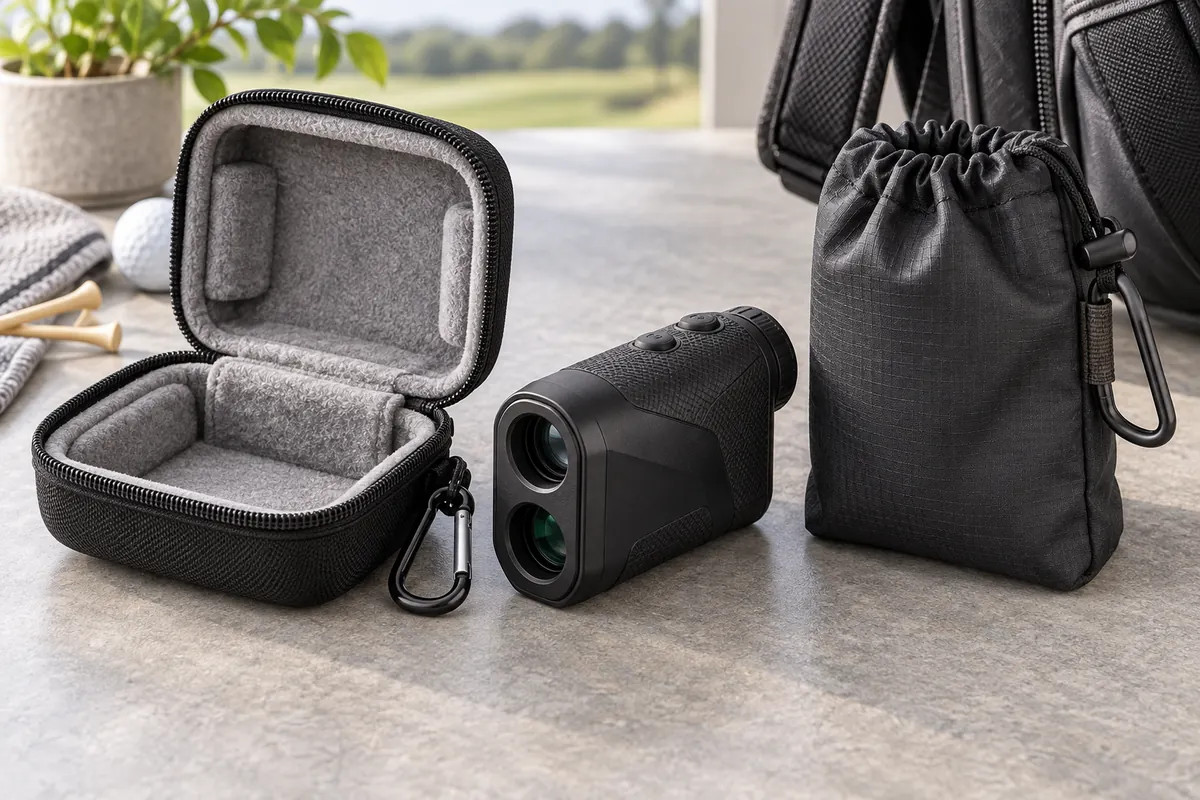
Choose the case format by access and protection
| Format | Main advantage | Check on the sample |
|---|---|---|
| Structured zip case | Defined shape and closed storage | Device clearance, zipper path and one-handed access |
| Soft cinch pouch | Lightweight, flexible opening | Drawcord retention and lens contact |
| Flap or magnetic case | Fast repeated opening | Closure security during walking and cart travel |
These formats are starting points, not a claim that one type fits every laser rangefinder. Order samples around the largest and smallest intended devices and test them with any strap, silicone sleeve or clip the buyer will actually use.
Measure the device before approving the pattern
Record the rangefinder’s length, width, depth and protruding controls. Allow for the hand position needed to remove it; an exact device-sized cavity can still be awkward on the course. Check the opening width, usable internal depth, seam allowances and any padding that reduces the internal volume.
Fit-test while the case is clipped to the bag, not only on a table. The case should not rub adjacent club shafts, block a bag zipper or swing into a cart wheel. If multiple rangefinder models are planned, state which models were physically tested; “universal fit” should not be assumed.
Protect the optics without overclaiming waterproofing
Check the contact points inside the case. A soft lining can reduce rubbing, while padding and a reinforced base can help the case hold its shape. Inspect where a zipper pull, rivet, magnet or clip sits relative to the lens and display. None should touch the device during insertion or removal.
Fabric, coatings and closures can resist ordinary splashes, but performance depends on the assembled case. If water resistance matters, define the exposure test and acceptance criteria for the sample rather than describing an untested pouch as waterproof. Dry a damp device and case according to their makers’ care instructions before closed storage.
Test the closure and bag attachment together
Open and close the loaded case with one hand while the bag is standing, carried and on a cart. A zipper should run without catching the lining or pressing into the rangefinder. A drawcord should hold the opening shut without creating a long loose loop. A magnetic or flap closure should remain shut during normal movement yet open without excessive force.
Specify the attachment: carabiner, webbing loop, hook-and-loop strap or another mounting method. Check gate clearance and stitching with the device loaded. Choose the attachment position to keep the case upright and away from the bag handle, stand legs and other hanging accessories. Our golf bag organizer guide covers how accessory placement interacts with pockets and hardware.
Plan materials, logo and retail presentation
Select shell and lining materials after the fit and use test. Review color consistency, edge binding, zipper tape, cord ends and seam finish on the assembled sample. Place artwork where it remains legible after the case is filled and closed; avoid seams, folds and attachment points. An embroidery, patch, print or debossed mark should be approved at finished size on the chosen surface.
List what is included: case only, rangefinder supplied separately, or a combined gift set. Confirm label copy, barcode, insert, individual bag or retail box before pricing. The gift set buying guide explains how to approve a multi-item pack without assuming that a device shown in photography is included.
Use a sample checklist before bulk approval
- Actual rangefinder model and usable internal dimensions.
- Insertion and removal with one hand in the intended bag position.
- Lens, display and control clearance from seams and hardware.
- Closure retention when walking, carrying and riding.
- Attachment strength, orientation and interference with other bag items.
- Lining, padding, seam, logo, color and finished packing.
Retain the approved sample and a written specification for every color or construction version. For repeat orders, inspect the bulk case against both, including the case when loaded with the selected device.
Frequently asked questions
Will one golf rangefinder case fit every model?
No. Device dimensions, controls and any added sleeve vary. Measure and physically test the intended rangefinder models before describing the fit.
Is a soft pouch or hard case better for a rangefinder?
Choose by the required balance of shape support, carrying weight, closure and access. Test each format with the actual device on the intended bag.
Can a rangefinder case be waterproof?
A case should only be described with the water-resistance level demonstrated by the assembled sample and an agreed test. An untested fabric or coating does not prove that the finished case is waterproof.
What is the easiest closure to use during a round?
That depends on the bag position and player. Try the loaded sample one-handed; compare zipper, cinch and flap access against retention during movement.
Can we put a logo on the case?
Yes, subject to the selected material and decoration method. Approve artwork at finished size, clear of folds, seams and hardware.
Does the quoted case include a rangefinder?
Only if the quotation expressly lists the device. Specify each included component, insert and packing format before approving the quote.
Request a golf rangefinder case quote
Send the rangefinder model and dimensions, preferred case format, attachment, shell and lining, logo file, packaging, quantity per SKU and destination. Standard products generally start from 200 per SKU; logo, color or packaging customization starts from 500 per SKU. PASSEN will confirm the sample, included components, price and schedule for the quoted version.