
From Alibaba to Your Pro Shop: A Practical Guide to Chinese Golf Accessory Manufacturers
The majority of custom golf accessories sold in the United States are manufactured in China. The supply chain is mature, the quality range spans from budget promotional items to premium products indistinguishable from domestic manufacturing, and the price advantage is typically 40-60% versus US or European production. But navigating this supply chain requires specific knowledge that most first-time customers do not have.
This guide covers how to find, evaluate, and work with Chinese golf accessory manufacturers, from initial supplier search to receiving the finished order.
Key Takeaways
- China produces approximately 70% of the world's custom golf accessories. The manufacturing clusters are in Guangdong (headcovers, bags, textiles), Zhejiang (tees, metal accessories), and Fujian (umbrellas, apparel accessories). Knowing which region specializes in your product category improves supplier targeting.
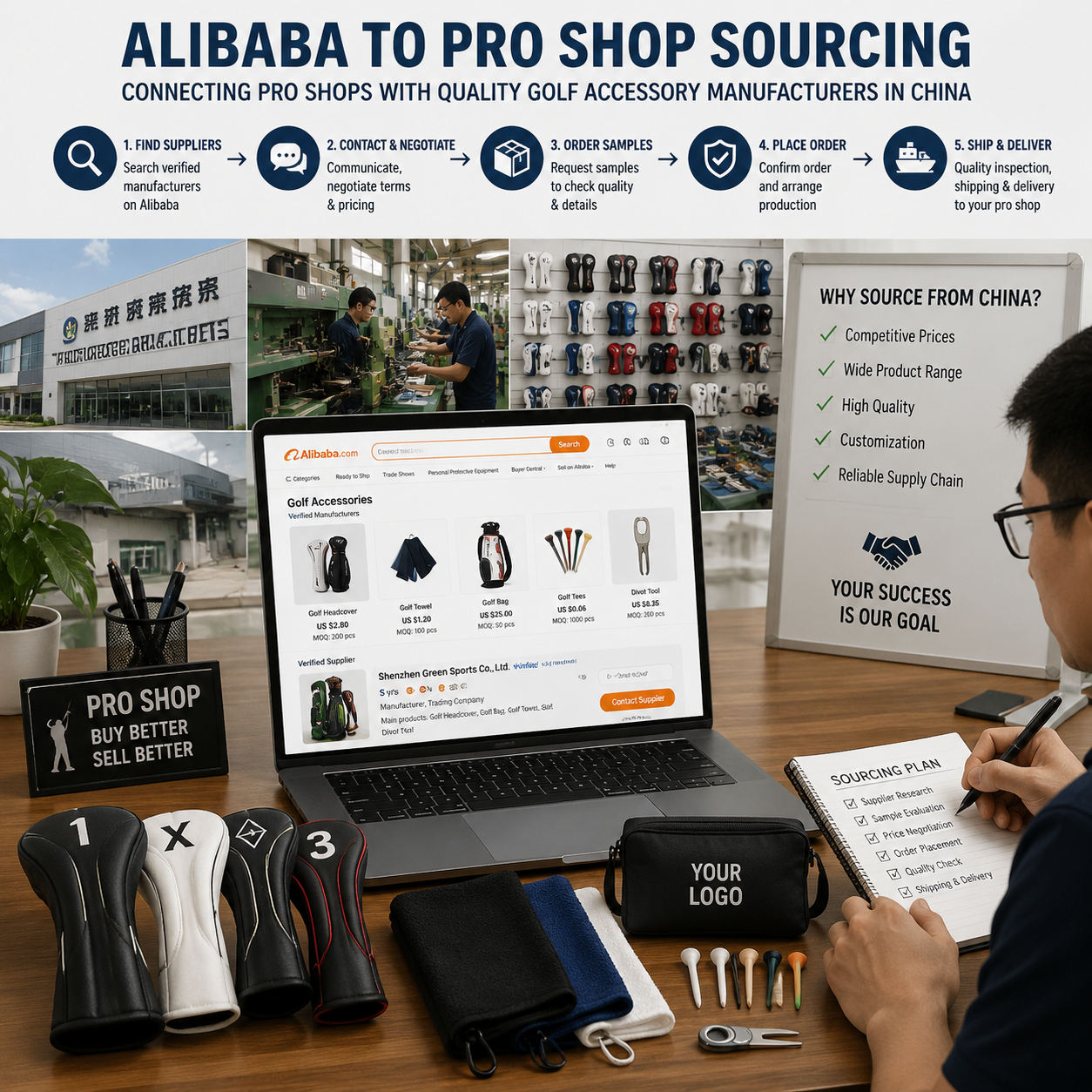
- Alibaba is the starting point, not the finish line. Use Alibaba to identify suppliers, then move communication to email or WeChat. Evaluate suppliers on their specialization (do they make golf accessories or everything?), their minimum order quantities (specialist golf manufacturers typically have lower MOQs), and their communication quality.
- Gold Supplier status on Alibaba means they paid for the badge, not that they are verified. Assessed Supplier status (with an on-site factory audit by a third party) is more meaningful. Trade Assurance provides order protection but does not guarantee quality.
- The best suppliers are often not the cheapest. A supplier quoting 15% below the market average is cutting corners on materials, labor, or quality control. The goal is reliable quality at a competitive price, not the lowest possible price.
Regional Manufacturing Specialties
| Region | Specialty | Typical MOQ | Lead Time |
|---|---|---|---|
| Guangdong (Dongguan, Shenzhen) | Headcovers, bags, textile accessories | 100-300 pcs | 4-6 weeks |
| Zhejiang (Yiwu, Ningbo) | Tees, ball markers, divot tools, small metal | 500-1,000 pcs | 3-5 weeks |
| Fujian (Xiamen, Quanzhou) | Umbrellas, apparel, bags | 200-500 pcs | 4-6 weeks |
| Jiangsu (Nanjing, Suzhou) | Training aids, plastic products | 300-500 pcs | 4-7 weeks |
The Evaluation Process
Step 1: Initial Contact. Send a clear inquiry that includes product description, approximate quantity, target price range, required certifications, and timeline. Suppliers who respond within 24 hours with specific questions about your requirements are demonstrating responsiveness that will continue through production.
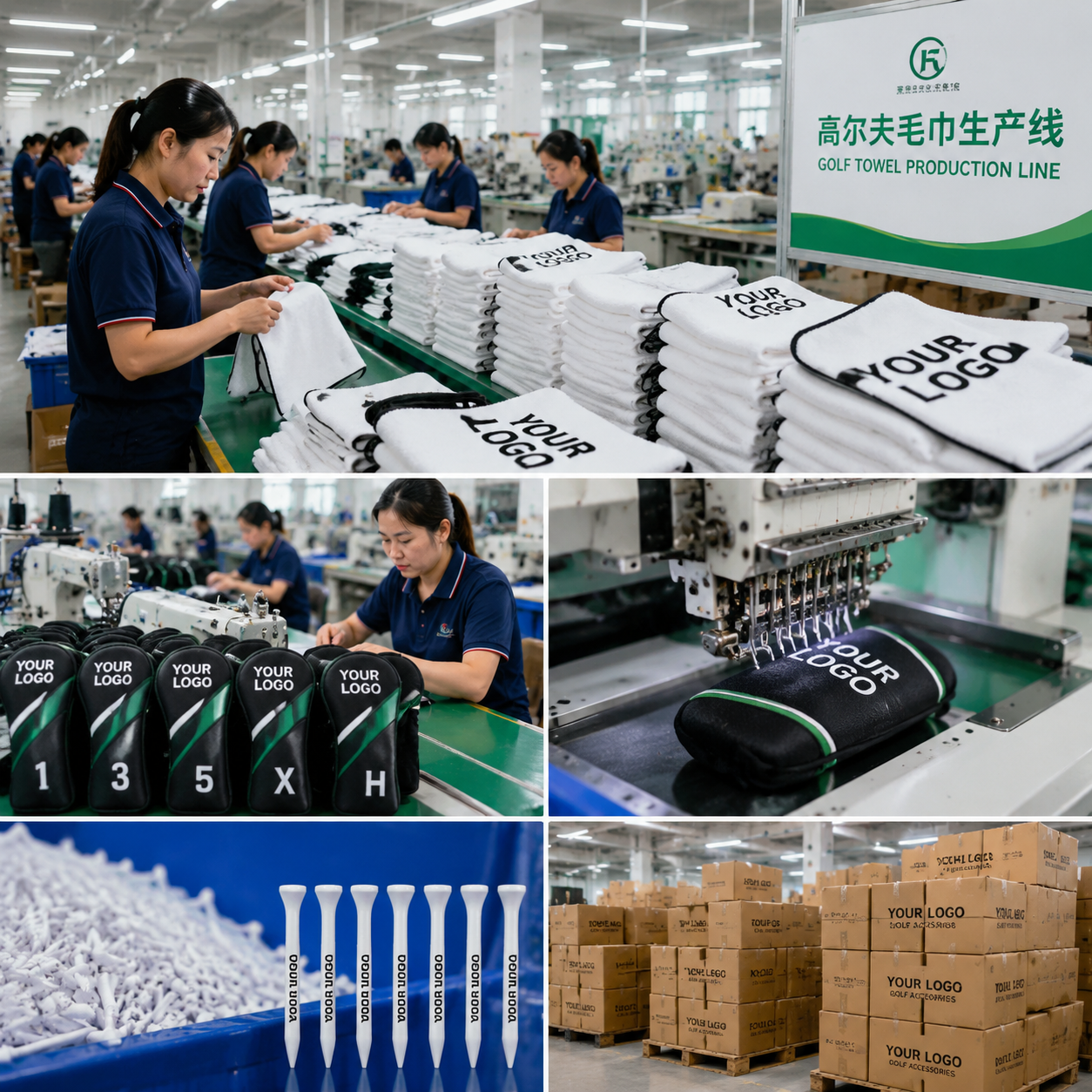
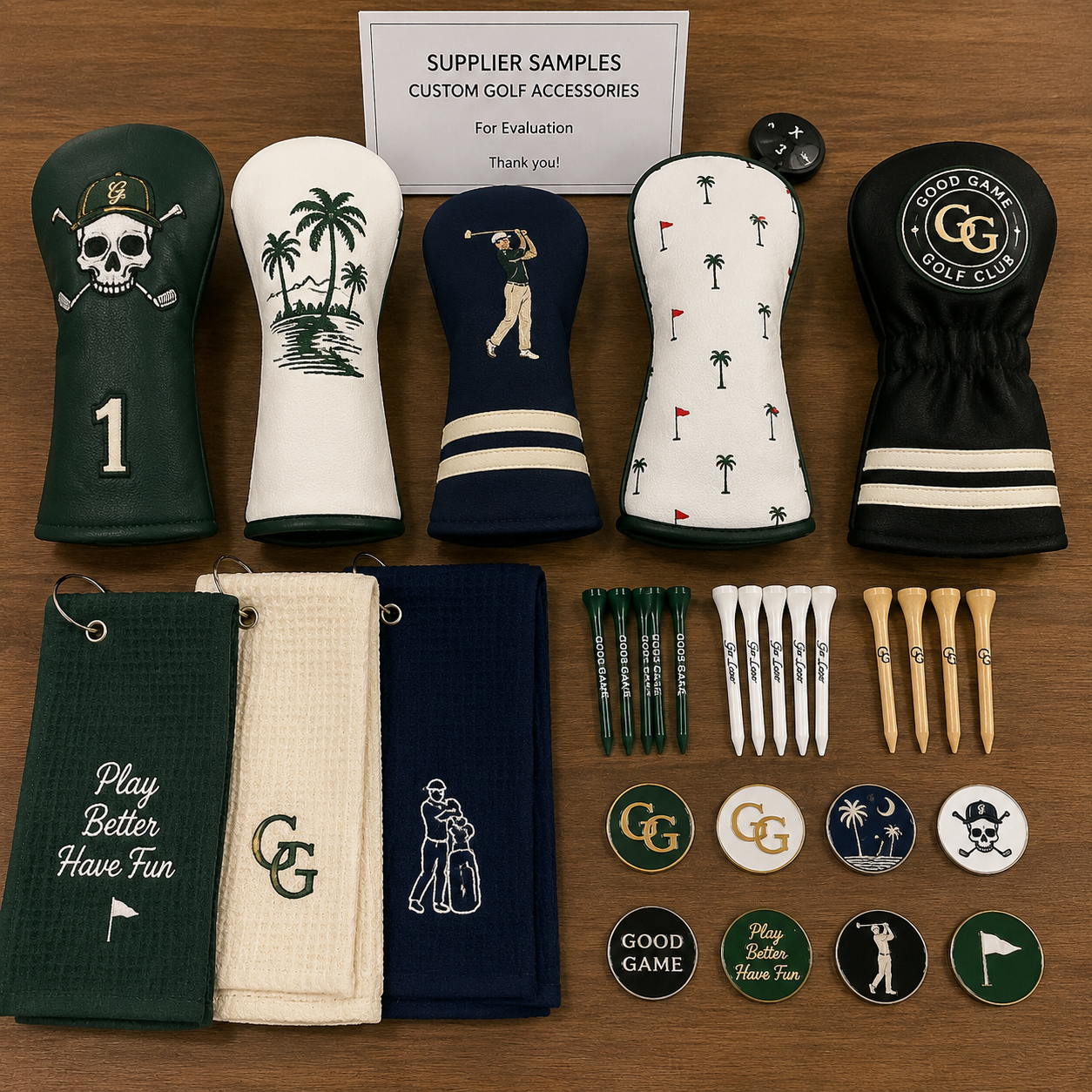
Step 2: Sample Order. Always order a sample before placing a production order. Even if the sample costs $100 and takes 3 weeks, it is the cheapest quality insurance available. Photograph the sample from every angle. Test it. Write down every detail of what you like and what you want changed.
Step 3: Factory Audit. For orders over $5,000, commission a third-party factory audit through QIMA, AsiaInspection, or SGS. The audit costs $300-500 and covers factory registration, production capacity, quality management systems, and social compliance. This is the single most important investment in supplier verification.
Step 4: Purchase Order Specification. Write a detailed purchase order that includes product specifications, material grades, color references (Pantone codes), logo placement and size, packaging requirements, quality standards, inspection requirements, shipment date, and payment terms. If it is not written in the PO, it does not exist.
FAQ
How do I avoid the most common Alibaba sourcing mistake?
The most common mistake is choosing the cheapest quote. A $5 headcover from an unverified supplier will cost more in returns, replacements, and reputation damage than an $8 headcover from a verified specialist. Price is one factor among many. Quality consistency, communication, and reliability are worth more than the per-unit savings from the lowest bidder.
What payment terms should I expect?
Standard terms for first orders are 30% deposit with the purchase order and 70% before shipment after quality inspection. Established relationships can move to 30% deposit and 70% net 30 days after shipment. 100% upfront payment should be a red flag unless the order is very small (under $2,000).
How should pro shops evaluate Chinese golf accessory manufacturers?
Check product specialization, sample quality, communication speed, packaging capability, artwork handling, export experience, and consistency across repeat orders.
Is the lowest Alibaba price usually the best choice?
No. The lowest quote may exclude packaging, quality control, better materials, logo setup, or realistic shipping assumptions, so buyers should compare total landed value.
Can PASSEN work as a direct OEM supplier instead of a marketplace seller?
Yes. PASSEN supports direct OEM golf accessory sourcing with product development, branding, packaging, and bulk production communication.