
Behind the Scenes: How Custom Golf Headcovers Are Made and Why Quality Varies So Dramatically
A custom golf headcover may look simple, but material backing, lining, cutting, stitching, closure construction and logo application all influence the finished result. Many of these differences are difficult to judge from catalog photos alone.
This article explains how custom headcovers are actually manufactured, what drives quality differences, and what to look for when evaluating suppliers.
For current formats, MOQ planning and quotation details, see PASSEN's custom golf headcovers OEM page.
Key Takeaways
- Review the complete material construction. Surface finish, backing, lining and padding should be assessed together.
- Approve logo execution on the selected material. Embroidery, printing, debossing and labels behave differently across constructions.
- Fit and closure details need a physical check. Confirm club type, opening, retention and removal before bulk production.
- Use a written approval checklist. Record material, fit, color, logo position, stitching, lining and packaging comments.
Manufacturing Process Overview
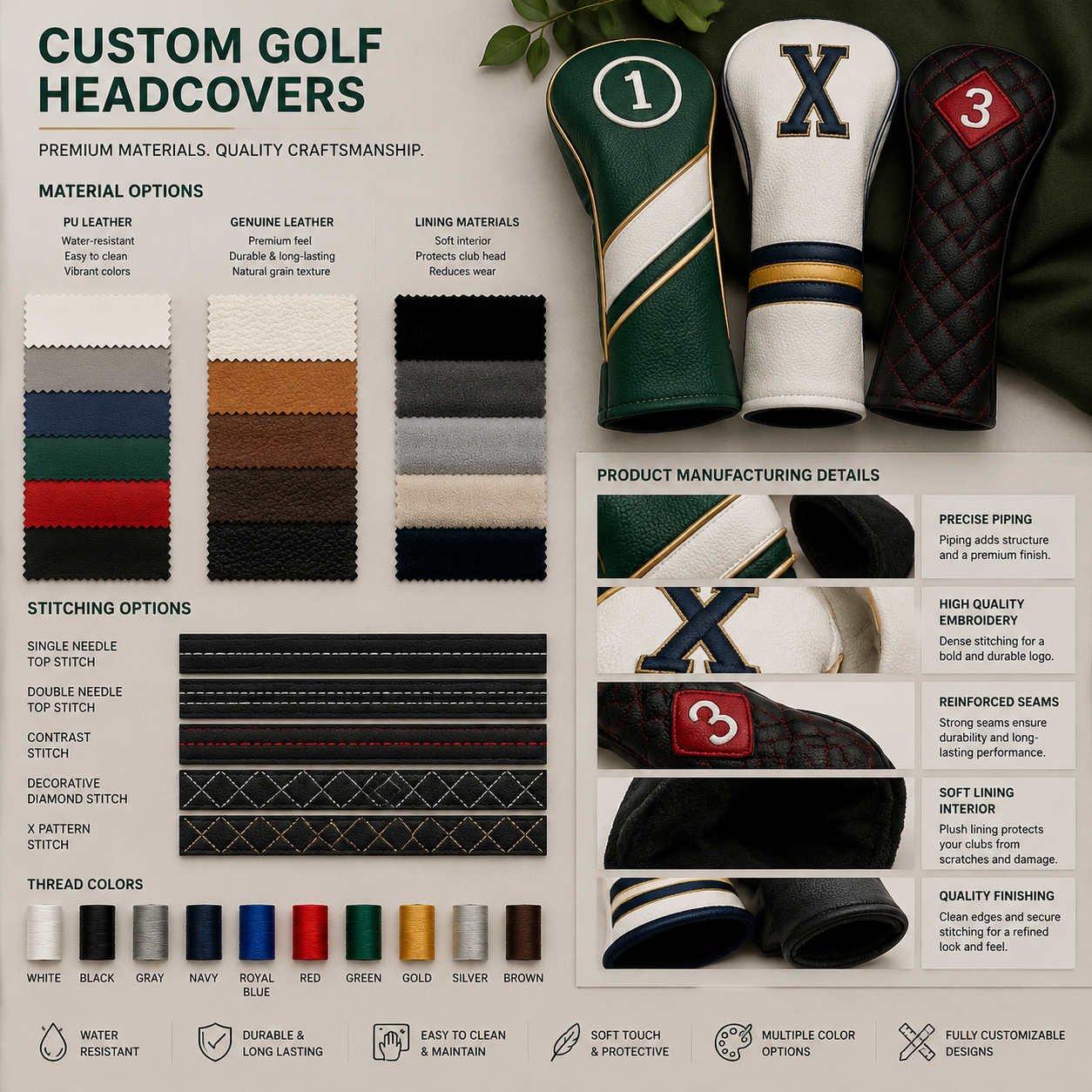
Step 1: Material Cutting. PU leather, genuine leather, or fabric is cut using metal dies or CNC cutting machines. Die-cut pieces have clean edges. Hand-cut pieces have irregular edges that show in the finished product. Ask if the supplier uses die-cutting or hand-cutting.
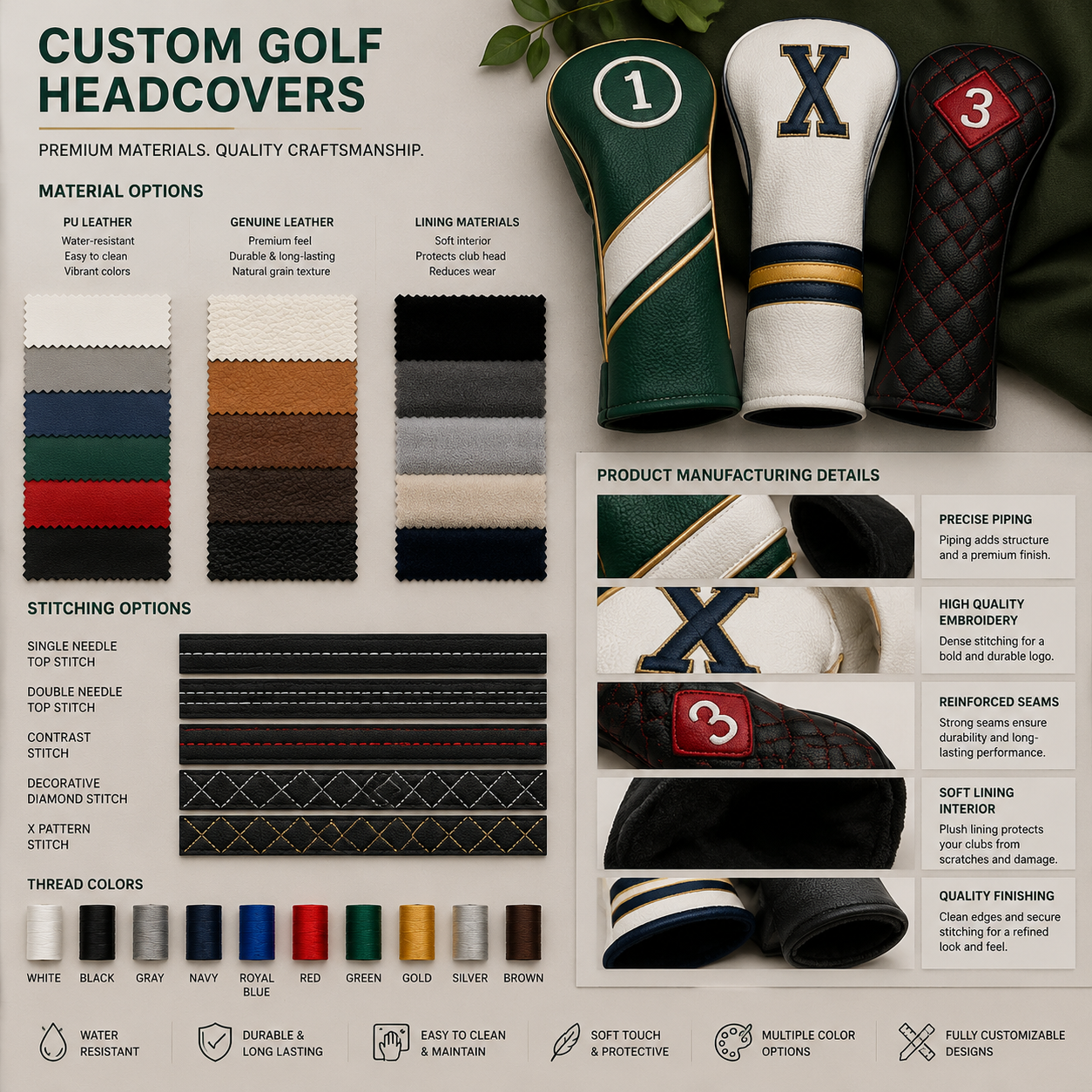
Step 2: Logo Application. Logo application should be selected with the exterior material, artwork detail and expected appearance in mind. Approve a representative logo treatment before bulk production.
Step 3: Assembly and Stitching. The exterior panels, lining, padding, and closure are sewn together. Double-stitched seams last. Single-stitched seams fail at stress points. Internal binding on raw edges prevents fraying. Budget manufacturers skip internal binding, which is invisible at purchase but obvious after 6 months.
Step 4: Quality Control. Define the inspection points in the approved specification. Fit, stitching, logo position, material surface, closure function and packaging should be checked against the agreed sample and order details.
FAQ
How do I tell PU leather quality from a sample?
Three tests: (1) Scratch test: scratch the surface with a fingernail. Quality PU shows no mark. Budget PU shows a visible line. (2) Fold test: fold the material and press the crease. Quality PU recovers fully. Budget PU retains a crease line. (3) Smell test: quality PU has no odor. Budget PU has a chemical smell that indicates volatile organic compounds that will off-gas for months.
Why does custom golf headcover quality vary so much?
Quality varies because materials, lining, stitching, embroidery density, pattern accuracy, and finishing standards can differ greatly between factories.
What should buyers check before approving a headcover sample?
Check the fit, padding, opening size, lining, embroidery, logo position, seam strength, color accuracy, and whether the cover sits correctly on the intended club.
Which materials are common for custom golf headcovers?
Common options include PU leather, genuine leather, knit fabrics, plush fabrics, canvas, neoprene, and mixed-material constructions.
Can PASSEN help brands develop headcovers from a reference design?
Yes. PASSEN can use reference samples, drawings, logo files, material targets, and packaging notes to develop a production-ready custom headcover.